
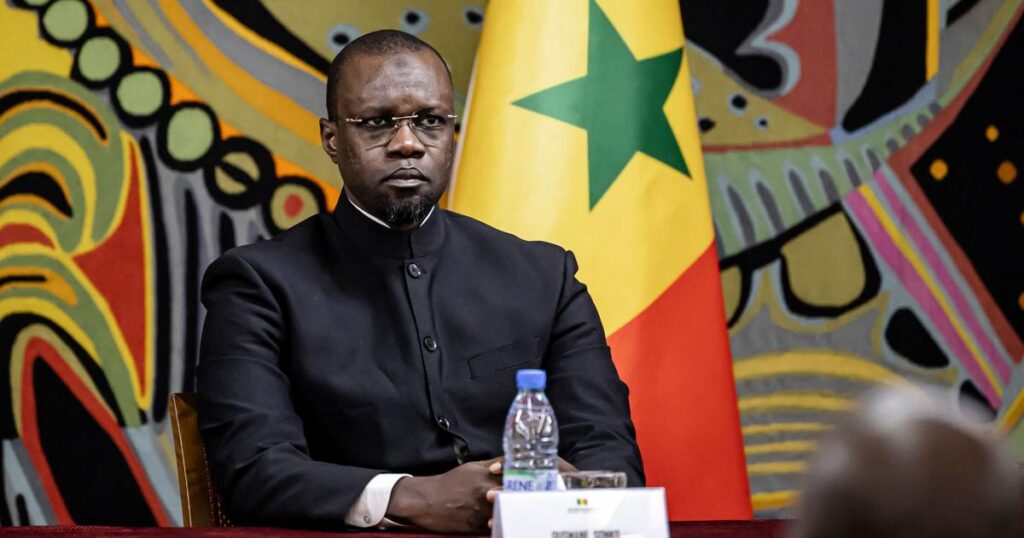
The political landscape in Senegal has been rocked by a dramatic announcement: President Bassirou Diomaye Faye has terminated the mandate of Prime Minister Ousmane Sonko via a presidential decree issued this Friday, May 22. The decision marks the culmination of months of simmering tensions within the executive branch, where internal power struggles and unspoken rivalries have been quietly undermining governance.
Earlier that day, Sonko had delivered a fiery address to the National Assembly, where he openly challenged the president’s authority. In a bold display of defiance, he declared his role as a premier who makes decisions independently, without seeking prior approval—words that echoed loudly across the political spectrum. As a prominent figure among Senegal’s youth, Sonko was originally barred from contesting the 2024 presidential election, instead endorsing Bassirou Diomaye Faye as his successor in the race.
The dismissal comes at a critical juncture for Senegal, where public expectations for reform and transparency remain high. Observers describe the move as a seismic shift in the country’s political trajectory, with potential ramifications for both domestic stability and international relations.
United States tightens green card rules for immigrants
The Biden administration has implemented a sweeping change to immigration policy, requiring applicants for permanent residency—the coveted green card—to return to their countries of origin to complete the application process. Previously, individuals holding temporary visas could adjust their status from within the United States, allowing them to remain in the country while their cases were under review. The new directive, issued by U.S. Citizenship and Immigration Services (USCIS), eliminates this pathway, forcing legal immigrants—including spouses of U.S. citizens—to leave the country for weeks or months to finalize their applications. Critics condemn the policy as both impractical and heartless, arguing that it disrupts lives, separates families, and imposes undue hardship on those who have built stable lives in America.
Tulsi Gabbard resigns from top U.S. intelligence post
Tulsi Gabbard, Director of National Intelligence (DNI) and a vocal advocate for a more restrained U.S. foreign policy, has submitted her resignation to President Trump. In a statement, she cited personal reasons, explaining that she is stepping down to support her husband, who is battling a rare form of bone cancer. Her departure, effective June 30, will bring an end to a tumultuous tenure overseeing 18 U.S. intelligence agencies. During her time in office, Gabbard was notably sidelined from major national security discussions, including critical decisions regarding military operations in Iran and Venezuela.
EU and Mexico expand trade partnership with new deal
The European Union and Mexico have enhanced their long-standing trade agreement, first established in 2000. The updated accord eliminates tariffs on nearly all Mexican food exports to Europe while strengthening cooperation in security, migration, clean energy, and digital trade. In a global climate marked by rising protectionist measures, the two partners have sent a clear signal in favor of open commerce and economic collaboration.
New hantavirus case reported on cruise ship voyage
A fresh case of hantavirus has been confirmed aboard the MV Hondius cruise ship, bringing the total number of infections to twelve. The latest case involves a crew member who disembarked in Tenerife before being transferred to the Netherlands for medical care. According to the World Health Organization (WHO), the death toll remains unchanged at three, with no new fatalities reported since May 2. The outbreak was first reported to the WHO on May 2, raising concerns about public health risks in maritime travel.

More Stories
Sénégal: president Bassirou Diomaye Faye removes prime minister Ousmane Sonko
Senegal’s president sacks prime minister amid growing political tensions
Senegal’s president sacks Prime Minister Ousmane Sonko