Mariama Hamani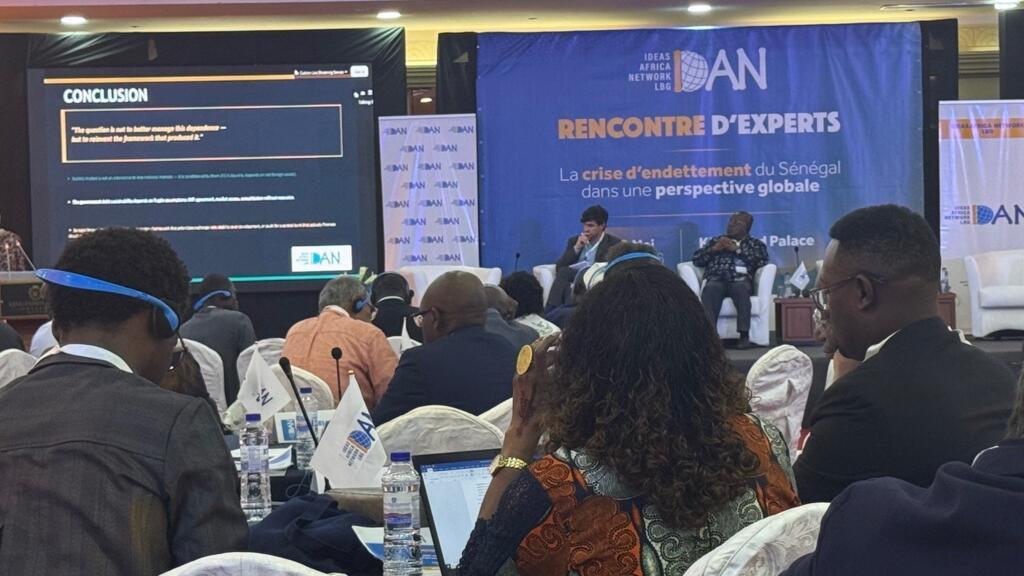
Senegal’s debt crisis: experts seek independent solutions beyond the imf

A recent conference held in Dakar addressed Senegal’s debt crisis, seeking innovative solutions. While Prime Minister Ousmane Sonko was slated to preside over the event, he was unable to attend due to illness, with Justice Minister Yacine Fall representing him.
Ayib Daffé, who chairs the parliamentary group for the ruling African Patriots of Senegal for Work, Ethics, and Fraternity (Pastef), conveyed a strong message. He underscored the critical need to “broaden perspectives” and move beyond “conventional wisdom” regarding the nation’s financial challenges. This implicitly challenged the International Monetary Fund (IMF)’s proposal for debt restructuring, which involves renegotiating loan terms when repayment becomes unfeasible – an option that Dakar has firmly rejected.
The imperative for alternative debt solutions
Economists participating in the conference unanimously asserted that Senegal’s external debt burden is unsustainable, a stance that contradicts previous assurances from government authorities. They stressed the urgent necessity of identifying viable remedies. Economist Souleymane Bah highlighted the precarious situation, explaining that the state’s current revenues are insufficient to cover both principal and interest payments.
“The usual practice of borrowing more to repay existing external debt, especially with continuously rising interest rates, is not a sustainable path,” Bah stated. “We must explore genuine alternatives.”
This exploration of alternative solutions was the core objective of the conference, organized by the Ideas Africa Network think tank. The network believes that the IMF’s traditional approach does not adequately address the root causes of the crisis.
Ndongo Samba Sylla, an economist and researcher with Ideas Africa Network, criticized the IMF’s strategy, describing it as “purely accounting-based and pro-creditor.” He argued, “The IMF’s primary focus is often on facilitating further lending so that countries can signal their ability to service existing debts and take on new ones, rather than investing in fundamental economic transformation.”
Among the innovative strategies discussed were reforming the monetary system, potentially moving away from the Franc CFA, and advocating for the cancellation of “illegitimate” debt. This refers to loans reportedly contracted opaquely by the previous administration without proper declaration.
However, a potential contradiction emerged in the government’s approach. While experts in Dakar, under the implied endorsement of Prime Minister Ousmane Sonko, were deliberating on strategies independent of the International Monetary Fund, President Bassirou Diomaye Faye was simultaneously engaging with IMF Director Kristalina Georgieva in Nairobi, Kenya. As of now, these parallel discussions have not yielded significant progress.

 Boureima Amadou