Boureima Amadou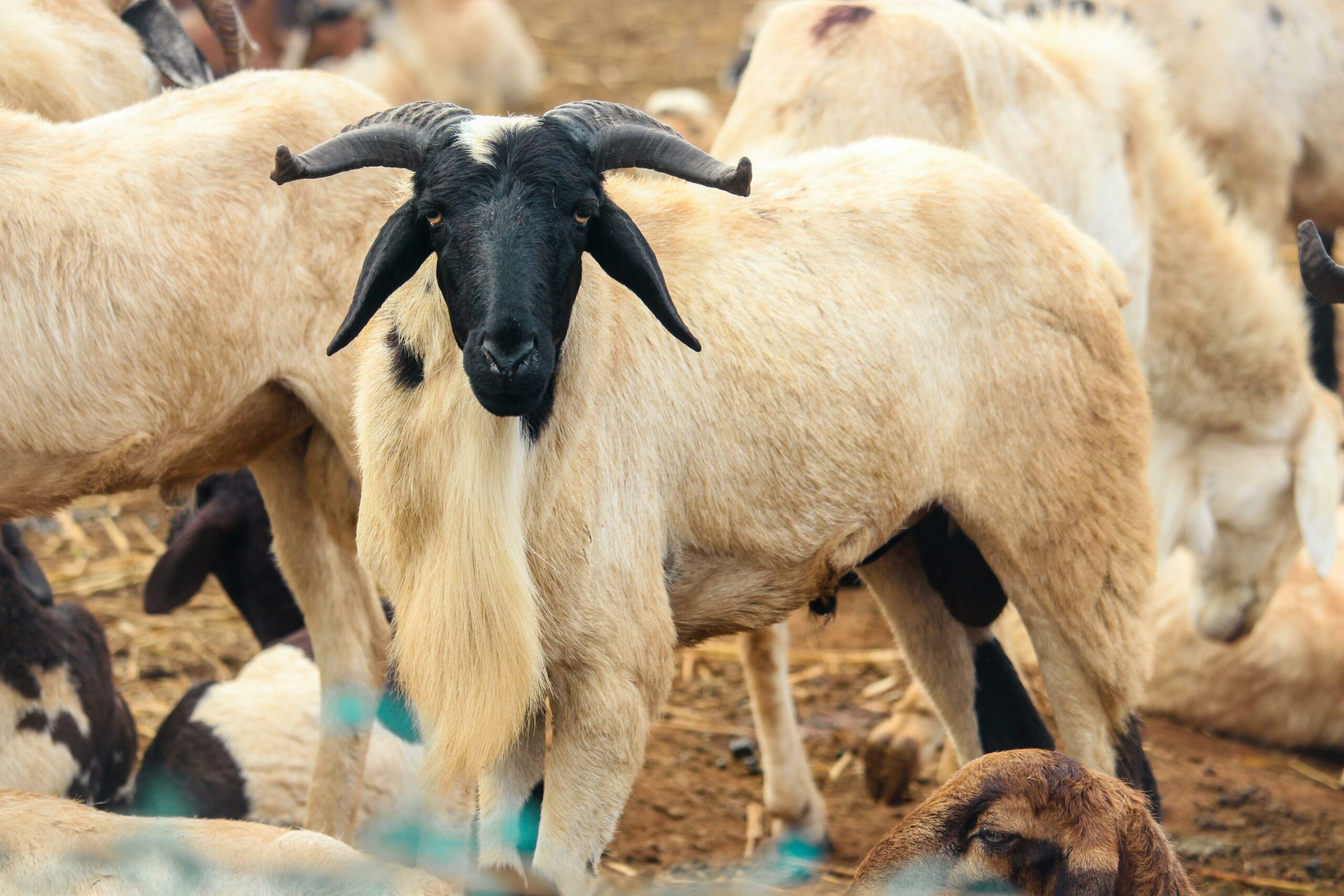
Tabaski sheep: the financial burden behind a religious tradition
Every year, millions of Senegalese families take on debt to purchase a sheep for Tabaski. From rotating savings groups to microfinance institutions, an entire ecosystem of borrowing has emerged around a religious celebration that now fuels a social crisis. While Morocco implemented a solution decades ago, Senegal continues to grapple with this mounting financial strain.
Two weeks before Tabaski, a wave of anxiety sweeps across Dakar, from bustling neighborhoods to the quiet Almadies district. The price of sheep has surged yet again. Yesterday, a decent animal cost 120,000 CFA francs. Today, the same sheep fetches 150,000, while premium “prestige” animals—those destined for social media—can reach 300,000 CFA francs or more.
The question weighs heavily on fathers’ minds: How will I afford this? It’s a recurring nightmare, a yearly ritual of financial pressure disguised as tradition. Tabaski, once a purely spiritual observance, has morphed into a status symbol, where the size of the sacrifice reflects one’s social standing.
From faith to finance: the commercialization of Tabaski
Mamadou Sall, a resident of Sacré-Cœur, earns just 60,000 CFA francs per month. By May, the stress begins. By July, he must somehow produce 150,000 CFA francs—a sum equal to two and a half months of his salary—not to feed his family for a week, but to uphold tradition. To be seen sacrificing an animal of sufficient size. To maintain his family’s dignity in the eyes of neighbors and peers.
Banks won’t lend him the money for a sheep, so Mamadou turns to his local tontine—a rotating savings group. They approve his loan of 150,000 CFA francs, but at a steep cost. During Tabaski season, interest rates in these informal lending circles can soar to 30% or even 50% annually. On a 150,000 CFA franc loan, that means upfront fees of 3,750 to 6,250 francs, followed by 12 months of repayments that push total debt to 172,500 to 225,000 francs.
Mamadou’s situation is far from unique. Between 35% and 45% of all microfinance loans issued in Senegal during Tabaski season are used to purchase sheep. Nearly one in every two credit applications during this two-month window is for an animal that will be consumed within the year.
Sheep prices: a decade of steep inflation
In 2010, a sheep cost between 60,000 and 80,000 CFA francs. By 2024, the price had ballooned to between 150,000 and 250,000 CFA francs—a surge of 87% to 275% in just 14 years. This inflation isn’t tied to general economic trends in Senegal. It’s driven by concentrated seasonal demand: during Tabaski, necessity overrides price sensitivity. Sheep prices become inelastic, and breeders know it. With no regulatory oversight, they inflate costs with impunity.
The minimum wage in Senegal is 60,239 CFA francs per month. For a typical worker earning this amount, purchasing a 150,000 CFA franc sheep requires devoting two and a half months of full salary—before accounting for other Tabaski expenses like clothing, food, and gifts. For the 60% of Senegalese living below the poverty line, this is impossible without resorting to debt.
Who is borrowing for sheep, and how much?
During Tabaski 2024, Senegal’s microfinance sector recorded a 62% increase in loan applications compared to non-festival periods, with average loan amounts ranging from 120,000 to 200,000 CFA francs. This surge in borrowing is concentrated into a two-month window, overwhelming financial systems and trapping families in cycles of debt.
The hidden architecture of informal debt
With traditional banking inaccessible for sheep purchases, Senegal’s financial landscape fractures into a patchwork of informal borrowing. Rotating savings groups, microfinance lenders, and private moneylenders all thrive during Tabaski season.
| Credit source | Regular period rates | Tabaski season rates |
|---|---|---|
| Local tontines | 15–30% per year | 30–50% per year |
| Formal microfinance | 24–36% per year | 36–48% for short-term loans |
| Private informal lenders | 30–40% per year | 50–60%+ per year |
| Commercial banks | Nearly inaccessible | Nearly inaccessible |
The acceleration of rotating savings group cycles during Tabaski means that interest rates in these informal networks jump to between 30% and 50% annually. A 150,000 CFA franc loan taken in July can balloon to 172,500 to 225,000 CFA francs by the time it’s repaid a year later.
Microfinance institutions offer slightly lower rates—typically 24% to 36%, or up to 48% for ultra-short-term loans—but even these come with immediate financial burdens. A family borrowing 150,000 CFA francs in July for an August Tabaski faces upfront interest charges of 3,000 to 6,000 francs.
Social media fuels the Tabaski debt spiral
If the financial strain weren’t enough, social media has intensified the pressure on families. What was once a private family gathering has become a public spectacle. Where neighbors once saw your sheep, now 500 contacts on WhatsApp can admire, comment on, and compare it.
A 2023 study by Cheikh Anta Diop University revealed that 67% of young adults in Dakar feel social pressure to buy a sheep for Tabaski. Of those, 48% cite social media as the primary source of this pressure. Influencers showcase extravagant Tabaski sacrifices, with videos of wealthy families gifting oversized, photogenic sheep. The message is clear: a sheep not posted on Instagram might as well not exist.
This digital pressure hits hardest among men. In Senegalese culture, it is the man’s responsibility to provide the Tabaski sheep. Failure to do so is seen as a sign of inadequacy, a failure to provide for one’s family. The shame is palpable, driving otherwise rational individuals into unsustainable debt.
The hidden cost: reduced household well-being
Households that borrow for Tabaski reduce food and healthcare spending by 18% to 25% in the three months following the festival. Children’s school fees go unpaid. Essential medications go unfilled. The true economic cost of saving face during Tabaski extends far beyond the sheep’s purchase price.
The consequences are even more severe when agricultural loans are diverted for Tabaski. Between 8% and 12% of Senegal’s agricultural loans are misused for sheep purchases instead of seeds or fertilizer. A farmer who might have increased their harvest by 30% ends up with fewer resources for the next planting season.
Morocco’s solution: a lesson for Senegal
Twenty-five years ago, Morocco took decisive action. The country’s leadership recognized that a religious celebration should not hinge on personal wealth. In 1999, the Moroccan king established a national program ensuring every low-income family received a sheep for Tabaski—not as charity, but as a right.
Since then, Morocco has distributed over 2.8 million sheep through its Zakat Al-Fitr fund. The annual cost? Approximately 450 million Moroccan dirhams, equivalent to 43 billion CFA francs. When placed in context, this amounts to less than 0.1% of Morocco’s national budget—a small price to ensure every family can celebrate Tabaski without financial ruin.
Morocco recognized an uncomfortable truth: when access to a religious festival depends on personal wealth, it ceases to be a religious observance and becomes a tool of social distinction. By treating Tabaski as a public good rather than a private expense, the country transformed a seasonal financial crisis into a manageable civic duty. Senegal has the opportunity to follow this model.
Senegal’s stalled progress
Senegal, by contrast, has no such program. No national initiative exists to alleviate the financial burden of Tabaski. A few municipalities and private religious organizations offer limited assistance, but the scale is negligible. The vast majority of Senegalese families are left to navigate the predatory lending market and the psychological weight of social comparison alone.
Debt collectors report troubling patterns: household over-indebtedness peaks three months after Tabaski. Families struggle to repay loans while meeting basic needs. Food consumption drops. Medical bills go unpaid. Children are pulled from school. The cycle of poverty deepens.
The mental health toll is equally severe. A 2022 study by the Dakar Mental Health Research Center found a dramatic increase in calls to helplines three weeks before Tabaski. Among men aged 30 to 55, the number of calls doubles. The anxiety of not affording a sheep, the fear of social judgment, and the shame of perceived failure weigh heavily on families.
The roots of the crisis
The crisis stems from two intertwined forces. First, the rise of ostentatious consumption. Tabaski, once a humble act of faith, has been co-opted by urban consumer culture. Social media amplifies this transformation, turning the festival into a public display of wealth and respectability.
Second, there is a glaring absence of public policy. Senegalese leaders have not addressed Tabaski as a social issue. The topic rarely appears in national debates or media discussions. Meanwhile, millions of households sink deeper into debt every year.
Mamadou’s phone already rings with reminders from his tontine. Tabaski 2025 is approaching. Sheep prices are climbing. Interest rates are rising. The cycle begins anew.