Boureima Amadou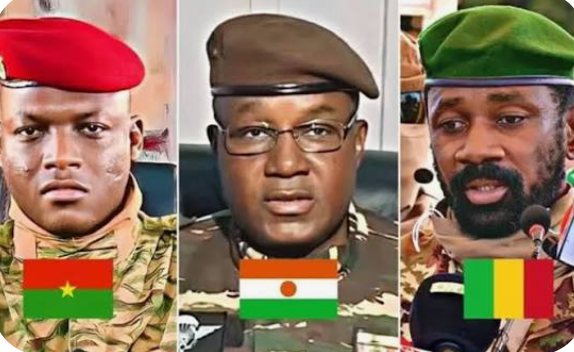
Unveiling Mali’s Deepening Ties with Moscow
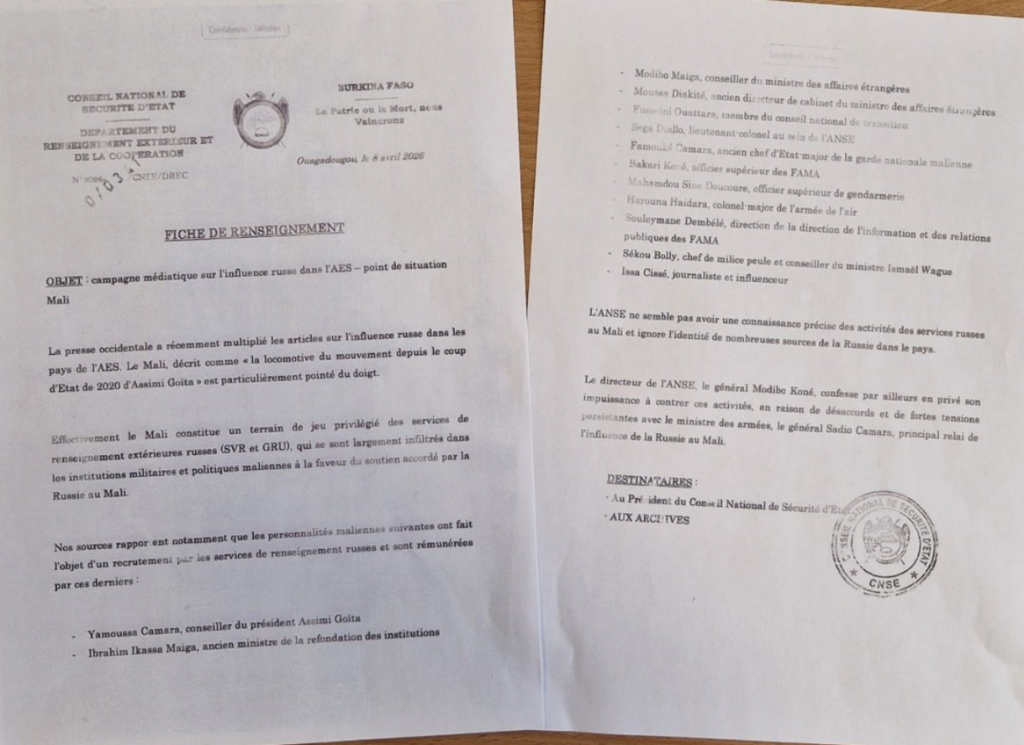
What was meant to be a united front against external threats—the Alliance of Sahel States (AES), comprising Mali, Burkina Faso, and Niger—now faces an unprecedented crisis. Behind the scenes, a classified intelligence report from Burkina Faso suggests that Mali’s leadership may no longer be in full control of its decisions. Instead, it appears to be heavily influenced by shadowy networks with ties to Russia.
A web of influence reaching Mali’s highest circles
The report goes beyond mere speculation about foreign military advisors. It implicates key figures within Mali’s government, military, and media who are allegedly aligned with Moscow’s interests. Among the names listed are high-profile advisers to President Assimi Goïta, such as Yamoussa Camara, along with diplomats like Modibo Maïga and Moussa Diakité. Senior military officials, including Bakari Koré and Harouna Haidara, are also mentioned, alongside media personalities and militia leaders like Sékou Bolly and journalist Issa Cissé.
For Burkina Faso, this revelation is a red flag. If Bamako’s decisions are being steered by external actors, the very foundation of the AES—built on shared sovereignty—could crumble. The fear? That Mali’s strategic choices no longer serve the alliance’s interests but instead align with Russia’s geopolitical agenda.
From Western dependence to Russian control?
The irony is stark. The AES was created to break free from former Western influences, yet Mali now finds itself entangled in a new web of dependency. Neighbors like Niger and Burkina Faso are growing increasingly uneasy about the presence of foreign mercenaries and covert advisors shaping Mali’s policies. There’s growing concern that Bamako’s military and political moves may no longer prioritize regional stability but instead advance Moscow’s objectives.
This shift has fueled tensions within the alliance. Niger, in particular, views Mali’s growing foreign entanglement with skepticism, questioning whether it can still be a reliable partner. The unease is palpable: if one member’s sovereignty is compromised, can the AES truly function as a cohesive bloc?
Can the Sahel Alliance survive its internal fractures?
The AES’s future hangs in the balance. Can it survive the fallout of Mali’s alleged subjugation to foreign influence? The leaked report signals Burkina Faso’s growing wariness, as officials fear instability in Mali—or worse, decisions dictated by Moscow—could spill over and destabilize the entire Sahel region.
For analysts, the core question is no longer whether the alliance can defeat insurgencies but whether it can withstand the internal divisions threatening to tear it apart. If Mali fails to reclaim control of its national sovereignty, the AES may collapse as quickly as it was formed, undone by the very foreign influence its founders vowed to resist.


 Mariama Hamani