Boureima Amadou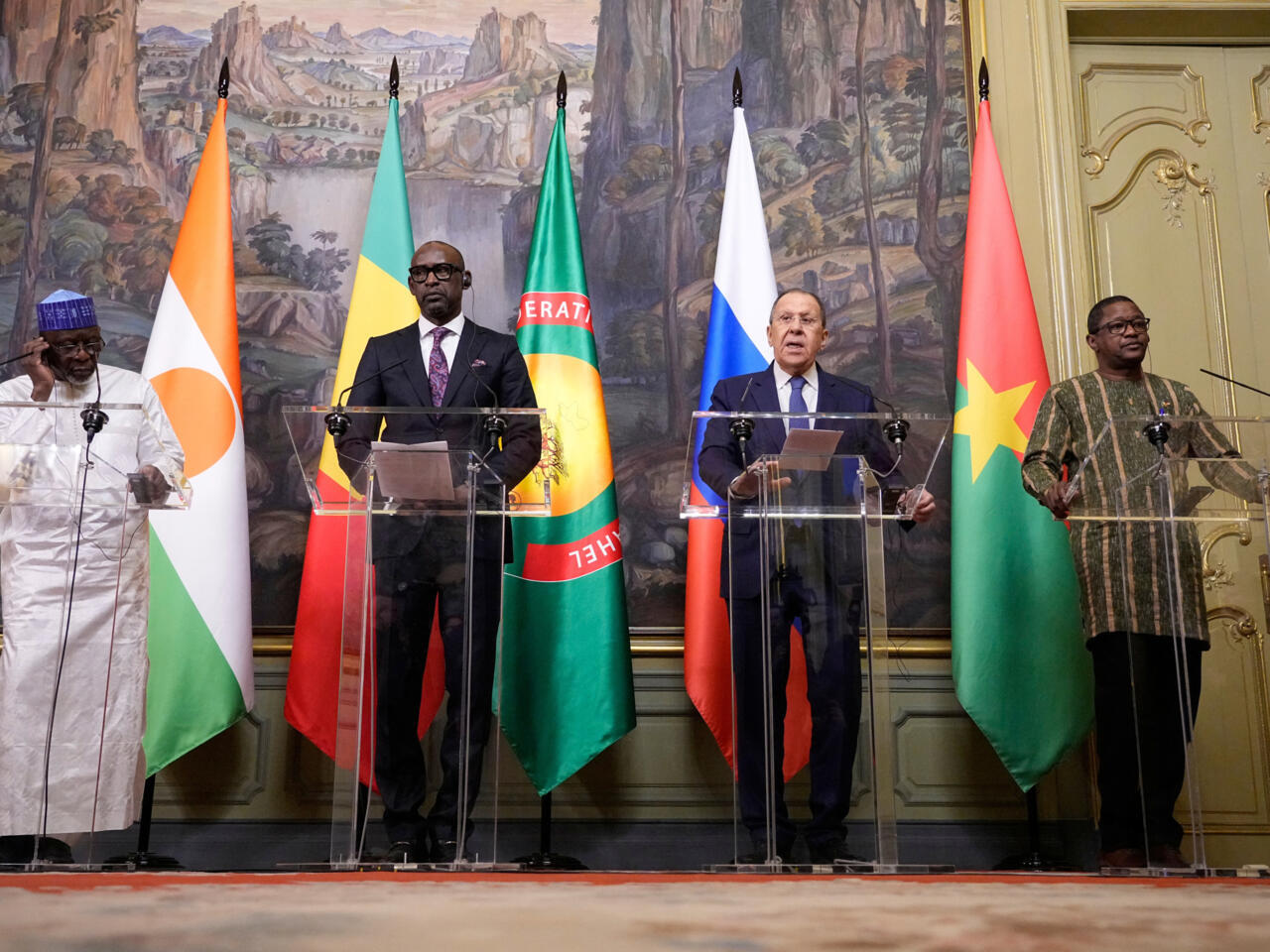
The military governments of Mali, Burkina Faso, and Niger are uniting under a new security and political alliance, deliberately distancing themselves from Western partners. Russia is stepping into this power vacuum, rapidly expanding its influence through military cooperation, arms supplies, and the use of private military networks. This shift poses a significant challenge to U.S. interests in the region, particularly by undermining Washington’s counterterrorism efforts and eroding its long-term presence in West Africa.
As these regimes reduce cooperation with the United States and its allies, they simultaneously strengthen ties with Moscow. The loss of critical military bases and intelligence infrastructure in the Sahel weakens America’s ability to track and counter jihadist movements. Meanwhile, Russia gains strategic access to resources and political leverage in some of Africa’s most fragile states. The result is a long-term erosion of U.S. influence, with ripple effects across the continent.
Russia’s strategy in the Sahel is not opportunistic—it is systematic and multifaceted. By leveraging military advisers, arms contracts, and propaganda campaigns, Moscow is embedding itself within the security structures of Sahelian juntas. Unlike Western partners, who often tie assistance to governance reforms, Russia offers unconditional support, making it an attractive option for authoritarian regimes seeking to consolidate power.
Why the Sahel is a critical battleground
The Sahel stretches across West and North Africa, serving as a vital corridor for migration, counterterrorism operations, and access to key mineral resources such as uranium, gold, and rare earth metals. For decades, the United States has relied on the region as a frontline in the fight against extremist groups like ISIS-Sahel and al-Qaeda affiliates. However, the withdrawal of Western forces from Mali, Burkina Faso, and Niger has left a dangerous security void—one that Russia is quickly filling.
Without a U.S. military presence in these countries, America’s intelligence-gathering and rapid-response capabilities are severely diminished. This not only weakens counterterrorism efforts but also increases the risk of jihadist groups expanding their influence, potentially threatening U.S. and European security in the long term.
How Russia is expanding its role in the Sahel
Moscow is advancing its objectives in the region through a mix of military, political, and informational tools:
- Military instruments: Arms sales, deployment of advisers, private military contractors, and intelligence-sharing agreements.
- Political instruments: Diplomatic support for coup governments, bilateral agreements that bypass international scrutiny, and recognition of juntas as legitimate authorities.
- Information instruments: Anti-Western propaganda campaigns, disinformation targeting France and the U.S., and narratives portraying Russia as a defender of sovereignty against colonialism.
This hybrid approach allows Russia to gain influence at a relatively low cost while avoiding the political conditions often imposed by Western partners.
Key strategic objectives of Russia in the Sahel
Moscow’s goals in the region are far-reaching and interconnected:
- Replacing Western security structures: Russia aims to dismantle the decades-long U.S. and European military presence by offering itself as the primary security partner for Sahelian regimes.
- Building an anti-Western bloc: The alliance between Mali, Burkina Faso, and Niger is evolving into a coordinated political front against Western influence, reinforcing narratives of resistance to “neocolonialism.”
- Securing access to resources: Agreements with juntas for gold, uranium, and other minerals provide economic benefits while reducing Moscow’s vulnerability to Western sanctions.
- Expanding influence across Africa: Success in the Sahel serves as a model for Russia to extend its reach into other African states facing instability or anti-Western sentiment.
The appeal of Russia to Sahelian juntas
Military-led governments in the Sahel prefer Russia for five key reasons:
- No demands for democratic reforms or good governance.
- Fast delivery of weapons and military equipment.
- Support focused on regime survival rather than broader state-building.
- Diplomatic backing against Western sanctions and criticism.
- Propaganda campaigns that legitimize their rule by portraying them as defenders against foreign interference.
This transactional relationship reinforces authoritarian stability while reducing incentives for political reform, deepening long-term instability.
Consequences for the United States and regional stability
The rise of a Russian-backed alliance in the Sahel carries significant risks for both U.S. interests and regional security:
- Collapse of counterterrorism reach: Without military bases in the Sahel, U.S. intelligence and surveillance capabilities are severely weakened, increasing the threat of extremist expansion.
- Erosion of U.S. credibility: The perception of American retreat may encourage other African governments to seek alternatives, such as partnerships with Russia or China.
- Expanded jihadist safe havens: Russian-backed regimes prioritize short-term stability over long-term governance reforms, leaving the structural causes of extremism unaddressed and potentially worsening insurgencies.
- Regional fragmentation: The emergence of a Russia-aligned bloc reduces the effectiveness of joint anti-terror operations and complicates efforts to develop a unified security strategy.
Long-term projections (2026–2030)
If current trends continue, three possible scenarios could unfold:
- Scenario A: Consolidated Russian Sphere (High Probability)
Russia solidifies its dominance in the Sahel, making a Western return politically or militarily unfeasible.
- Scenario B: Competitive Multipolar Contestation (Moderate Probability)
Turkey, China, Gulf states, and Russia compete for influence, creating a fragmented landscape of competing alliances.
- Scenario C: Regime Collapse and Strategic Vacuum (Moderate Risk)
If juntas fail to address insurgencies or economic decline, state collapse could create uncontrolled conflict zones beyond Russia’s ability to stabilize.
Policy recommendations for the United States
To counter Russia’s growing influence in the Sahel, Washington may need to adopt a more adaptive strategy:
- Shift from military-first engagement to civilian and economic partnerships that address local grievances.
- Strengthen cooperation with coastal West African states to contain the spillover of instability.
- Support African Union and ECOWAS initiatives that offer alternatives to Russian-led security arrangements.
- Counter Russian disinformation through targeted media campaigns in local languages.
- Impose sanctions on Russian-linked extraction networks to disrupt Moscow’s economic gains in the region.
The Sahel is no longer just a counterterrorism front—it has become a testing ground for Russia’s broader strategy of displacing Western influence in Africa. By aligning with military juntas, Moscow is constructing a durable anti-Western corridor that combines regime protection, resource access, and geopolitical leverage. If left unchecked, Russia’s foothold in the Sahel could set a precedent for a continent-wide reordering of power.


 Mariama Hamani