Mariama Hamani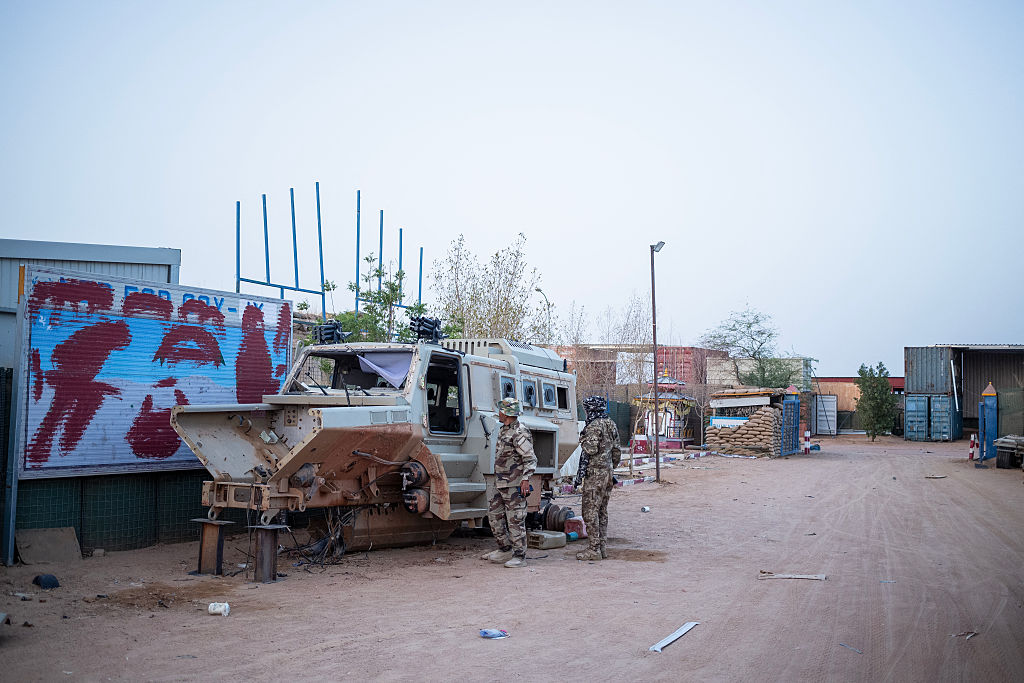
The Africa Corps, Russia’s military contingent in Mali, has significantly altered its operational approach by relocating its forces away from the northern regions to safeguard the capital, Bamako, and the ruling junta. Concurrently, it continues to provide critical aerial support and intelligence to Malian troops engaged in ground operations.
According to strategic assessments, the Africa Corps now plays a more subdued role compared to its predecessor, the Wagner Group. Military analyst Benedict Manzin notes that the shift reflects efforts to minimize personnel losses while maximizing strategic impact. «They’re avoiding unnecessary casualties and focusing on high-impact operations,» he explains. «Every fighter counts, and they’re ensuring their actions deliver maximum damage.»
The transition occurred after the Africa Corps absorbed many former Wagner mercenaries following the mid-2024 transition. The group’s presence has since been scaled back, with roughly 2,000 personnel deployed—less than half the size of Wagner’s former force and a fraction of France’s Barkhane counterterrorism operation, which was expelled in 2022.
The loss of Kidal to the National Movement for the Liberation of Azawad (MNLA) and the Group for the Support of Islam and Muslims (JNIM) in late April appears to have been a key factor in the Africa Corps’ decision to consolidate near Bamako. In response, Russian-backed strikes targeted Kidal’s infrastructure, forcing civilians to flee and ceding control to Malian forces (FAMa), which now spearhead northern operations.
Analysts highlight a shift toward aerial dominance, with recent strikes using Russian-made cluster munitions—banned under Mali’s international commitments. «They’re conserving resources,» Manzin observes. «Deploying these munitions in small northern settlements is both wasteful and counterproductive. Instead, they’re focusing on high-value targets.»
Social media monitoring by observers like Jacob Boswall reveals a strategic pivot toward central and southern Mali, with most operations now concentrated near Bamako. Following the retreat from Kidal, the Africa Corps launched an intensified propaganda campaign, publishing over 500 posts across platforms like Telegram to bolster its narrative.
Beyond military strikes, the Africa Corps has also adapted to economic challenges by securing supply routes. Truck convoys entering Mali’s landlocked borders from Ivory Coast, Guinea, and Senegal are now escorted by Russian fighters and air support to prevent JNIM ambushes.
Meanwhile, JNIM has escalated its tactics, deploying drones to target Russia’s Africa Corps. Recent videos show drone footage of strikes on Russian bases in Sévaré, damaging aircraft and killing personnel. In retaliation, the Africa Corps has launched its own drone strikes, including a recent attack on a JNIM fuel depot in the Timbuktu region.
Since late 2021, Mali has spent nearly $1 billion on Wagner and Africa Corps fighters. Yet, despite this investment, the government and its Russian allies have lost ground in the North, with JNIM expanding its influence across the Sahel. Analysts argue that the brutal tactics employed by Malian forces and their Russian allies have pushed communities toward extremist groups. «This strategy is self-defeating,» Manzin concludes. «It’s eroding state stability and fueling JNIM’s growth.»

 Boureima Amadou