Mariama Hamani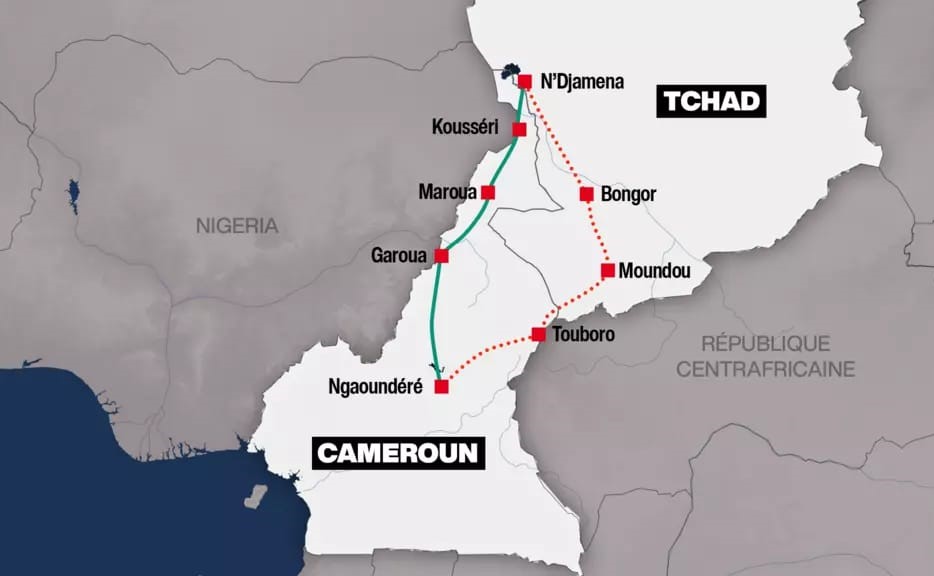
Rail corridor Cameroon-Chad: N’Djamena challenges Yaoundé’s proposed route
The Cameroonian government’s recent endorsement of a railway route linking Ngaoundéré to N’Djamena has triggered immediate opposition from Chad’s authorities. This disagreement highlights deeper issues surrounding regional infrastructure projects governed by unilateral decisions rather than collaborative frameworks.
The proposed 900-kilometer railway line, passing through Garoua, Figuil, Maroua and Kousséri before crossing into Chad, was presented as the most economically and technically viable option by Cameroonian officials. They argue that this route would strengthen Cameroon’s role as a maritime gateway for landlocked Central Africa while extending the country’s rail network toward the Sahel. However, Chad’s Ministry of Transport swiftly dismissed this decision, asserting that no final route had been jointly approved by both nations.
The economic stakes behind the railway project
This rail corridor is envisioned as a transformative infrastructure for both countries. For Chad, which relies on Cameroon’s port of Douala for over 80% of its foreign trade, the railway promises to reduce logistical costs, accelerate trade flows and enhance economic resilience. The project aligns with the Central African Economic and Monetary Community (CEEAC)’s multimodal corridor development strategy, with an estimated investment exceeding several billion dollars.
Key commodities such as hydrocarbons, cotton, livestock, cereals and construction materials would benefit from faster, more cost-effective transportation between the two nations. The railway is also expected to boost Douala and Kribi’s port competitiveness while fostering industrial zones along the route. Yet, the debate over the route’s alignment reveals conflicting national priorities.
N’Djamena’s objections: a matter of national interest
While Yaoundé’s proposed route prioritizes northern Cameroon’s development—aiming to connect major cities like Garoua and Maroua—Chad argues that it fails to adequately serve its agricultural and productive regions. N’Djamena contends that alternative alignments must be considered to ensure equitable economic benefits across both countries. This divergence underscores a fundamental challenge in regional infrastructure projects: the tension between national sovereignty and collective regional growth.
Regional integration tested by competing agendas
The dispute over the railway route exemplifies broader obstacles to Central African integration. Despite commitments to cooperation, many cross-border projects remain driven by individual national interests rather than shared governance. International best practices suggest that successful regional infrastructure requires collaborative decision-making on financing, technical standards and route selection to ensure long-term viability and political buy-in.
Without such cooperation, the risk of project delays or abandonment looms large. The Cameroon-Chad railway, though promising, now faces the challenge of reconciling divergent national visions into a unified vision for regional progress.

 Boureima Amadou