Mariama Hamani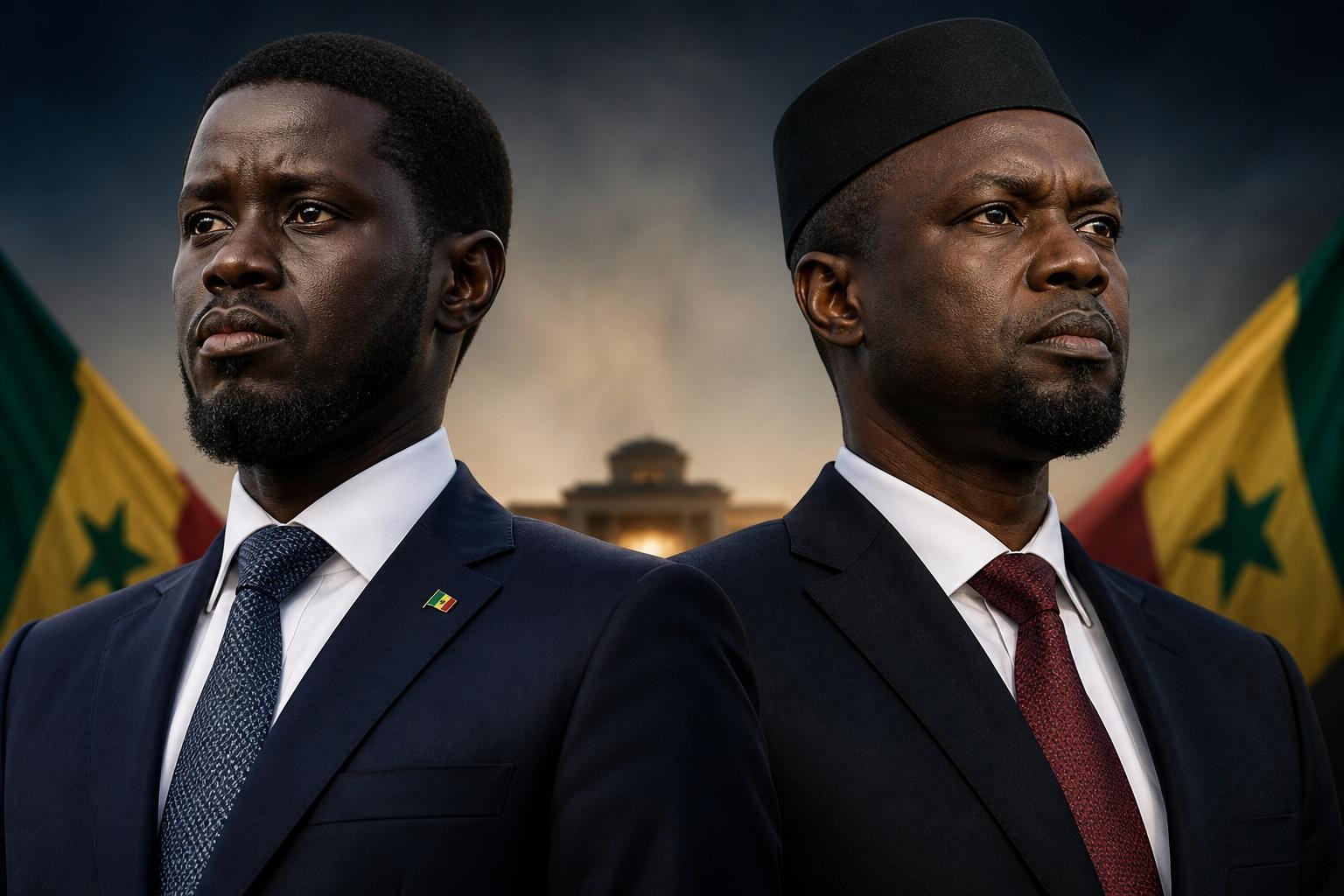
A shift in the executive duo
The initial period of political harmony in Sénégal appears to be transitioning into a more complex era of realpolitik. During the weekend of May 2 and 3, 2026, a significant symbolic change occurred in the dynamic between President Bassirou Diomaye Faye and Prime Minister Ousmane Sonko. By publicly addressing his differences with the Pastef party and expressing a readiness to part ways if national interests demand it, the Head of State has challenged the notion of their inseparable partnership. As the President seeks independence from party constraints, the nation watches closely at what could be the start of a major political realignment.
Clarifying the presidential stance
A specific comment made during a national press interview sparked intense media discussion. Previously, the official narrative emphasized a unified front—a mentor and disciple moving together toward promised reforms. However, the tone has shifted significantly. When questioned about the growing gap between government policy and the aggressive rhetoric of Pastef leaders, President Faye demonstrated unexpected resolve. He reminded the public that he resigned from party roles to serve as the leader of all citizens in Sénégal. His assertion that his ultimate responsibility is to the people, even if it means a potential separation from his political roots, sent shockwaves through Dakar‘s political circles.
The influence of Ousmane Sonko
To grasp the weight of these tensions, one must look at the regime’s beginnings. Elected under the premise that a vote for Diomaye was effectively a vote for Sonko, the President has often worked in the shadow of his Prime Minister’s heavy media presence. The charismatic leader of Pastef has maintained his persona as a party head, frequently holding rallies and making statements that seemed to bypass official presidency communications.
Recently, strategic disagreements have surfaced regarding international relations and debt management. While the Prime Minister favors a radical break from traditional systems, the President adopts a more diplomatic and pragmatic approach. Furthermore, the selection of government officials has caused friction, pitting the President’s preference for technocrats against the party’s push for long-time activists. The contrast between the impulsive style of Ousmane Sonko and the calm authority of Bassirou Diomaye Faye is now undeniable.
Is a political split imminent?
While declaring an immediate divorce might be premature, it is now a recognized political possibility. The President appears to realize that to leave a lasting legacy, he must establish his own identity. Although those close to the Prime Minister’s office attempt to frame these developments as a simple division of labor, the President’s message implies a deeper shift. By signaling his willingness to break away, Faye is informing his supporters that the presidency will not be controlled by any single interest group.
This puts Sénégal in a state of institutional uncertainty, as the country remembers past executive conflicts that led to government paralysis. If a full rupture occurs, the President would face the challenge of leading without the full backing of the Pastef political machine, requiring him to find new alliances or rely more heavily on executive decrees.
The challenge of presidential independence
The primary goal for Bassirou Diomaye Faye is to maintain international confidence in the stability of Sénégal while proving to the electorate that he is the one in charge. Public sentiment is currently divided: some young supporters of Ousmane Sonko view this move as a betrayal, while others who value legal stability welcome a President who fully embraces his constitutional authority.
Faye is currently navigating a difficult path, asserting power without sparking a social crisis that political rivals could exploit. The question is no longer about the personal relationship between the two men, but whether the state can function with two competing centers of authority. We are witnessing the end of a naive political era; governance is about power management rather than brotherhood. Bassirou Diomaye Faye has made it clear that he intends to exercise the full extent of his constitutional powers alone. The partnership that secured their victory may now be the very thing hindering their ability to lead. Sénégal is entering a mature phase where the interests of the State must outweigh those of the party.


 Boureima Amadou