Mariama Hamani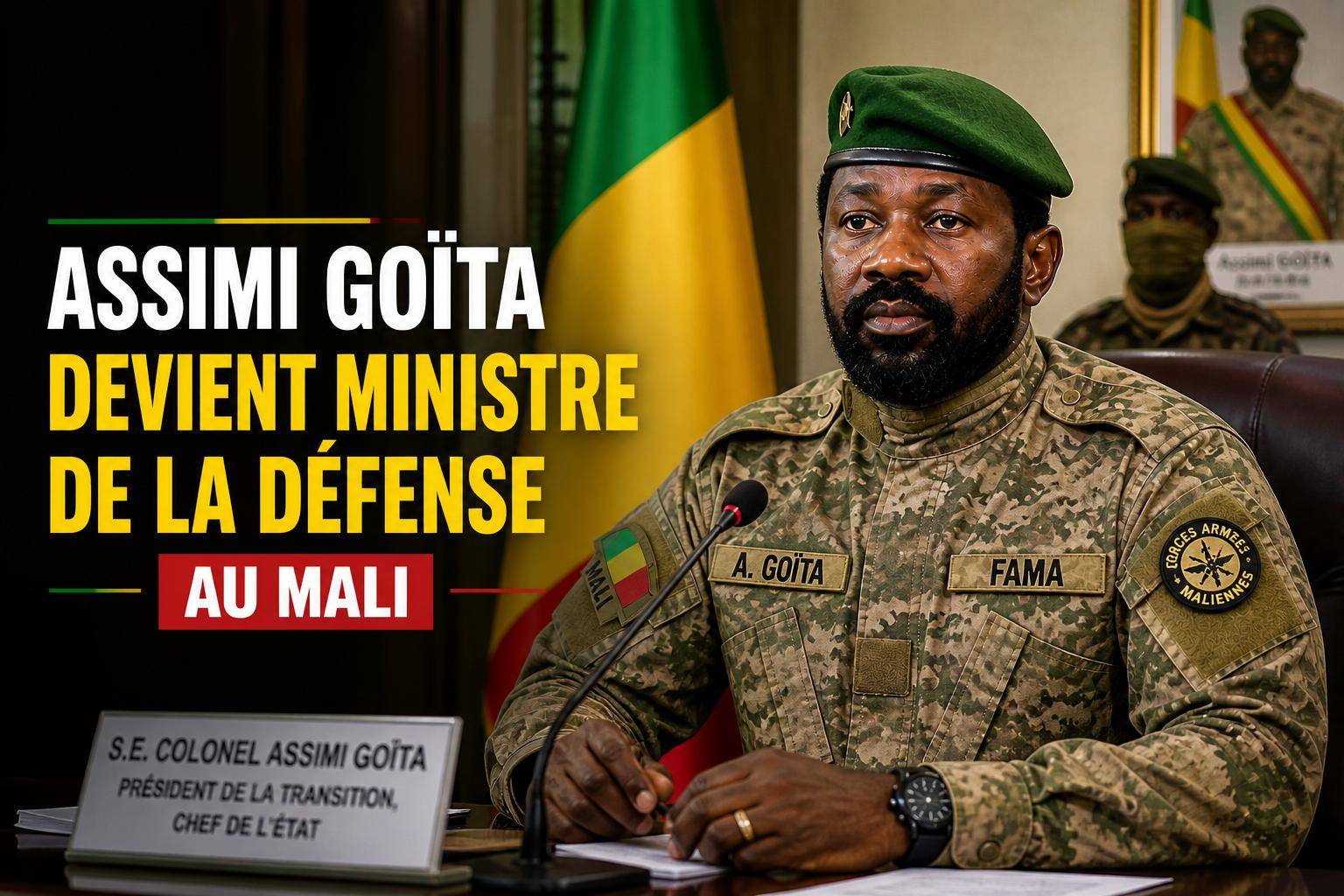
By officially assuming the responsibilities of Minister of Defense in addition to his role as Head of State, Colonel Assimi Goïta has finalized the concentration of power in Bamako. This move is more than a simple administrative shift; it appears to be a recognition of a stalled command structure and a military strategy that is losing momentum. Between the loss of Kidal to the JNIM and the FLA, and the debated effectiveness of Russian military support, Mali is entering an era of unprecedented instability.
The centralization of power at Koulouba
Today in Bamako, all executive paths lead directly to Koulouba. By combining the presidency with the defense portfolio, Colonel Assimi Goïta is no longer just setting a political vision; he has become the primary operational leader of the armed forces. Regional observers suggest this consolidation reflects a deepening mistrust within the inner circle of power.
As the transition period continues to stretch on, this extreme centralization raises a vital question: can one individual effectively manage state governance, regional diplomacy, and the tactical complexities of asymmetrical warfare? This accumulation of roles seems like a high-stakes gamble. By eliminating ministerial buffers, Goïta has placed himself on the front line. Any future military setbacks will now be seen as the direct failure of the Head of State rather than a subordinate.
The reality of Kidal: From celebration to loss
Only months ago, official channels were celebrating the “liberation” of Kidal as a symbol of restored sovereignty and a major achievement for the transition government. However, recent events have dampened those hopes. The city, a vital strategic point in the North, has fallen back under the control of armed groups, notably the Group for the Support of Islam and Muslims (JNIM) and the forces of the Coordination of Azawad Movements (CMA/FLA).
This development is both symbolic and tactical. The insurgent takeover of Kidal suggests that the Mali army, despite rhetoric regarding its growing capabilities, is struggling to hold onto reclaimed territory. The lack of a permanent state administration and a security vacuum allowed for a swift reoccupation by jihadist groups and separatist rebels. The JNIM, in particular, has refined its approach by isolating military outposts and severing supply lines, turning Bamako‘s previous victories into temporary gains.
The Russian partnership under scrutiny
The other cornerstone of Goïta’s security plan is the alliance with Russia, represented by the paramilitary group formerly known as Wagner (now operating as Africa Corps). While this partnership was presented as a sovereign alternative to France, the actual security outcomes have yet to prove their worth.
Russian forces, though active on the most volatile fronts, often utilize tactics that risk radicalizing local populations. Increasing reports of human rights concerns provide fertile ground for terrorist recruitment. Furthermore, the technical proficiency of these instructors is being questioned as Mali military columns continue to fall victim to deadly ambushes. With Russia occupied by its own external conflicts, there are doubts about its ability to provide the consistent aerial and technological support Mali needs to counter the mobile JNIM forces.
Regional diplomatic isolation
This security crisis is unfolding alongside growing diplomatic isolation. By withdrawing from CEDEAO to establish the Alliance of Sahel States (AES), Mali has bet on security self-sufficiency. However, the reality is that terrorism does not respect national borders, and the country’s frontiers remain highly porous.
By distancing itself from regional cooperation frameworks, Bamako is losing access to essential intelligence and logistical support from its neighbors. Goïta’s decision to hold multiple high-level posts is viewed by neighboring capitals as a move toward authoritarianism, making diplomatic dialogue even more difficult. Mali now finds itself in a contradictory position: attempting to assert sovereignty through military force while appearing increasingly dependent on opaque external actors and a centralized command structure.
The threat of a prolonged conflict
For the people living in Central and Northern Mali, the outlook is grim. Despite shifts in leadership and new geopolitical alliances, insecurity is spreading. Attacks on both military and civilian convoys have become a near-daily occurrence.
The new “President-Minister of Defense” is taking a significant risk. If the security environment does not see rapid improvement, the social unrest currently held in check by strict security measures could eventually boil over. History shows that excessive concentration of power often precedes major national instability.
To find a way out of this crisis, Mali must reconsider its overall strategy. Pure military force and reliance on mercenary groups have shown their limits. Without a return to inclusive governance and a plan to restore social services across the territory, Colonel Goïta’s efforts may fail to overcome the persistence of armed groups. The time for wartime rhetoric has passed; urgent political realism is required to protect the future of the Mali state.

 Boureima Amadou