Mariama Hamani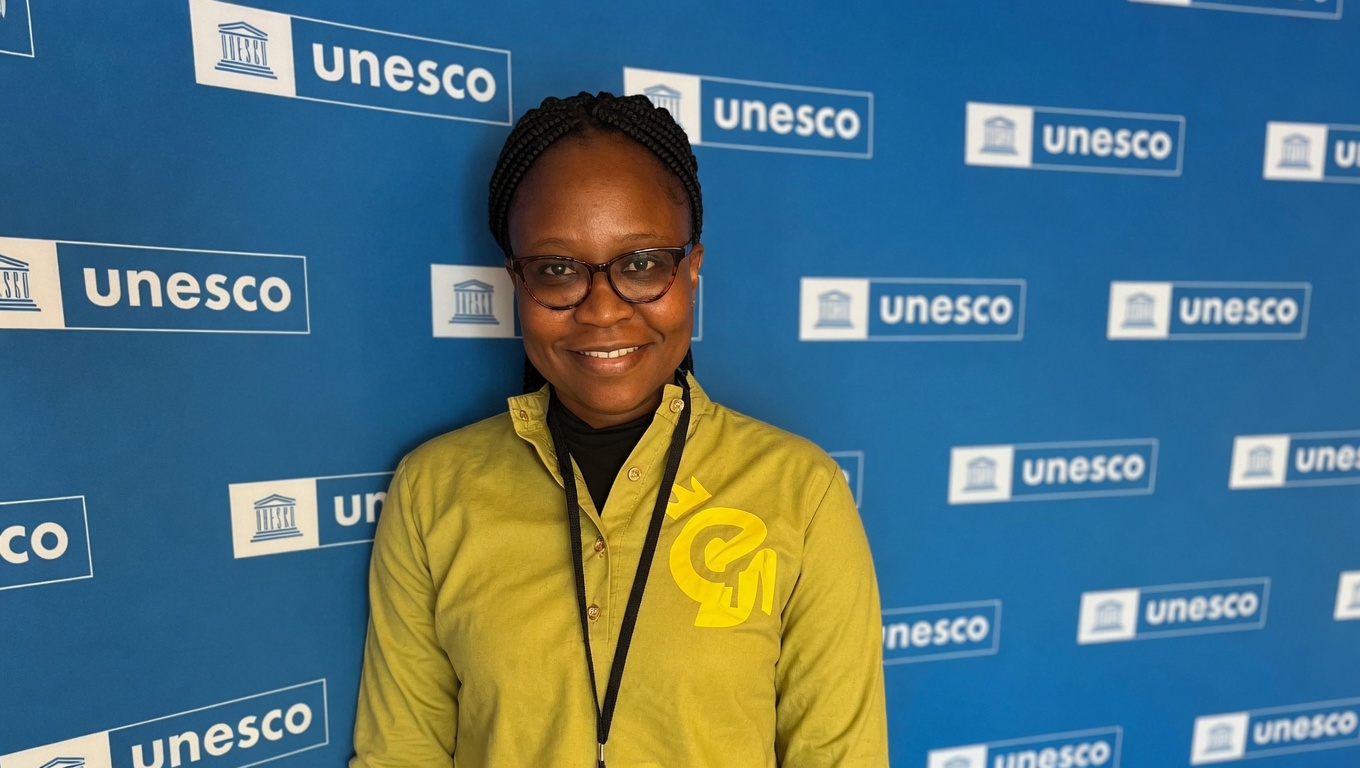
In the heart of Cotonou, the startup SSaFE is redefining the boundaries of technological innovation. Led by chemical engineer Marielle Agbahoungbata, a specialized “filtering robot” powered by artificial intelligence is designed to convert contaminated water into a valuable resource, all while communicating in local dialects.
During a presentation at UNESCO in Paris, Marielle Agbahoungbata shared her vision for a practical solution to her country’s water challenges. Rather than focusing on abstract theories, she introduced a machine capable of not only analyzing water quality but also autonomously determining the most effective treatment method.
A digital brain for cleaner water
Named Watt Air, this robot functions as a compact, mobile laboratory. Using its integrated artificial intelligence, the system evaluates detected pollutants to decide the water’s best use: irrigation, laundry, or safe human consumption.
“The robot optimizes both time and energy. The AI calculates the exact amount of reagents needed with surgical precision, ensuring the resource is managed as efficiently as possible,” the founder explains. In an era of increasing water scarcity and rising costs, this technological advancement helps prevent waste and maximizes the utility of every available liter.
Overcoming literacy barriers through voice technology
The SSaFE innovation is designed to be accessible to everyone, not just technical experts. One of its most significant features is a multilingual voice assistant. Whether a user speaks Fon, Bambara, Swahili, or Wolof, the machine can interact with them.
This allows women in rural villages, where formal education may not always be accessible, to engage with the filtration system to recycle water from domestic tasks. Marielle Agbahoungbata notes with pride that the technology adapts to the user, allowing individuals to manage their water resources even if they have never attended school.
Sèmè City: A hub for local excellence
The development of Watt Air took place within Sèmè City, the premier innovation center in Cotonou. Thierry d’Almeida, the Director General of the center’s research institute, believes that the collaboration between chemists and mathematicians is vital for addressing regional issues. Supported by a $30,000 grant from UNESCO, the project demonstrates that effective solutions for Africa are often born from a deep, local understanding of the environment.
Looking toward 2027
While the robot is currently in the prototype stage, the roadmap is clear: a full-scale launch is targeted for 2027. SSaFE is now searching for the necessary partnerships and funding to move the project from the lab into individual homes.
Beyond its technical achievements, Marielle Agbahoungbata emphasizes that the true value of technology lies in its ability to save time, protect health, and ensure that no one is excluded based on their language or background.

 Boureima Amadou