
 Mariama Hamani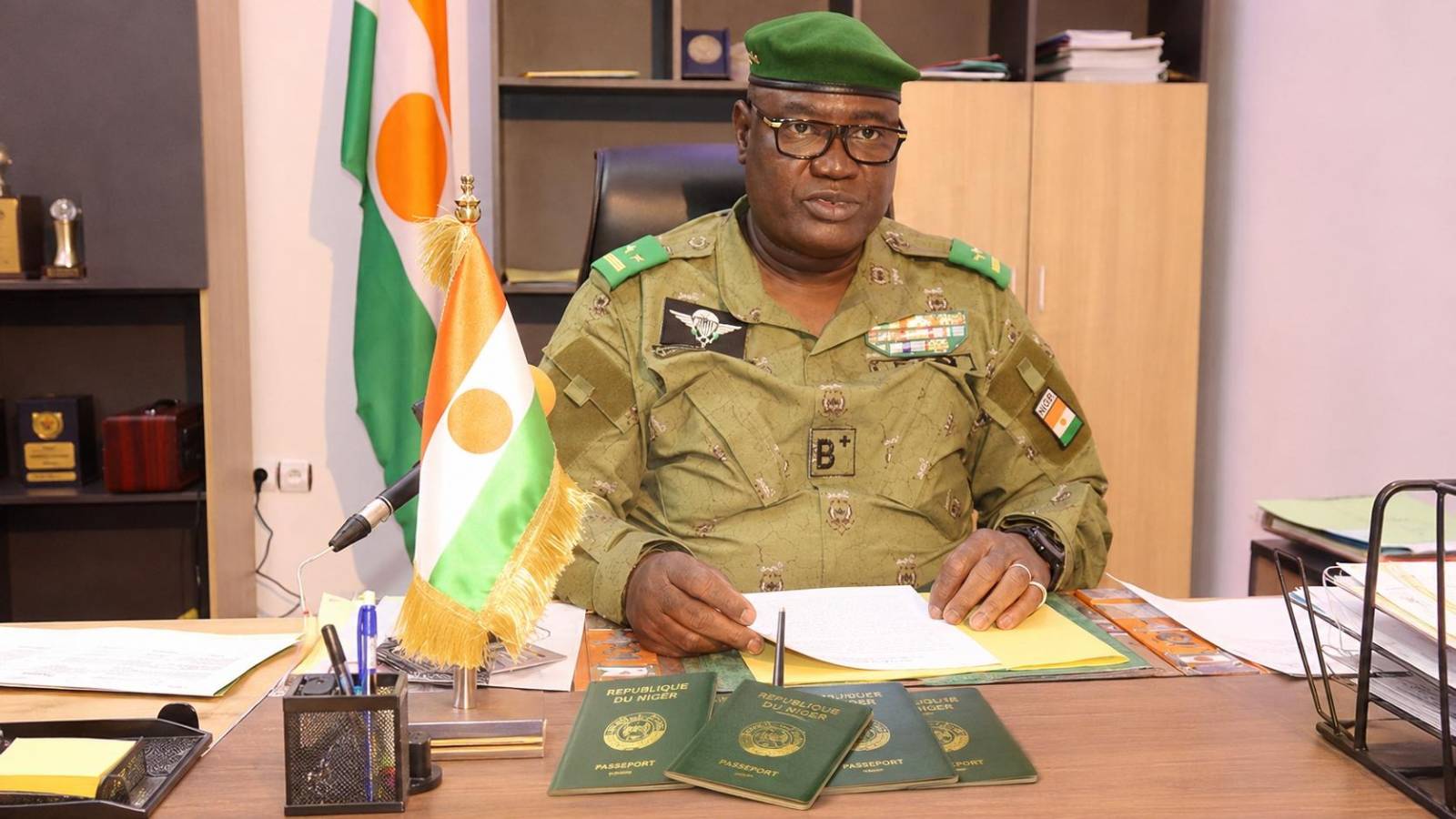
The Spanish Ministry of Foreign Affairs has discreetly but decisively recalled its consul from Niamey. This drastic measure follows the dismantling of a sophisticated Schengen visa trafficking network, where individual visas were reportedly sold for over 2.5 million FCFA. In Niger, this diplomatic controversy exposes deeply rooted, organized corruption reaching the highest levels of the state, directly implicating the inner circle of General Mohamed Toumba, the third-ranking member of the National Council for the Safeguard of the Homeland (CNSP). Amidst this political storm, which challenges the junta’s promises of moralizing public life, the profound silence of transitional president General Abdourahamane Tiani raises significant questions.
Spanish consul removed amidst scandal fallout
The diplomatic repercussions have now extended across the Mediterranean. Madrid has made its decision clear: the Spanish consul in Niger has been officially relieved of duties. While Spanish diplomacy typically remains tight-lipped about personnel changes, security sources in Niamey confirm that this dismissal is directly linked to the ‘visa affair’ that has captivated the Nigerien capital for weeks. The Spanish diplomat is suspected of having either actively facilitated or shown culpable complacency in the validation of Schengen visa applications outside official channels. This move by Madrid serves as a significant rebuke of consular management in Niamey, and more importantly, it underscores the international scope of a fraudulent scheme that maintained direct access within European diplomatic missions.
Systemic corruption at the heart of the junta
Beyond the Spanish diplomat’s revocation, a far more troubling reality emerges for the transitional authorities: the presence of systemic, organized corruption embedded within the Nigerien state apparatus itself. A meticulous technical investigation conducted by the Directorate General of Documentation and External Security (DGDSE) revealed that this trafficking operation was not the work of petty smugglers, but a highly lucrative enterprise orchestrated from the privileged circles of power. Central to these investigations is the wife of Brigadier General Mohamed Toumba, who serves as Minister of Interior and the CNSP’s number three. Leveraging her husband’s considerable influence, she allegedly established a system to bypass standard attribution procedures. Each visa or residency permit was reportedly monetized at the exorbitant sum of 2.5 million CFA francs (approximately 3,800 euros). This prohibitive cost for the average Nigerien targeted affluent merchants and wealthy aspiring emigrants, effectively transforming the diplomatic privileges of the new military elite into a remarkably profitable state-sponsored business.
DGDSE’s offensive and internal power struggles
The credit for dismantling this network goes to Lieutenant-Colonel Souleymane Balla Arabé, head of Nigerien counter-intelligence. By intercepting communications and gathering substantial material evidence against the Minister of Interior’s entourage, the DGDSE has dealt a critical blow to the CNSP’s outward display of unity. This intelligence offensive indicates that General Toumba is now on the defensive, his position weakened amidst intense internal rivalries within the junta. For a Minister of Interior, expected to embody order and rigor, having his name associated with a cross-border criminal enterprise severely undermines his legitimacy among the troops and his peers.
Tiani’s deafening silence
In the face of this political earthquake and the internationalization of the scandal through the Spanish consul’s revocation, the head of state’s stance is under intense scrutiny. To date, General Abdourahamane Tiani has maintained complete silence. No official communiqué, no public statement, and no precautionary measures have been taken against General Toumba or his office. This silence is interpreted by many observers in Niamey as a politically charged decision, possibly even passive complicity. Following the coup d’état on July 26, 2023, the junta had pledged to rebuild institutions and wage an uncompromising fight against impunity and the excesses of the former regime. By refusing to decisively act and sanction the regime’s number three, General Tiani jeopardizes the very credibility of the transition and conveys the impression of prioritizing the protection of the inner circle of power over the pursuit of justice for the Nigerien people.
The Spanish consular visa affair marks a critical juncture for Niger. It highlights the paradox of a regime that advocates for a break with the West while illicitly enriching itself through access to the Schengen area. The revocation of the Spanish consul demonstrates that Madrid has chosen to address its internal issues. The question remains whether General Tiani will possess the political courage to do the same in Niamey, or if the preservation of the junta’s internal power balances will definitively outweigh the promises of probity made to the people of Niger.


 Boureima Amadou





