Mariama Hamani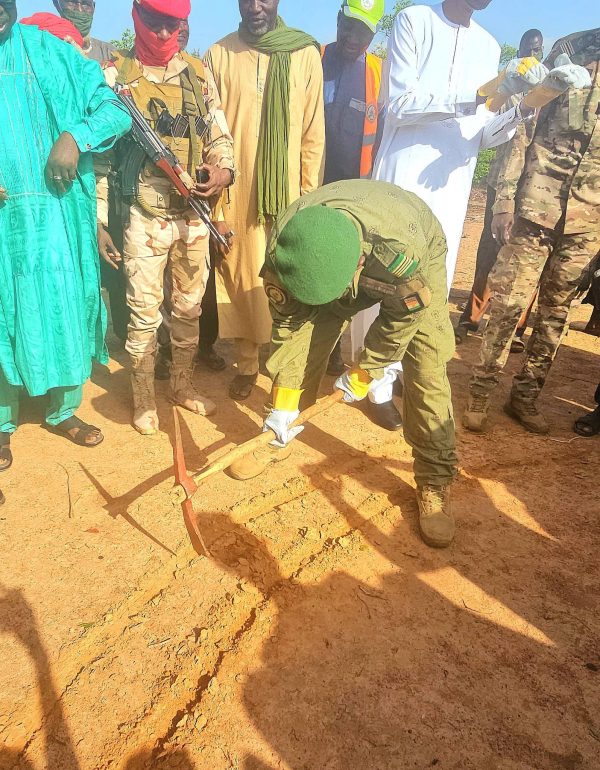
Gaya, June 5, 2026 — The urban municipality of Gaya has launched groundbreaking restoration work on 500 hectares of degraded pastoral land, funded by the Integrated Urban Development and Multisectoral Resilience Project (PIDUREM). The initiative kicked off at two symbolic sites—one in Gaya and another in Tara.
Revitalizing degraded landscapes for sustainable pastoralism
The PIDUREM-funded project aims to rehabilitate severely degraded pastoral plots, fortify soil against erosion, and enhance land capacity for livestock grazing. Key interventions include reforestation, erosion control measures (both hydric and wind-based), construction of bypass structures, and rehabilitation of access roads to streamline pastoral activities and monitoring.
The effort brings together local authorities, environmental agencies, and ten partner NGOs, all present during the symbolic groundbreaking ceremony presided over by the Gaya department prefect. Among the attendees were the municipal administrator, the prefecture’s secretary general, the canton chief representative, PIDUREM’s regional coordinator, regional and departmental environment directors, and local community leaders.
Residents from Gaya and Tara, who will directly benefit from the restored lands, also participated in the event, underscoring the community-driven nature of the initiative.
Climate resilience and economic empowerment
Local authorities emphasize that these interventions will bolster community resilience against climate change impacts while safeguarding natural resources. PIDUREM’s regional coordinator highlighted that the project will generate temporary employment for nearby populations, injecting economic momentum into the area during the implementation phase.
This initiative is part of a broader PIDUREM strategy to combat land degradation, enhance food security, and mitigate farmer-herder conflicts in the region. Technical and environmental monitoring will track progress, allowing for adaptive management based on real-time results.
Collaborative efforts for long-term impact
The project targets pastoral households and herders in neighboring villages, ensuring restored and secured grazing routes. Partner NGOs will lead awareness campaigns to promote sustainable land stewardship and maintain completed infrastructure. Immediate action has already begun, with planting and initial site preparations underway. Regular assessments and progress reports will ensure transparency and guide future funding decisions.

Mariama Hamani
Journalist
Boureima Amadou
- News
- October 23, 2026
- 5 views
Benin’s decisive shift: how bold reforms catapulted it into the global economic freedom top 100
In a landmark breakthrough, Benin has secured the 99th global position and 11th African rank in the 2026 Economic Freedom of the World Index, published by Canada’s Fraser Institute. This…

- News
- October 23, 2026
- 10 views
Mali’s military at a decisive crossroads: stolen arms and desertions fuel internal collapse
The Malian transitional authorities have long touted the growing strength of the Malian Armed Forces (FAMa) and their sovereign control over the territory. Yet the opening of the Military Tribunal…