Mariama Hamani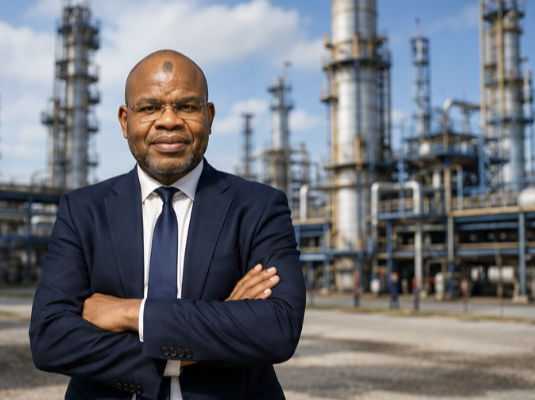
The promises of a radical Refoundation and economic sovereignty made eighteen months after the July 26, 2023 coup in Niamey have collided with the harsh reality of Niger’s petroleum sector. At the heart of this power struggle sits the newly appointed Petroleum Minister, Hamadou Tini, whose actions are now under scrutiny for violating the most basic ethical standards. Accused of wearing multiple hats simultaneously, the former Mazars executive is leveraging his government position to reinstate contracts for his private firm, demanding unrestricted access to SORAZ’s sensitive financial records.
This unfolding scandal reveals a troubling return to business as usual, where state resources are weaponized for personal and corporate gain. The audit process, originally intended to expose mismanagement, has instead become a tool for purging rivals and enriching insiders. At the center of the storm is the Société de Raffinage de Zinder (SORAZ), whose financial transparency is now a bargaining chip in a high-stakes political game.
From anti-corruption rhetoric to corporate capture
When the National Council for the Safeguard of the Homeland (CNSP) seized power, it vowed to dismantle the corrupt networks that had long exploited Niger’s oil wealth. The state-owned SORAZ, a joint venture with China National Petroleum Corporation (CNPC), was singled out as a symbol of this exploitation. Mazars, the international consulting firm that had audited SORAZ for a decade, was swiftly blacklisted. Officials accused the firm of producing biased reports, catering to foreign interests—particularly those of China. The new regime insisted on hiring an independent, neutral auditor to conduct a thorough financial review of the refinery.
Yet behind the scenes, influence peddling and backroom deals quickly undermined these lofty principles. In January 2026, just months after Mazars was publicly discredited, Hamadou Tini—once a senior partner at the firm—was appointed Petroleum Minister. His rapid rise, reportedly backed by General Mody, marked the unexpected rehabilitation of Mazars within Niger’s corridors of power.
One man, four roles: the anatomy of a conflict of interest
From his first day in office, Minister Tini moved swiftly to reclaim control over SORAZ’s financial oversight. Within weeks, he ordered a new audit, this time insisting it be entrusted solely to Mazars—his former employer. The justification? Completing unfinished work and ensuring the firm was duly compensated. This decision, however, created an unprecedented conflict of interest.
The minister now fulfills four critical roles in one: he is the client who commands the audit on behalf of the Nigerien state, the service provider whose private firm executes the audit, the recipient of the final report, and the signatory authorizing public funds for payment. Such a concentration of authority strips the state of any meaningful safeguard against manipulation.
Critics argue that an auditor cannot objectively review a public enterprise when their former boss now holds the purse strings. The independence of the audit process has effectively been neutralized by the very person who should be overseeing it.
The demand for secrets: a minister’s bold move
The strategic maneuvering didn’t stop at contract signatures. In a sweeping directive, Minister Tini ordered the SORAZ management to hand over, within eight days, all financial, accounting, technical, and operational documents—without delay or restriction. This sweeping request targets the same sensitive data that SORAZ’s leadership and Chinese partners had previously refused to disclose, citing business confidentiality.
Local observers use a local proverb to describe the situation: “He who peeks through the keyhole already knows what’s on the table.” As a former Mazars executive, Minister Tini is intimately familiar with SORAZ’s financial vulnerabilities. His demand for full access is not just about transparency—it’s about securing the evidence needed to justify his agenda.
The mystery of fallen ministers
The sudden instability at the Petroleum Ministry over the past three years raises serious questions. Three ministers have come and gone in rapid succession—each departure shrouded in secrecy and linked, directly or indirectly, to the SORAZ affair.
In June 2024, Minister Mahaman Moustapha Barké announced a major financial audit of SORAZ. By January 2025, he was arrested and held incommunicado by the Directorate General of Documentation and External Security (DGDSE) for nearly a year, without formal charges. His successor, Dr. Sahabi Oumarou, appointed in January 2026, attempted to restart the audit in February of that year—only to be removed from office shortly thereafter.
Insiders now allege that Hamadou Tini played a pivotal role in the downfall of both predecessors. While still with Mazars, he allegedly prepared damning internal memos and reports aimed at discrediting their management of SORAZ. The goal was clear: remove obstacles to Mazars’ return and position himself as the ideal candidate for the ministerial post.
The illusion of reform: oil wealth under new management
The SORAZ scandal lays bare the contradictions of Niger’s post-coup regime. While citizens endure the economic fallout of international isolation and wait in vain for the promised dividends from oil production, the country’s hydrocarbon wealth appears to be flowing into private hands.
What began as a public demand for transparency and accountability has devolved into a factional power struggle. The audit, once heralded as a symbol of reform, has been repurposed: it serves as both a shield for conflicted interests and a revenue stream for Mazars. The vision of a Refoundation rooted in justice and efficiency has been replaced by a system where the rules change only in favor of the beneficiaries.

 Boureima Amadou