Mariama Hamani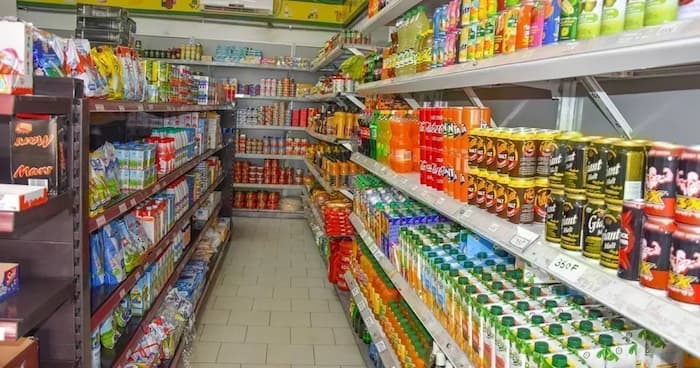
In a nation grappling with persistent inflation, a striking observation has reignited the critical debate surrounding the high cost of living in Senegal. A video produced by French content creator Simon Labas, originally published in December 2025, has recently recirculated across social media platforms. The content meticulously details a series of everyday product prices recorded in Dakar shops, juxtaposing them with the costs of comparable items found in Paris.
The comparison begins with whole chicken, priced at 2,610 F CFA per kilogram in the Senegalese capital, a figure notably higher than the Parisian equivalent of 2,300 F CFA. Butter from the popular Elle & Vire brand follows a similar trend, retailing for 2,990 F CFA in Dakar compared to approximately 1,990 F CFA in France. Cooking oil, a fundamental staple in household budgets, climbs to 6,990 F CFA in Senegal, while across the Mediterranean, it costs around 6,000 F CFA.
The financial gap widens significantly for other common household goods. A packet of Chocapic cereals is displayed at 5,250 F CFA on Dakar’s shelves, a price more than double the Parisian equivalent, estimated at 1,990 F CFA. Furthermore, a bottle of Soupline fabric softener illustrates this disparity, priced at 9,990 F CFA in Dakar against 5,600 F CFA in Paris, nearly doubling the cost.
Adding to these price discrepancies is a looming logistical challenge set to further impact import costs. Maritime transporter Maersk is scheduled to implement a new handling surcharge starting May 1, 2026. This fee, set at 250 dollars per container – roughly 151,250 F CFA – could potentially reach up to 211,750 F CFA in certain cases. Such an increase is expected to mechanically elevate the cost of imported goods, ultimately passing these higher expenses onto Senegalese consumers.
The renewed sharing of this price comparison has triggered widespread reactions among Senegalese netizens, many expressing surprise at the considerable differences highlighted. Beyond food items, comments frequently cite housing and fuel as particularly burdensome expenses for households, especially in light of recent fuel price hikes enacted by authorities.
This observation positions Senegal prominently within broader African current affairs, where the nation is frequently identified among African countries with the highest cost of living. A ranking compiled by Countryeconomy, and reported in 2024, placed Senegal as the second most expensive country on the continent, trailing only Côte d’Ivoire. This underscores a persistent economic challenge for many residents.


 Boureima Amadou