
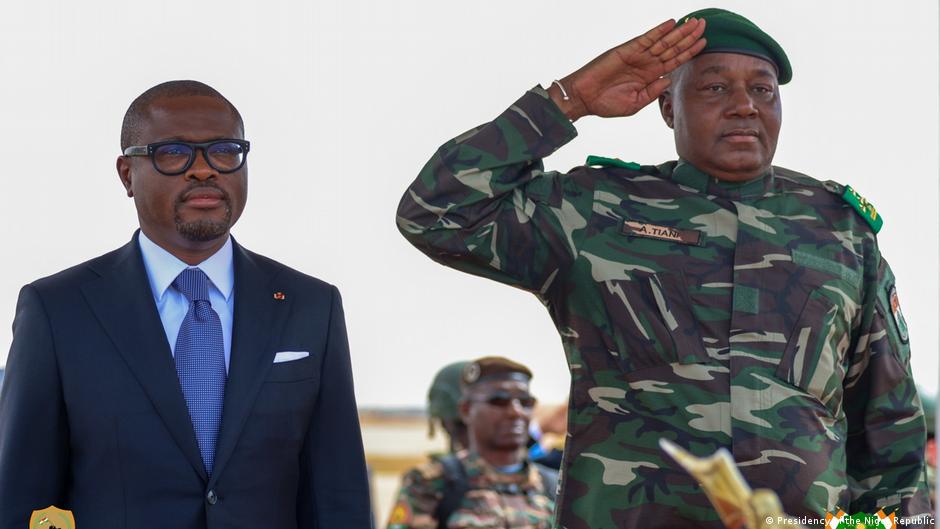
The Nigerien authorities, now three years into their mandate following the 2023 change of leadership, continue to navigate strained relations with the Economic Community of West African States (CEDEAO). The regional bloc’s initial response—issuing sanctions and threatening military intervention—was met with resistance not only from Niamey but also from neighboring Mali and Burkina Faso, both under military rule at the time.
This collective stance led to the formation of the Alliance of Sahel States (AES), marking a decisive break from CEDEAO. While the three nations formally withdrew from the bloc in early 2025, informal channels of communication remain open, creating a delicate but persistent dialogue.
Diplomatic mediation takes center stage
Amidst these tensions, Lansana Kouyaté, former Prime Minister of Guinea, has emerged as a key mediator. His appointment was welcomed by both CEDEAO and the AES, signaling a willingness to explore common ground. At a recent CEDEAO summit in Freetown, the bloc’s new Commission President, Birame Diop of Senegal, was tasked with prioritizing regional security discussions—an agenda that aligns with the concerns of the AES nations.
“This marks the beginning of a promising process,” noted Pape Ibrahima Kane, an expert in international organizations. “Both sides are aligned on the need for dialogue, and the focus now is on addressing the Sahel’s pressing security challenges.” Kane highlighted the Nigerien junta’s reliance on Nigeria and Benin—both CEDEAO members—for critical resources like electricity and port access in Cotonou. He emphasized that Kouyaté’s mediation must account for these dependencies to ensure sustainable solutions.
New leadership, renewed hope
The appointment of Bassirou Diomaye Faye as CEDEAO’s rotating president and the election of Romuald Wadagni in Benin have injected fresh momentum into diplomatic efforts. Both leaders have taken swift action: Faye visited the AES countries shortly after assuming office, while Wadagni prioritized Niamey on his first official trip, signaling a shift from the confrontational approach of previous administrations.
“Faye and Wadagni are in a stronger position than their predecessors,” Kane observed. “They bring a new perspective to CEDEAO’s strategy, one less rigid than before.” This evolving dynamic is expected to foster more pragmatic engagements, particularly as the bloc’s leadership in Abuja prepares to roll out revised cooperation frameworks.
The fate of Mohamed Bazoum
The detention of former Nigerien President Mohamed Bazoum remains a contentious issue, complicating efforts to normalize relations. Sahanine Mahamadou, a senior advisor to Bazoum, argued that the military’s refusal to engage in dialogue undermines Niger’s stability. “If these leaders are truly patriotic, they must pave the way for civilian governance,” he stated, echoing calls for Bazoum’s reinstatement. The European Parliament’s recent resolution condemning Bazoum’s detention—passed overwhelmingly in March—further strained Niamey’s relations with international partners, which the junta dismissed as interference.
Meanwhile, Jérôme Pigné, founder of the Sahel Strategic Security Network, posed a critical question: “How can the EU balance its principles with realpolitik in its dealings with Niger?” Pigné acknowledged that Bazoum’s detention poses a significant obstacle but stressed the need for continued engagement. “Dialogue is essential, and Europe must rethink its cooperation model with Niger without compromising its values.”
Analysts suggest that the EU could support the Sahel through enhanced military cooperation—such as intelligence-sharing and security training—as well as economic initiatives. However, they caution against expecting immediate behavioral changes from the juntas, emphasizing the importance of long-term political engagement with regional stakeholders.
More Stories
Mounting pressures challenge military governance in Burkina Faso and Niger
Abuja’s steadfast sadR support challenges Morocco’s gas pipeline vision
Gabonese opposition leader’s detention: lawyers point to ‘irregular’ old financial dispute