Mariama Hamani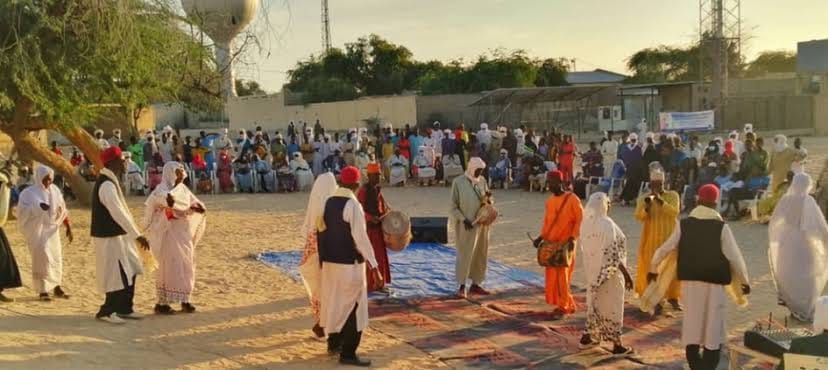
Weddings in N’Djamena: a fusion of Chadian and Sudanese traditions
In N’Djamena, the capital of Chad, wedding ceremonies are evolving in a way that reflects both local heritage and foreign influences. While these changes bring fresh energy to celebrations, they also raise concerns about the future of Chadian cultural identity. Increasingly, Sudanese customs are shaping the way weddings unfold in the city, creating a blend of traditions that some see as enriching, while others fear may overshadow local practices.
Modern ceremonies versus traditional values
The modern Chadian wedding, particularly in urban areas like N’Djamena, now incorporates elements that were once foreign to local customs. One of the most visible changes is the inclusion of the henna ceremony, where both the bride and groom adorn their hands and feet with intricate designs. The groom is often paraded in a festive procession to the bride’s home, where he carries her in his arms in front of guests before transporting her to his own residence. Days later, another gathering takes place where he presents her with jewelry, a practice reminiscent of Sudanese wedding traditions.
In contrast, traditional Chadian weddings were marked by solemnity, respect for elders, and the guidance of family members. Before the ceremony, the couple had limited interaction, and the bride would leave her family home accompanied by her mother and grandmothers. These elders would share wisdom on patience, household responsibilities, and the virtues of marriage. A week after the wedding, the bride’s family would symbolically entrust her to neighbors, asking them to guide her with advice and encouragement—a practice that reinforced community bonds.
From griots to modern entertainment
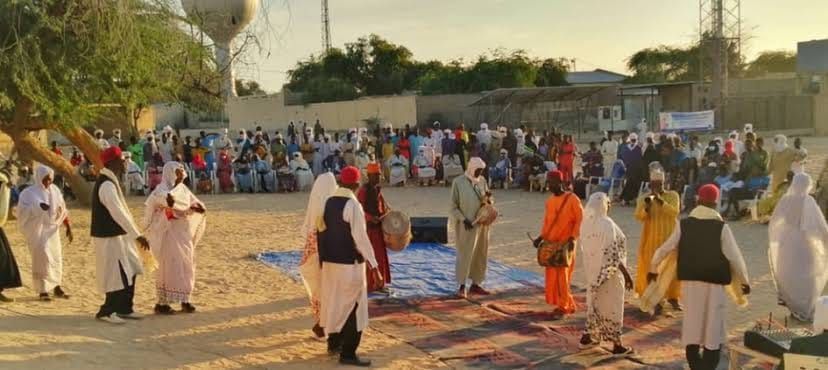
The shift in wedding customs extends beyond rituals to the very way celebrations are conducted. Traditional griots, drummers, and communal songs that once narrated the history and values of Chadian communities are being replaced by contemporary entertainment. Elders and cultural guardians worry that this transformation risks eroding the transmission of ancestral knowledge to younger generations. In some neighborhoods of N’Djamena, the line between a Chadian and a Sudanese wedding has become so blurred that guests struggle to tell them apart.
« A Chadian wedding used to be a school of life, » says a respected elder from the Bololo district. « The elders spoke, the youth listened, and everyone left with a lesson. Today, the focus is on spectacle rather than wisdom. »
Voices from the community
Maman Azma, a mother of three and director of the Lamy Fortain association, expresses concern about the fading of local customs. « Our daughters today are familiar with foreign wedding styles, but many no longer know the traditions their grandmothers practiced. If we don’t pass them down, they will disappear forever, » she warns.
Not everyone views these changes negatively. One newlywed, who recently celebrated his marriage in N’Djamena, sees the blending of traditions as a natural evolution. « We borrow what we find beautiful from other cultures, but that doesn’t mean we reject our own. The goal is to preserve the core values of marriage, » he explains.
Balancing openness and preservation
The debate over these changes highlights a broader question: how can Chadian society embrace cultural exchange while safeguarding its own heritage? Cultural experts emphasize that the solution isn’t to reject outside influences but to ensure that Chadian traditions remain alive in the hearts and minds of future generations. Without conscious effort, the unique customs that define Chadian weddings could fade into obscurity, leaving only traces of what once was.

 Boureima Amadou