Mariama Hamani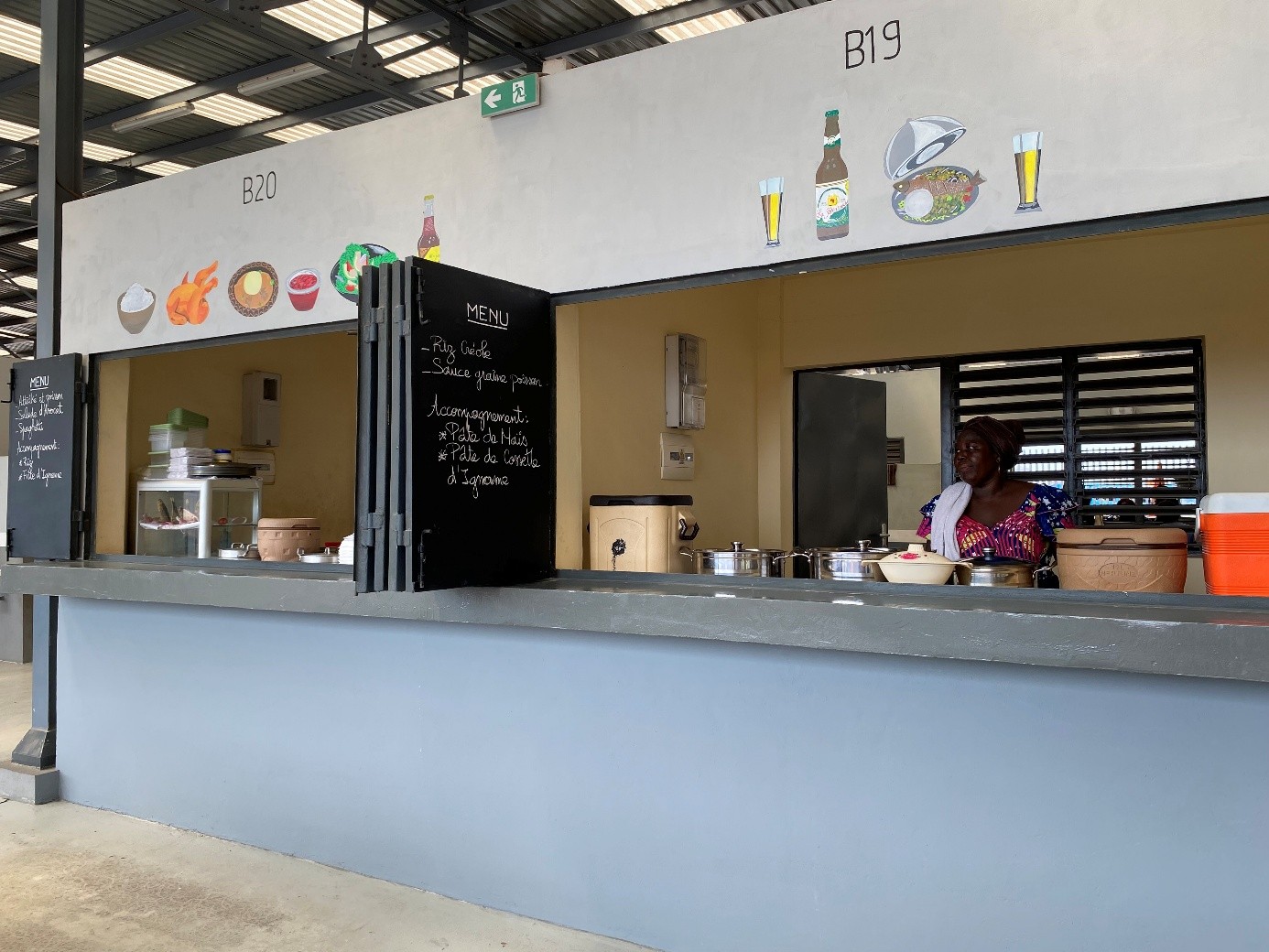
Addressing the challenge
How can Cotonou’s port-area street vendors maintain their livelihoods while ensuring both food safety and fair working conditions for themselves and their customers?
Solution implemented
The Autonomous Port of Cotonou (PAC) launched a comprehensive consultation process to transform the working conditions of food vendors operating along the port access road. Recognizing the urgent need for better hygiene and safety standards, the port authority invested in constructing modern, weatherproof facilities complete with running water and electricity. This initiative reflects the PAC’s commitment to social responsibility and environmental stewardship for neighboring communities.
Transforming port-side commerce
The Autonomous Port of Cotonou has long prioritized social and environmental progress alongside its core operations. In 2024, this commitment culminated in the inauguration of a 3,000 m² covered market space featuring fully equipped vendor stalls, kitchen facilities, and sanitation infrastructure. Previously, 98 vendors operated along the roadside without protection from traffic or weather, unable to prepare meals on-site or maintain proper hygiene standards.
The new facilities provide clean, secure working environments where vendors can store inventory and serve a diverse clientele including port workers and neighborhood residents. The project, which cost over 600 million FCFA, involved extensive stakeholder consultations. Beyond improving working conditions and financial stability for vendors—who now benefit from increased sales—the initiative has fostered a more inclusive local economy. Early data indicates a 20% sales increase, with ongoing assessments tracking additional benefits such as reduced waste and incident rates.

 Boureima Amadou