Mariama Hamani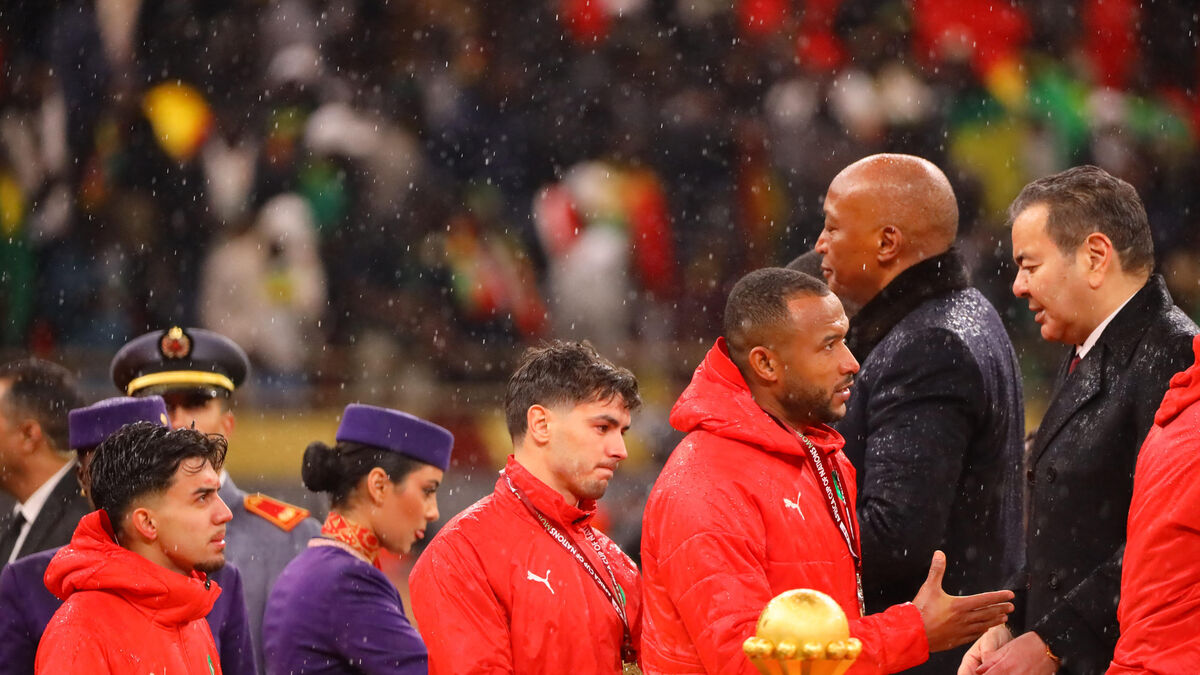
The dust has barely settled on Africa’s biggest football spectacle, and the 2025 Africa Cup of Nations (AFCON) final remains a hot topic. After an electrifying 120-minute clash in Rabat, where Senegal appeared to lift the trophy in dramatic fashion, the Confederation of African Football (CAF) made a stunning announcement: the title would be awarded to Morocco on a walkover.
This reversal stems from Senegal’s abrupt departure from the Prince Moulay Abdellah Stadium just moments after a contentious penalty decision in favor of Morocco went unscored by Brahim Díaz in a nerve-wracking shootout.
Why did the CAF rule in Morocco’s favor?
The continental governing body cited Article 84 of the AFCON regulations, which states: “Any team that exits the field before the official end of play without referee authorization forfeits the match and is eliminated.”
According to the CAF Appeals Jury’s official statement, this provision was triggered when the Senegalese squad walked off the pitch following the award of the decisive penalty. The result was consequently recorded as a 3-0 technical victory for Morocco, effectively rewriting the outcome of the final.
Key moments that led to the decision
- Controversial refereeing: The match was marred by a series of contentious calls, including a missed penalty by Brahim Díaz in the shootout—one that many argued should have been awarded to Senegal earlier in the game.
- Protest and exit: Under the orders of coach Pape Thiaw, the Senegalese players, led by captain Sadio Mané, abandoned the field in protest. Only Mané initially remained before being persuaded to return.
- Dramatic finish: Senegal had rallied from behind to force extra time, with Pape Gueye scoring a stunning long-range strike to send the crowd into raptures—only for the celebrations to be cut short by the forfeit ruling.
How Morocco turned the tables
Within days of the final, the Royal Moroccan Football Federation (FRMF) lodged an official appeal, arguing that Senegal’s actions violated the integrity of the competition. The federation emphasized that such behavior, if unchecked, could undermine the credibility of African football.
“This isn’t just about one match—it’s about safeguarding the spirit of the game,” a federation spokesperson stated. They drew parallels with past CAF cases, including the 2018–19 CAF Champions League final, where Wydad Casablanca’s walkout led to a similar forfeit ruling in favor of Espérance Sportive de Tunis.
What’s next for Senegal?
The Senegalese Football Federation (FSF) has vowed to fight the decision, calling it “unprecedented, unjust, and unacceptable.” They have announced plans to appeal to the Court of Arbitration for Sport (CAS) within ten days.
In a bold statement, the FSF declared: “We will defend our rights and the integrity of Senegalese football with all legal means available.” The federation had already planned a victory parade at the Stade de France for March 28 before the ruling—now, their focus shifts to overturning what they view as a flawed decision.
Meanwhile, Morocco’s football authorities have welcomed the ruling, reaffirming their commitment to “fair play, transparency, and the stability of African competitions.”
Echoes of past controversies
This isn’t the first time a CAF final has been decided off the pitch. In 2019, a similar protest during the Champions League final led to a forfeit, and the CAS ultimately upheld the decision. Analysts suggest a precedent may be set—one where strict adherence to regulations takes precedence over in-game drama.
Reactions across Africa
The decision has sparked a wave of emotions. Senegalese players and fans alike have expressed disbelief and outrage, with defender Moussa Niakhaté posting on social media: “Come and get the trophy—they’ve lost it! They’re crazy.” Others, like Nice goalkeeper Yehvann Diouf, humorously celebrated Senegal’s “two stars,” while former international Famara Diedhou poked fun at Morocco: “Will the victory parade be in Rabat or Casablanca?”
The football world now awaits the CAS ruling, which could either solidify Morocco’s triumph or reignite the debate over justice in African football.

 Boureima Amadou