Mariama Hamani
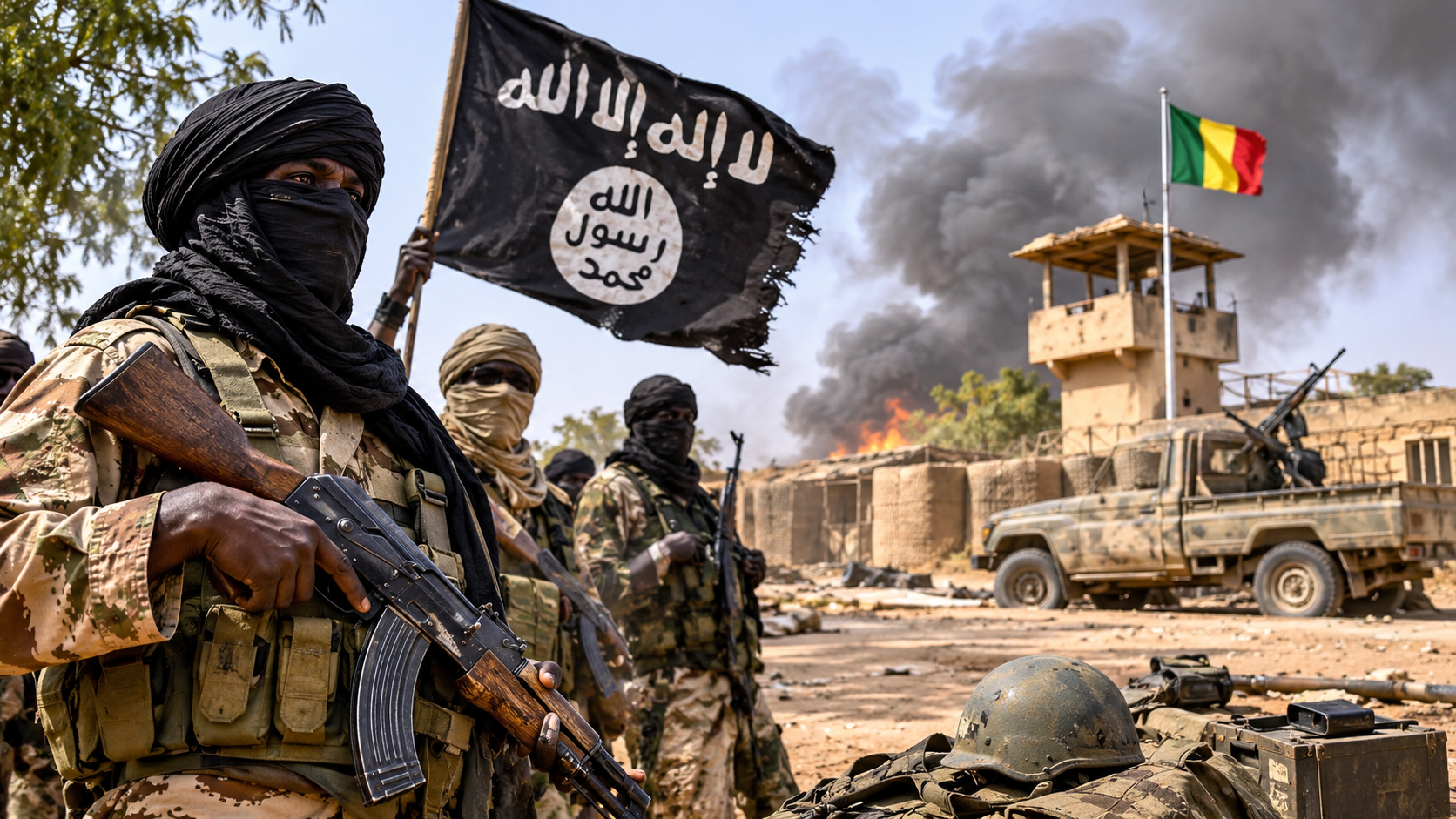
In a dramatic escalation of violence, Mali’s central region of Mopti witnessed a decisive jihadist assault over the weekend, marking a potential turning point in the country’s ongoing security crisis. The attack, claimed by the Group for the Support of Islam and Muslims (JNIM), targeted a military outpost near Bayman, temporarily occupied by pro-government militias. The militants’ bold maneuver underscores the fragility of Mali’s security architecture and raises critical questions about the efficacy of its military partnerships.
From rhetoric to reality: JNIM’s latest offensive challenges Bamako’s narrative
The assault on the Bayman position comes at a precarious moment for Mali’s military leadership. While authorities have repeatedly touted progress in counterterrorism operations including over 850 airstrikes and the neutralization of more than 4,800 militants since May 2026 ground realities paint a starkly different picture. JNIM’s claim of seizing the site, described as a former stronghold of so-called “Russafricans” (pro-government militias with alleged Russian ties), suggests that even fortified positions remain vulnerable to determined attacks.
Casualties remain shrouded in uncertainty
As with many such engagements, independent verification of casualties has proven elusive. The JNIM statement alleges significant losses among pro-government forces, though no official tally has been released. This lack of transparency is not uncommon in Mali’s conflict zones, where reports of fatalities often emerge weeks after the fact or not at all. What is clear, however, is that the region’s instability shows no signs of abating. A similar high-casualty strike in Dioura this past September, which reportedly killed over 100 Malian soldiers and five Russian paramilitaries, serves as a grim reminder of the jihadists’ capacity to inflict severe damage.
The limits of foreign alliances
Mali’s reliance on external military partnerships, particularly with Russia, has been a cornerstone of its counterterrorism strategy. Joint operations, aerial bombardments, and high-profile claims of victories have dominated official communications. Yet, the persistence of JNIM attacks despite these efforts exposes glaring gaps in the strategy’s effectiveness. Analysts and local observers alike are increasingly skeptical of the discrepancy between the government’s optimistic assessments and the reality on the ground.
For instance, while Bamako asserts that its campaigns have “neutralized” thousands of militants, the continued ability of JNIM to launch high-profile assaults raises doubts about the accuracy or at least the completeness of these claims. The group’s recent gains suggest that territorial control, rather than permanent eradication, may be the more pressing challenge for Mali’s overstretched forces.
What’s next for Mopti’s embattled forces?
The fallout from the Bayman attack extends beyond immediate military setbacks. It also threatens to erode public confidence in the government’s ability to safeguard its citizens. With jihadist groups increasingly posing as the de facto enforcers of order in ungoverned spaces, the risk of further defections or tacit acceptance of militant rule looms large. For Bamako, the question is no longer whether its strategies are working, but whether time is running out to reverse the tide of instability.
A fragile equilibrium
As the dust settles on this latest offensive, one thing is certain: the battle for Mopti is far from over. The JNIM’s audacious strike has shattered any lingering illusions of security, forcing Mali to confront the harsh reality that military prowess alone may not be enough to reclaim the initiative. Whether the government can adapt or whether the ground will continue to slip from its grasp will define the next chapter of a conflict that shows no signs of resolution.
By Mariama Hamani — Journalist


 Boureima Amadou