Boureima Amadou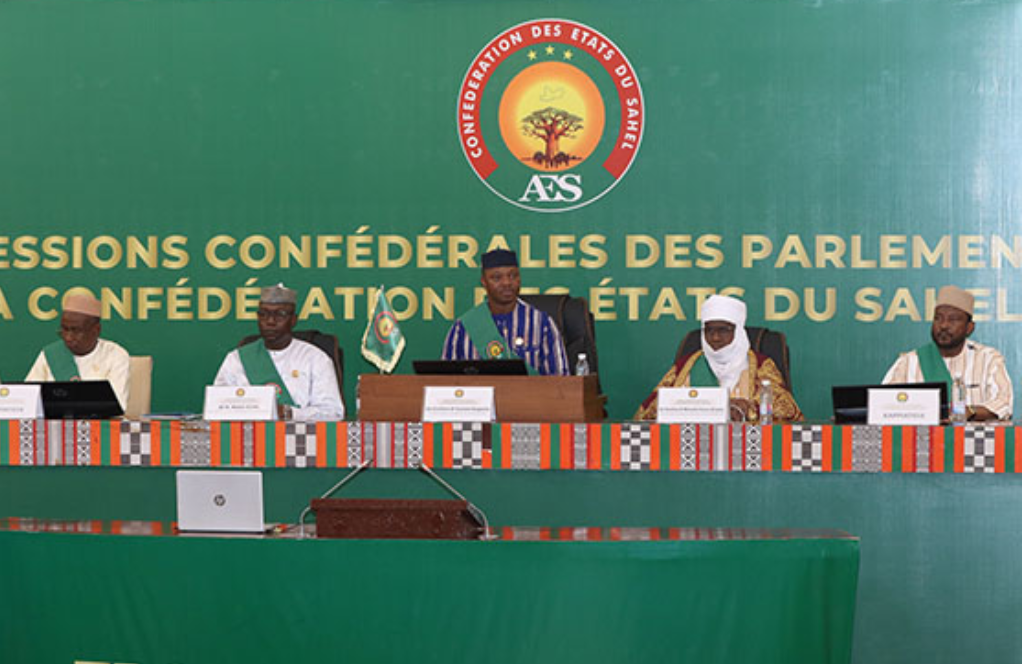
In Niamey, the newly formed Alliance of Sahel States (AES) has marked a significant milestone with the inauguration of its Parliament. However, beyond this visible institutional development, a fundamental question emerges: can genuine regional integration be forged without a foundation of democracy, political pluralism, and a true popular mandate?
The symbolism in Niamey was deliberate. In late August 2026, delegates from Burkina Faso, Mali, and Niger officially established the confederal Parliament of the Alliance of Sahel States (AES). This new body comprises forty-five deputies, with fifteen representatives from each member nation, tasked with contributing to the confederation’s development. These parliamentarians have already endorsed their internal rules and created three specialized commissions focusing on defense and security, diplomacy, and development.
On paper, the concept appears compelling: three nations, having withdrawn from ECOWAS, are now endeavoring to construct their own shared institutions. Official statements portray this Parliament as a key manifestation of rediscovered sovereignty and enhanced Sahelian integration.
Yet, a critical question lingers: whom do these deputies genuinely represent?
An architecture strikingly similar to ECOWAS
The inherent paradox is stark. After condemning ECOWAS as an organization disconnected from its populace and lacking sufficient sovereignty, the AES has paradoxically adopted several of its institutional frameworks: a confederal structure, shared political organs, and now a Parliament designed to address issues pertinent to the citizens of its member states.
This comparison becomes particularly unsettling when examining the parliamentary structure.
The ECOWAS Parliament, comprising 115 seats, is fundamentally conceived as an institution representing the community’s people. ECOWAS has also declared its ambition to transition to direct universal suffrage for electing its parliamentarians. Currently, many of its members are appointed from the national assemblies of its constituent states.
In contrast, the AES has inaugurated a Parliament with 45 members, allocating fifteen seats to each of its three nations. While the numerical difference is clear, the underlying principle remains consistent: to establish a regional assembly tasked with facilitating integration.
Therefore, the crucial distinction lies not primarily in the institutional architecture, but rather in the very source of political legitimacy.
And this, precisely, is where the core issue resides.
A parliament without popular elections?
The confederal AES Parliament emerges within three nations currently under military leadership, following coups d’état: Mali since 2020-2021, Burkina Faso since 2022, and Niger since 2023. The transitions, initially presented as temporary, have extended indefinitely, leaving the prospect of a return to normal electoral processes highly uncertain. International IDEA highlights that military transitions in these three countries have now persisted for several years.
In Burkina Faso, the situation offers a particularly telling example. The military government has indefinitely postponed elections and systematically curtailed political freedoms. In April 2026, Ibrahim Traoré publicly stated that Burkinabè citizens should