Mariama Hamani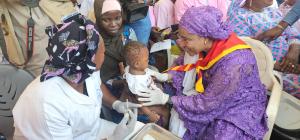
Mali leads Africa with innovative malaria vaccine approach
In a groundbreaking move during World Malaria Day, the Republic of Mali has become the first nation globally to implement a hybrid vaccination strategy against malaria. This pioneering initiative aims to protect children aged five to 36 months, marking a significant milestone in public health for the West African nation.
hybrid vaccination approach targets seasonal malaria surge
The new strategy combines age-based initial doses with seasonal administration to maximize protection during peak transmission periods. Children will receive three monthly doses throughout the year based on age, followed by fourth and fifth doses administered seasonally in May or June, just before the heightened malaria transmission season from July to December. This evidence-based approach aligns peak vaccine efficacy with periods of greatest risk.
Mali has allocated 927,800 doses of the R21/Matrix-M vaccine for this initiative, initially deploying them across 19 priority districts in five regions: Kayes, Koulikoro, Mopti, Ségou, and Sikasso. The country joins 19 other African nations that have introduced malaria vaccines into routine immunization programs, supported by Gavi, the Vaccine Alliance.
Mali faces significant malaria burden
According to the World Health Organization’s 2024 Malaria Report, Mali accounted for 3.1% (8.15 million) of global malaria cases and 2.4% (14,328) of malaria-related deaths worldwide in 2023. The country ranked among the 11 nations with the highest malaria burden globally and was one of eight countries where malaria cases increased significantly (by 1.4 million) between 2019 and 2023. The African Region bears 94% of global malaria cases and 95% of deaths.
experts highlight vaccine’s potential impact
The Minister of Health and Social Development of Mali, Colonel Assa Badiallo Touré, emphasized the collaborative effort behind this achievement: “This vaccine introduction represents a monumental challenge that all stakeholders must embrace until full-scale implementation. We are fully committed to implementing it immediately for the benefit of the Malian people, strengthening our efforts to reduce the disease burden.”
Dr. Sania Nishtar, Gavi’s CEO, praised Mali’s initiative: “Gavi commends the Government of Mali’s commitment to saving lives and reducing the devastating effects of malaria on families, communities, and hospitals. With vaccines deployed across 20 countries and over 24 million doses delivered, consistent funding remains essential to ensure equitable access to this vital tool.”
The R21/Matrix-M and RTS,S/AS01 vaccines, both WHO-prequalified, have demonstrated remarkable efficacy in clinical trials. Phase 3 trials showed more than 50% reduction in malaria cases during the first year post-vaccination, with a fourth dose extending protection. In areas of seasonal transmission, these vaccines reduce malaria cases by approximately 75% when administered seasonally, where half of child malaria deaths occur.
collaborative efforts strengthen malaria response
The vaccination program builds upon existing malaria prevention measures in Mali, including insecticide-treated nets, seasonal malaria chemoprevention, intermittent preventive treatment during pregnancy, and indoor residual spraying. International partners including Gavi, UNICEF, and WHO have played crucial roles in supporting the initiative.
Dr. Pierre Ngom, UNICEF Representative in Mali, stated: “The introduction of the malaria vaccine marks a crucial milestone for Malian children and people. After 35 years of dedicated research and development, this vaccine offers a powerful new tool to protect our children from this deadly disease. While this vaccine is a major advancement, it’s not a standalone solution.”
The WHO coordinated pilot evaluations of the RTS,S/AS01 vaccine in Ghana, Kenya, and Malawi through the Malaria Vaccine Implementation Programme (MVIP), co-funded by Gavi, the Global Fund, and UNITAID. Between 2019 and 2023, over two million children received the vaccine, resulting in a 13% reduction in mortality among vaccinated children.
expanding malaria vaccine programs across africa
The vaccine deployment in Mali follows Uganda’s recent large-scale rollout, which represented the largest district and population coverage to date. Since 2023, over 24 million malaria vaccine doses have been delivered across Africa, with countries progressively intensifying their programs. The 20 African nations introducing the vaccine now represent over 70% of global malaria burden.
Early results from countries like Cameroon demonstrate promising outcomes. By the end of 2025, an additional 13 million African children are expected to be protected by the malaria vaccine. Gavi aims to help countries scale up programs during its 2026-2030 strategic period, potentially protecting 50 million additional children with four doses, pending sufficient funding.
why target children with seasonal vaccination?
Children under five face the highest risk of malaria-related death, accounting for over 75% of malaria deaths worldwide. Unlike adults, young children lack partial immunity developed through years of exposure, making them particularly vulnerable.
vaccine safety and efficacy
Both R21/Matrix-M and RTS,S/AS01 vaccines are WHO-prequalified and recommended for preventing malaria in children. Clinical trials confirmed their safety and effectiveness:
- Phase 3 trials: Reduced malaria cases by over 50% in the first year post-vaccination, when children face highest risk of illness and death. A fourth dose administered in the second year extended protection.
- Seasonal administration: In areas of high seasonal transmission, vaccines reduce malaria cases by about 75% when given seasonally.
- Target pathogen: Both vaccines target Plasmodium falciparum, the deadliest and most prevalent malaria parasite in Africa.
adapting vaccination strategies to local contexts
Countries are implementing tailored approaches to reach those most at risk:
- Nigeria: Began phased rollout in December 2024 in Kebbi and Bayelsa states, with over 800,000 doses planned for initial distribution.
- Chad: Integrated malaria vaccine into an ambitious triple-deployment strategy against malaria, pneumonia, and diarrhea in low-resource settings.
- Sudan and Democratic Republic of Congo: Integrated deployment into broader response plans in fragile contexts.

 Boureima Amadou