Boureima Amadou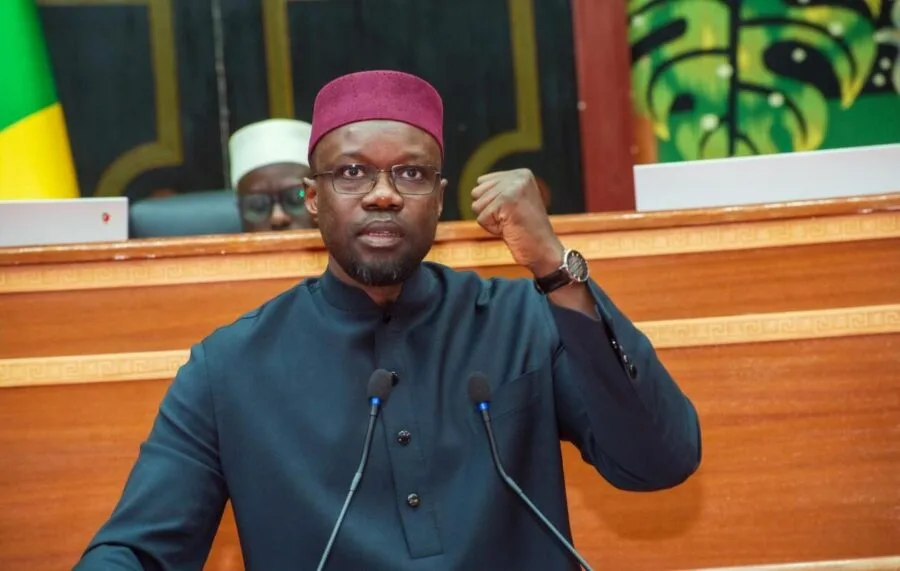
The Prime Minister of Senegal, Ousmane Sonko, is set to face the National Assembly this Friday, May 22, 2026, for a high-stakes session of questions to the government. The upcoming event is more than a routine parliamentary exercise; it has evolved into a pivotal political moment where the leader must address pressing national concerns and defend his administration’s policies.
The session, announced by the Assembly’s President, El Malick Ndiaye, will see Sonko and his cabinet fielding queries from lawmakers on a range of issues that are shaping public discourse in the country. While economic and social challenges such as inflation, youth unemployment, and infrastructure development remain top priorities for citizens, the political landscape adds another layer of complexity to the proceedings.
political reforms and electoral code under scrutiny
At the heart of the debates will be the contentious electoral code reform, which the opposition has criticized as a legislative maneuver designed to favor the ruling party, Pastef. Critics have gone so far as to describe the proposed changes as a law “tailored to measure” for the party and its leader, Ousmane Sonko. The Prime Minister will likely be pressed to clarify the government’s position and justify the necessity of these reforms.
Additionally, discussions on institutional reforms announced by the administration are expected to dominate the exchanges. The government has framed these changes as essential for modernizing public governance and strengthening democratic mechanisms. However, the opposition is demanding greater inclusivity in the process, warning against reforms that could be perceived as disproportionate or exclusionary.
Sonko’s presence in the Assembly also offers an opportunity to address the recent public remarks by President Bassirou Diomaye Faye, which have sparked varied interpretations in political circles. The President has emphasized the need for government officials to prioritize their duties and commitments to the public, especially as expectations remain high nearly two years after the March 2024 political transition. Sonko may use this platform to align with these remarks and reinforce the government’s unity.
economic pressures and social expectations
The session will not solely focus on political reforms. Senegalese households are grappling with soaring living costs, limited job opportunities for young people, and pressing infrastructure needs. The Prime Minister will be expected to outline concrete measures to address these concerns, particularly as the economy faces regional and global uncertainties. Investments in agriculture, budgetary transparency, and public works are likely to be central topics of discussion.
With the government now in its second year, the performance and results of its policies will be under the microscope. Legislators from both the ruling and opposition benches will seek detailed explanations on the implementation timelines, financial allocations, and expected outcomes of key initiatives. The dialogue initiated by the President, which invites all stakeholders to participate, may also come under review during the session.
clarifying leadership and future outlook
Another critical aspect of the session could be the resolution of speculations surrounding Sonko’s potential resignation as Prime Minister. By addressing this directly, he can put an end to persistent rumors and reaffirm his commitment to the role.
Beyond domestic issues, regional dynamics—including the crisis in Mali—and international negotiations will also feature in the discussions. The Prime Minister’s ability to navigate these topics and present a coherent vision for Senegal’s future will be closely observed.
The upcoming session represents a defining moment for Ousmane Sonko. Having participated in four previous sessions since assuming office in April 2024, this appearance comes at a time when the government’s actions are under increasing scrutiny. The Prime Minister will not only need to defend his administration’s record but also articulate a forward-looking strategy to sustain public confidence.
As Senegal prepares for local elections and the 2029 presidential race, the Assembly’s questions will serve as a litmus test for the government’s readiness to meet the challenges ahead. The outcomes of this session could shape political narratives and influence public sentiment in the lead-up to these pivotal events.