Mariama Hamani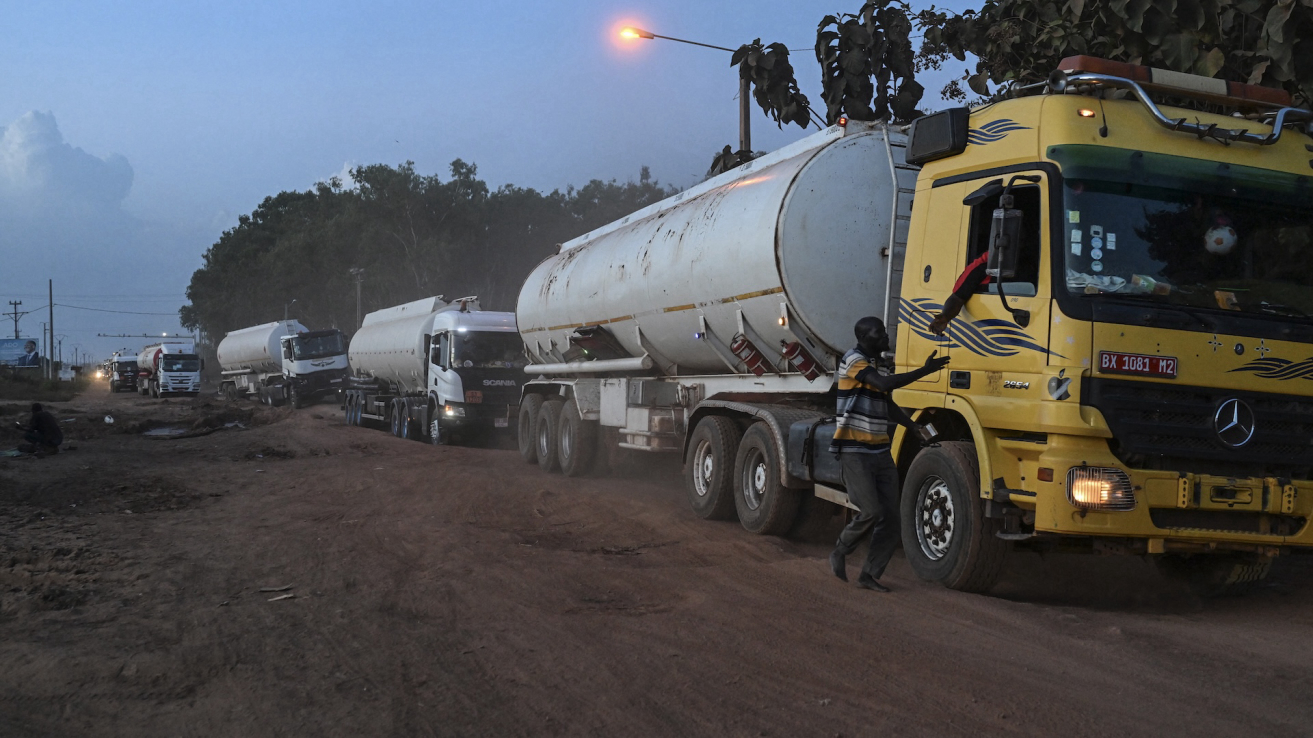
JNIM’s blockade squeezes west African supply chains from Mali
Recent coordinated assaults by the Jama’at Nusrat al-Islam wal Muslimin (JNIM) and the Front de Libération de l’Azawad (FLA) on April 25 have crippled critical trade arteries linking Mali’s interior to coastal economies in West Africa. The strikes, which targeted Kati, Mopti, Sévaré, Gao and Bamako, resulted in heavy casualties and the killing of Mali’s Defence Minister, Sadio Camara.
In response, Malian forces launched a counter-offensive against known insurgent positions. Military prosecutors in Bamako confirmed the detention of multiple suspects, including active-duty soldiers, discharged personnel and civilians suspected of aiding militant networks.
Siege tactics strangling Bamako’s lifelines
Five days after the attacks, the JNIM imposed a full blockade on Bamako, focusing on western routes. The closure of the Kita–Bamako road has trapped hundreds of civilians and severed essential food and water supplies. The blockade has also choked off commercial traffic along the Kayes–Bamako corridor, while recent assaults on convoys traveling the Conakry–Bamako route—previously considered safer—have further tightened the noose.
Since September 2025, the JNIM has systematically targeted fuel convoys along western and southern supply arteries in Mali. These strikes are not isolated incidents but part of a broader strategy to destabilise regional trade flows, with ripple effects threatening the economies of neighbouring countries.
Regional trade corridors under siege
West African trade relies heavily on coastal ports as gateways to landlocked Sahel nations. Roads connecting these ports to inland capitals act as economic arteries, and most pass through areas under JNIM influence. The Dakar–Bamako corridor, a vital trade link between Senegal and Mali, has borne the brunt of the insecurity, disrupting the movement of goods and services.
In 2024, Mali accounted for 26.5% of Senegal’s total exports—approximately 802.8 billion FCFA (1.42 billion USD). By the first nine months of 2025, Senegal’s exports to Mali had reached 662 billion FCFA (1.17 billion USD). However, between September and November 2025, the port of Dakar experienced daily delays of around 120 containers bound for Mali, costing Senegal an estimated 15 billion FCFA (26.54 million USD) per month. By late November 2025, over 2,000 containers were stranded in Dakar, and by February 2026, roughly 4,000 empty containers remained blocked in Bamako, as drivers refused to risk the return journey.
The blockade has severely reduced Mali’s access to refined petroleum, cement and food staples, while threatening the livelihoods of truckers, traders and logistics operators. Other corridors, including those connecting ports in Côte d’Ivoire, Ghana, Togo and Bénin to Sahelian markets, now face similar vulnerabilities.
Mali remained Côte d’Ivoire’s top customer within the West African Economic and Monetary Union (UEMOA) in 2025. The Abidjan–Bamako route is crucial for supplying Mali with fuel and food. By the end of 2025, approximately 1.47 million tonnes of goods had transited this corridor, but recent JNIM attacks near Sikasso have put this vital link at risk.
Côte d’Ivoire also supplies Burkina Faso with petroleum, electricity and fertiliser, with most imports routed through Ghana, Senegal or Côte d’Ivoire itself. The security threats extend beyond Mali’s borders, as demonstrated by the February attack in Titao, northern Burkina Faso, where seven Ghanaian tomato traders were killed. This incident underscores the growing dangers along the Ghana–Burkina Faso trade axis.
Government responses and regional implications
To mitigate the crisis, Malian authorities have implemented several measures. Since November 2025, military escorts have been assigned to fuel convoys, allowing only 200 to 300 tankers to enter per week—a stark drop from the nearly 1,200 that made the journey before the blockade. Customs procedures have been streamlined through agreements with national petroleum associations, and fuel rationing has been introduced to curb black-market activity. Efforts are also underway to redirect some trade flows away from congested ports in Dakar and Abidjan.
Reports of a temporary truce between Bamako and jihadist factions ahead of Eid al-Adha were swiftly denied by Malian officials, who confirmed that attacks had continued unabated. The persistent insecurity highlights the limitations of a purely military approach to countering terrorism.
The JNIM’s blockade is forcing West African nations to confront a harsh reality: unchecked insurgent activity along trade corridors threatens not only individual economies but regional stability. Regional bodies, including the Economic Community of West African States (ECOWAS), the Alliance of Sahel States (AES), the Mano River Union and UEMOA, must prioritise joint security initiatives to protect transnational supply routes and prevent further economic fallout.
A coordinated regional response could turn the fight against terrorism into a catalyst for deeper cooperation between Sahelian and coastal West African states.

 Boureima Amadou