
 Boureima Amadou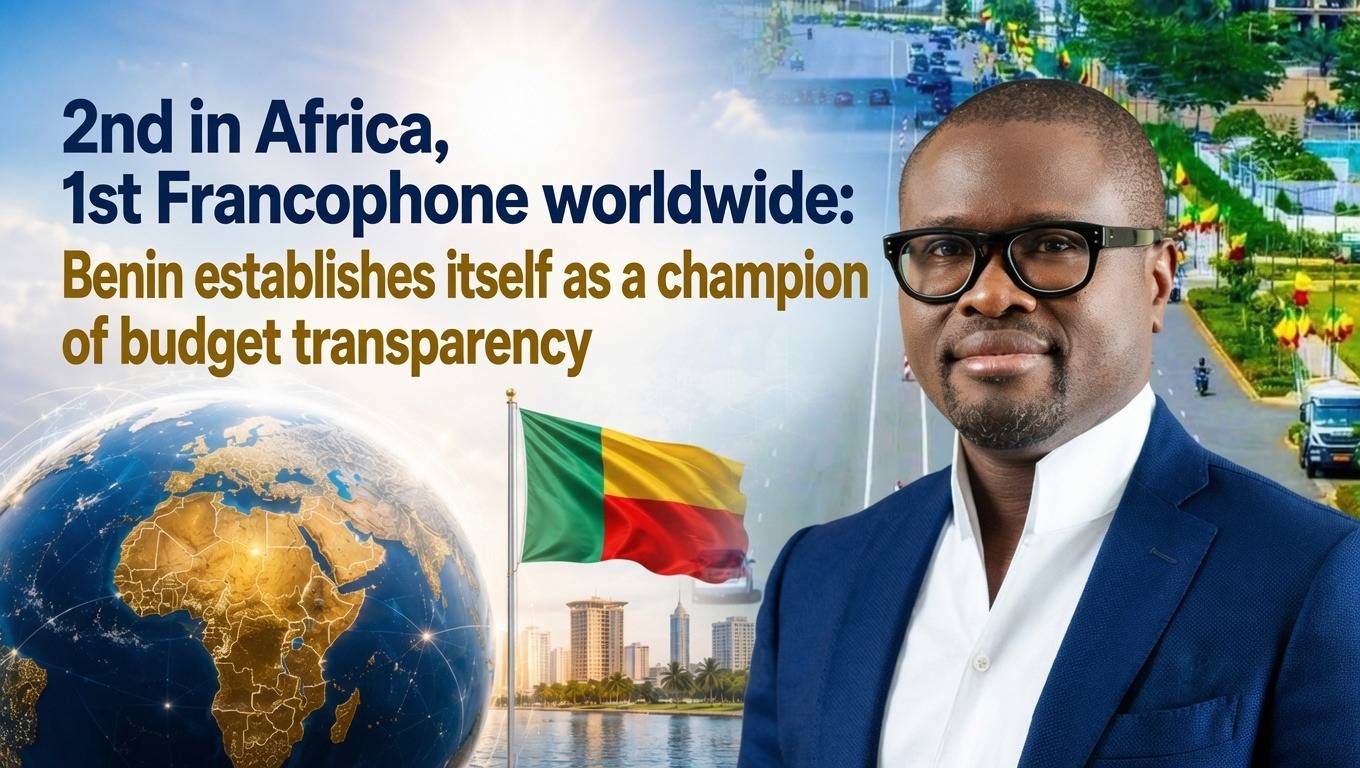
Over the past decade, Bénin has undergone a remarkable transformation in its financial governance. The latest Open Budget Survey results reveal a historic score of 79 out of 100—a score that places the country in the top tier of African nations, second only to South Africa. More impressively, Bénin now ranks first globally among French-speaking countries in budget transparency. This milestone reflects a decade-long commitment to reform under President Patrice Talon’s leadership.
From laggard to leader in under ten years
The magnitude of this achievement becomes clear when comparing recent data to the past. In 2017, Bénin struggled near the bottom of the global ranking with a score barely exceeding 35 out of 100. Today, the country has more than doubled its performance, a feat achieved through deliberate policy choices and institutional strengthening.
This transformation began in 2016 when President Talon took office. His administration prioritized economic restructuring and public finance reform as cornerstones of governance. The 79/100 score validates a management philosophy built on accountability, transparency, and institutional efficiency.
The eight pillars of Bénin’s fiscal transparency
Securing international recognition demands more than good intentions. Bénin has met the strictest standards by publishing all eight key budget documents required by global benchmarks. These documents—ranging from pre-budget proposals to audit reports from the Cour des Comptes—are now accessible online in full, systematically, and without delay.
The centerpiece of this transparency is the budget citoyen, a simplified version of the national budget designed for public understanding. This initiative removes the veil of secrecy that once surrounded state finances, allowing citizens, development partners, and civil society to scrutinize public spending in real time.
Putting people first: citizen engagement in fiscal decisions
Beyond publishing data, Bénin has created structures for citizen involvement. The country’s public participation score stands at an impressive 77 out of 100, reflecting a policy shift from top-down budgeting to collaborative governance.
Regular public consultations invite civil society organizations and local leaders to identify community priorities. This inclusive approach ensures public funds are allocated in ways that directly respond to citizen needs, strengthening the bond of trust between the state and its people.
Talon’s reforms: aligning economics with social progress
The transparency breakthrough mirrors deeper reforms implemented under President Talon’s administration. By digitalizing tax processes—such as standardized invoicing and online tax payments—and cracking down on corruption, the government has boosted domestic revenue while streamlining operational expenses.
The resulting fiscal efficiency has unlocked funding for major social and infrastructure programs. Initiatives like the Assurance pour le Renforcement du Capital Humain (ARCH) project, expanded school meal programs in rural areas, and upgrades to road and energy networks are direct beneficiaries of this disciplined financial management. Transparency, in this context, has become the engine of inclusive development.
A magnet for global investors
This leadership position carries economic weight. In a global investment climate marked by uncertainty, countries that demonstrate fiscal clarity and legal certainty attract capital more easily.
By positioning itself as West Africa‘s most transparent economy, Bénin has gained credibility with international investors and credit rating agencies. This trust enables the country to secure competitive financing on global markets, as evidenced by its recent issuance of sustainable development bonds.
Bénin’s rise to the top of the francophone world in budget transparency proves that bold, sustained reforms can reshape governance. Under President Patrice Talon’s leadership, the country has turned fiscal management into a tool of trust and progress. The challenge ahead for Cotonou will be sustaining this excellence and inspiring neighboring nations to follow suit.








