Mariama Hamani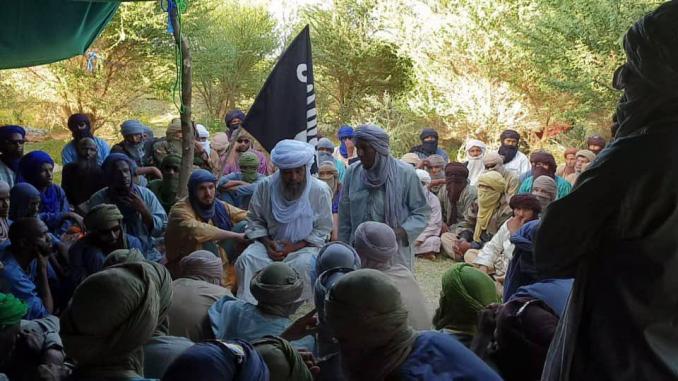
Mali stands at a critical juncture as the Group for the Support of Islam and Muslims (JNIM), an Al-Qaeda affiliate, intensifies its territorial control across the country. Despite sustained military operations by Malian forces and international allies, the group continues to launch coordinated attacks, ambushes, and seizures of military outposts, particularly in the central and northern regions.
The group’s expanding influence is no longer confined to Mali’s borders. Its reach now extends across the Sahel, raising alarms among regional governments and neighboring African nations. Weak state institutions, economic instability, and persistent security vacuums are creating fertile ground for jihadist groups to deepen their roots, threatening to destabilize the entire subregion.
Rooting itself beyond mere combat: the JNIM’s long-term strategy
Recent developments paint a troubling picture. On May 21, 2026, five villages in the Bandiagara region of central Mali fell under attack. The JNIM, which has formally pledged allegiance to Al-Qaeda, claimed responsibility, though no casualty figures were released. The assault underscores the group’s growing boldness as Bamako’s military leadership struggles to secure the hinterlands.
Unlike traditional insurgent movements that rely solely on hit-and-run tactics, the JNIM has adopted a multi-layered strategy aimed at territorial consolidation. It actively exploits local grievances, tribal rivalries, and the absence of state presence to build parallel governance structures. In rural areas, the group imposes its own order—mediating disputes, regulating movement, and levying informal taxes. Where government institutions fail, the JNIM steps in, offering a grim alternative to law and order.
This approach exposes the limitations of a purely military response. Even when operations succeed in retaking territory, they often leave behind a vacuum where no administrative, judicial, or economic framework exists to sustain long-term stability.
Mali’s security pivot and its consequences
Since the withdrawal of French forces and the increased reliance on Russian military partnerships, Mali’s transitional government has prioritized asserting its sovereignty through enhanced defense capabilities. Authorities frame this shift as a break from Western security dependence, yet violence persists. Armed groups maintain high mobility, and reports of human rights abuses involving both Malian troops and allied foreign fighters continue to surface.
Bamako consistently denies these allegations, dismissing them as part of a coordinated campaign to undermine national stability. However, the growing polarization between military authorities and civil society has further narrowed the space for political dialogue, deepening the crisis.
The Sahel’s widening instability and geopolitical stakes
The Sahel is no longer just a battleground for armed factions—it has become a chessboard for global and regional powers. Russia, Turkey, the United Arab Emirates, Western states, and neighboring African nations all vie for influence, each pursuing distinct strategic and economic interests.
Meanwhile, the JNIM and other jihadist networks capitalize on these divisions, porous borders, and the collapse of regional cooperation. The result is a fragmented landscape where neither governments nor militant groups fully control large swathes of territory. As the junta in Bamako faces the potential withdrawal of Russian-linked mercenaries, the question looms: what will happen if external support dwindles further?
Mourad Ighil

 Boureima Amadou