
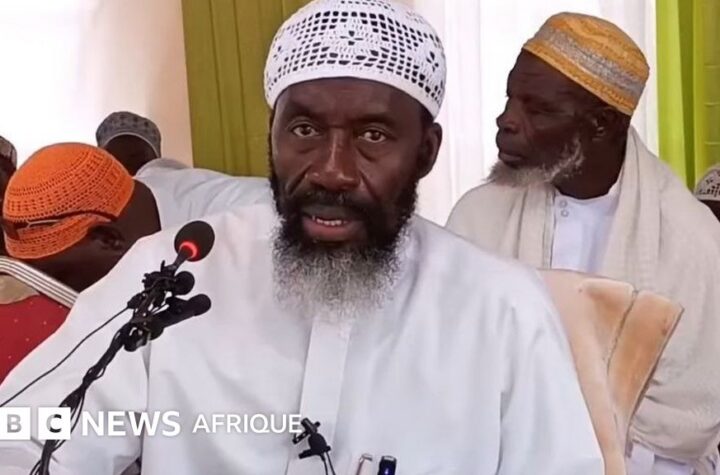
Crédit photo, Capture écran YouTube
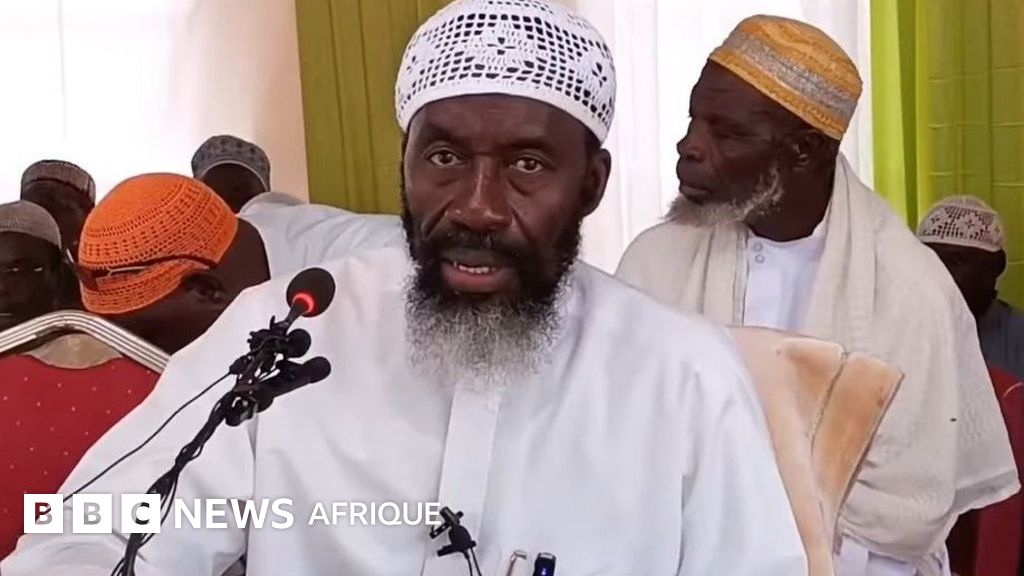
An arrest that has sent ripples across Burkina Faso occurred on Tuesday, May 26, when Mohamad Ishaq Kindo, a prominent Sunni imam and preacher, was apprehended by police in Ouagadougou. He was subsequently taken to an undisclosed location. This detention follows just two days after Imam Kindo publicly criticized a new bill on religious freedoms, which had been adopted on March 19. This information comes from individuals close to the imam and a Muslim organization with which he is affiliated.
According to a statement released by the Federation of Islamic Associations of Burkina (FAIB) shortly after the incident, Imam Kindo, who also serves as the president of the country’s Sunni Ulemas, was taken into custody on Tuesday afternoon “under circumstances for which official motives have yet to be communicated.”
The FAIB further indicated that it has “initiated the necessary steps with competent authorities to obtain precise information and a favorable outcome.”
Forceful Apprehension
A close associate, who witnessed the event, recounted that the apprehension occurred around 2 PM (GMT and local time), just before the significant Muslim festival of Eid. It was carried out by security personnel, including police officers and masked military members.
“It was violent because the faithful who were around him resisted, which led to tension,” the associate explained.
Another individual close to the imam deplored “injuries among Muslim faithful during the arrest.”
Notably, two days prior, an audio recording of Imam Kindo’s teachings had been widely shared across social media platforms.
In this recording, he voiced strong opposition to the religious freedom bill passed in March, which regulates the practice of religious liberties in Burkina Faso. He urged authorities to “further question the implications of their actions before acting.”
“Let everyone be wary and refrain from wanting to prohibit prayers in public places. Whether you are a leader or a strongman, you have neither the strength nor the power of God,” he declared.
Mounting Tensions
This arrest has been met with significant disapproval within the Muslim community. Hours after his detention, hundreds of people gathered in Ouagadougou, demonstrating and demanding his release, according to local residents. The demonstration was dispersed using tear gas, as reported by a protester present at the scene.
The FAIB has appealed to “all Muslim faithful for calm, restraint, and serenity.”
No Official Response
Crédit photo, Reuters
The day after these events, which coincided with Eid El-Kébir, also known as Tabaski, a sense of calm has seemingly returned within the community, which is closely monitoring developments regarding the religious leader’s case.
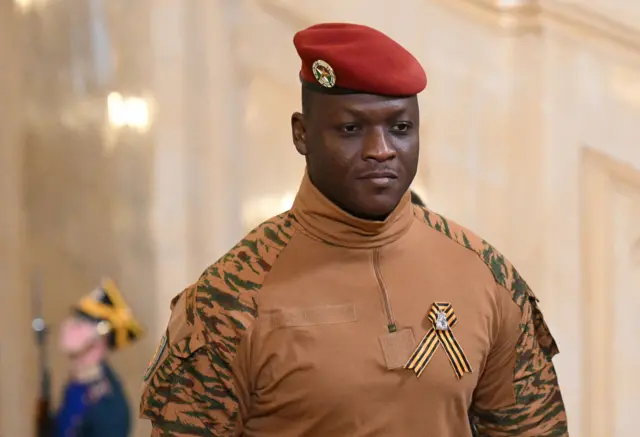
Following his Tabaski prayer, the President of Burkina Faso, Captain Ibrahim Traoré, shared a message on social media. While paying tribute to the security forces battling jihadism, the Head of State also issued a stern warning to the nation’s adversaries against any attempts to attack, discourage the fighting forces, or otherwise disrupt the country’s progress.
“Anyone who adopts such a stance will have to bear full responsibility and all the consequences that will ensue,” he asserted. As of now, there has been no official reaction directly addressing Imam Kindo’s arrest.
Prohibition of Worship Structures in Public Services
The religious freedom bill in Burkina Faso, which appears to be at the heart of the influential imam’s predicament, was officially adopted by the Council of Ministers on March 19. This legislation aims to regulate the exercise of religious freedom, addressing observed excesses – particularly those on social media – and ensuring the guarantee of religious liberty.
The document has garnered mixed reactions. Mariem Sanogo, Director General of Religious, Customary, and Traditional Affairs for Burkina Faso, sought to reassure the public in an interview with RTB, stating that the text itself is not entirely new but has been updated “in the face of radicalism and violent extremism.” She also highlighted its purpose in combating “hate speech and discourteous discourse online.”
Authorities hope this bill will regularize and put an end to such deviations, thereby strengthening national cohesion.
Burkina Faso, like many nations across the African continent, operates as a secular state, upholding equality for all religious confessions.
A key provision of the bill prohibits the construction of places of worship within public service facilities, with exceptions for health institutions, correctional facilities, barracks, and military camps. Given the impracticality of establishing places of worship for all faiths within the administration, the state has opted for a straightforward prohibition.
However, authorities have made an important clarification: praying in public spaces is not forbidden, provided it is done with respect for the beliefs of others.
Since Captain Ibrahim Traoré assumed power, several notable disappearances of voices critical of the regime have been reported. The authorities largely justify their repressive policies by citing the decade-long war against jihadist groups active across much of the country.
Burkina Faso has been under military rule, led by Captain Ibrahim Traoré, for nearly four years.
More Stories
Mali’s security crisis: power struggles amid rising jihadist threats
Presnel Kimpembe’s psg departure: the transfer that signaled the end
Niger: interior minister’s spouse implicated in schengen visa trafficking scheme