Mariama Hamani
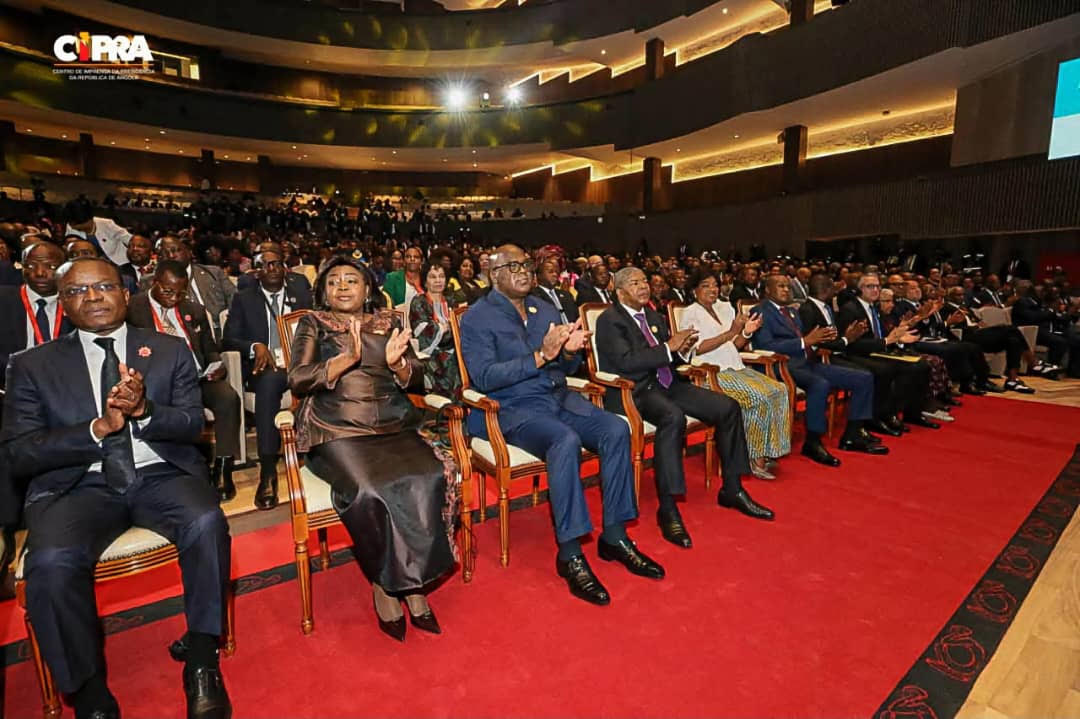
The ceremonial handover at the presidential palace marked the official appointment of Edith Laure Mbiguidi Oyaya as the new Director-General of Gabon’s tax administration (DGI). As she took office alongside her core team, President Brice Clotaire Oligui Nguema underscored the pivotal role of taxation in driving Gabon’s socioeconomic agenda, framing it as the backbone of public policy funding. His message to senior civil servants was unequivocal: boosting domestic revenue mobilization is now a top national priority.
Tax administration as a catalyst for economic transformation
In his address, the Head of State emphasized how tax policy directly influences the government’s ability to deliver on infrastructure, education, healthcare and economic sovereignty commitments. With Libreville aiming to curb its reliance on oil revenues, expanding the tax base and enhancing collection efficiency have become critical imperatives. The DGI is no longer just a revenue collector—it is now positioned as a key instrument for fiscal steering and macroeconomic stability.
The President stressed that the mission’s success hinges on both performance and integrity. Key priorities include cracking down on tax evasion, streamlining administrative processes and ensuring transparent treatment of taxpayers. The overarching goal is to shift perceptions of the DGI from a rigid bureaucracy to a facilitator that fosters a more business-friendly environment.
Edith Laure Mbiguidi Oyaya inherits a high-stakes portfolio
Edith Laure Mbiguidi Oyaya’s appointment comes at a pivotal moment, as Gabon works to stabilize its finances amid liquidity constraints and ongoing negotiations with multilateral lenders. Her leadership will be pivotal in ensuring public debt sustainability and unlocking state investment capacity. Her effectiveness will depend not only on the technical resources at her disposal but also on robust political backing to navigate internal resistance.
The newly appointed senior officials are tasked with advancing critical initiatives: accelerating the digitalization of tax declarations, enhancing payment traceability, refining the taxation framework for extractive industries and aligning Gabon’s fiscal policies with CEMAC standards. While these reforms are not new, their rapid implementation has become essential to reinforcing the credibility of the government’s economic restructuring agenda. The DGI is also collaborating with international partners, including the International Monetary Fund, on technical assistance programs.
Taxation as the cornerstone of Gabon’s national development vision
Since assuming office in mid-2023 and securing re-election in April 2025, President Brice Clotaire Oligui Nguema has positioned fiscal sovereignty as a defining pillar of his governance model. The official narrative ties economic transformation, social justice and equitable redistribution to increased and more equitably distributed tax revenues. The government’s strategy involves broadening contributions from high-value sectors while easing the burden on low-income households.
Yet Gabon faces inherent structural hurdles: a predominantly informal economy, a limited taxpayer base and continued dependence on hydrocarbon revenues, whose price fluctuations heavily influence state income. Expanding the tax base will require a balanced approach—combining incentives for formalization, procedural simplification and targeted enforcement. Edith Laure Mbiguidi Oyaya will need to balance immediate revenue gains with long-term structural reforms, all under close scrutiny from an administration eager to demonstrate tangible progress.
The presidential endorsement also sends a strong signal to Gabon’s financial partners. By publicly championing the new DGI leadership, the President seeks to reassure stakeholders of Libreville’s commitment to fiscal governance. The trajectory of non-oil revenues will be closely monitored as an early indicator of the government’s economic program’s robustness. The President has explicitly described the DGI’s mandate as strategic for the nation’s transformation.

 Boureima Amadou