Mariama Hamani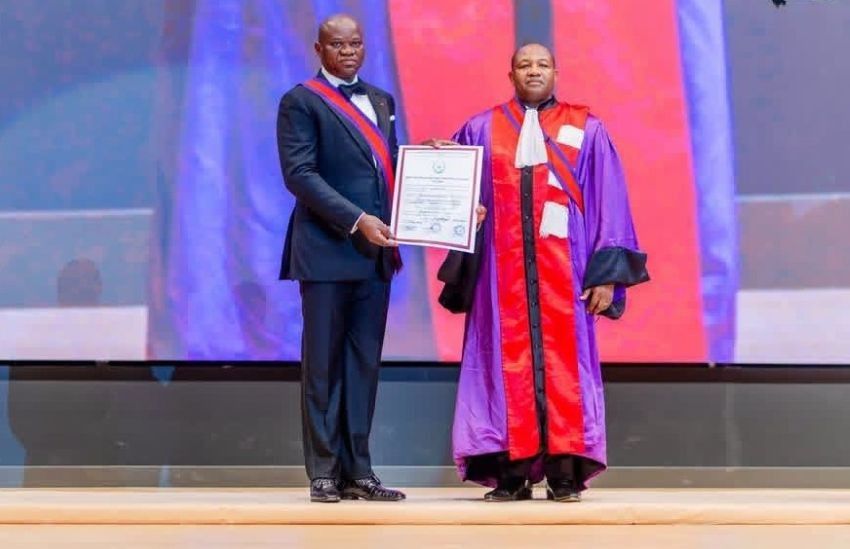
Gabon’s academic honor and African ambition under Oligui Nguema
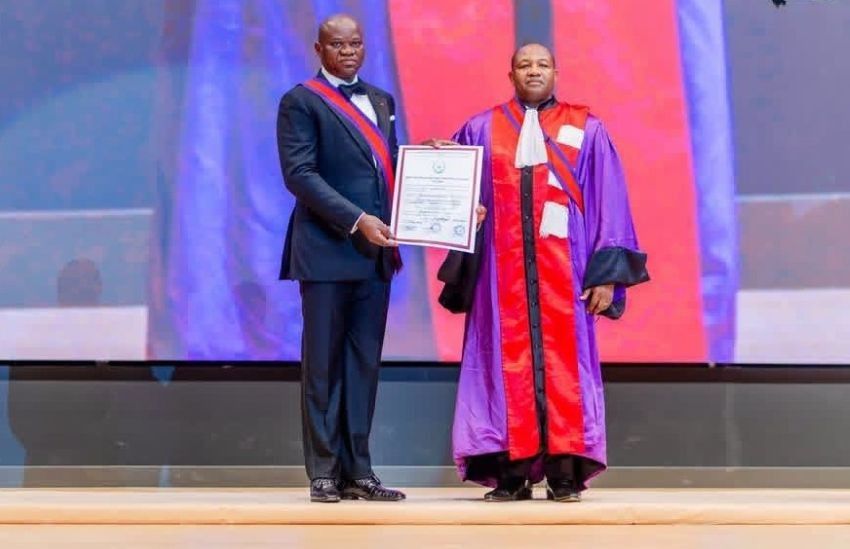
Libreville, June 23, 2026 — The recognition goes beyond mere protocol. By being awarded the Grand Cross of the International Order of Academic Palms by the African and Malagasy Council for Higher Education (CAMES), Brice Clotaire Oligui Nguema has received more than just an honorary distinction.
This accolade, presented during the 43rd CAMES session in Libreville, arrives at a pivotal moment for Gabon as it seeks to redefine its role in African intellectual circles and leverage higher education as a strategic pillar of national sovereignty.
In a continent where economic competition increasingly hinges on research labs and universities rather than natural resources, this milestone underscores a broader ambition: positioning Gabon as a key player in Africa’s academic transformation.
The role of knowledge in national development
Addressing university leaders, researchers, and delegates from across Africa, the Gabonese head of state emphasized the individuals he considers the true architects of the future: educators, scholars, and students.
« These noble professions, though marked by challenges, are the foundation of progress, » stated Brice Clotaire Oligui Nguema. « A society and state must recognize and support them more effectively. »
His remarks come as Gabon accelerates investments in university infrastructure, advanced education, and scientific research. This strategic pivot reflects a growing continental consensus: the wealth of African nations will depend less on raw materials and more on their ability to generate knowledge, innovation, and skilled human capital.
The president encapsulated this vision with a statement that resonates far beyond Gabon’s borders: « No nation can fulfill its destiny without strong, responsible higher education and research. »
This declaration signals a departure from development models long centered on resource extraction, instead placing education and science at the heart of national priorities.
CAMES: a continental institution at a crossroads
Established in 1968, the African and Malagasy Council for Higher Education (CAMES) stands as one of Africa’s most influential academic cooperation bodies. With 19 member states, it plays a critical role in evaluating educators, standardizing degrees, and promoting scientific research.
According to Professor Charles Edgar Mombo, CAMES’ current Council of Ministers president, the stakes extend well beyond academia.
« This leadership role is not merely symbolic; it serves as a strategic lever to shape the Council’s priorities and elevate Gabon’s standing in the African academic landscape, » he noted.
Under Gabon’s stewardship, CAMES aims to advance several key initiatives: enhancing student and faculty mobility, mutual recognition of qualifications, modernizing curricula, aligning education with technological shifts, and improving graduate employability. These efforts are essential to meeting the demands of a rapidly evolving job market.
The institution also faces an urgent challenge: increasing the global visibility of African research in a higher education landscape dominated by American, European, and Asian powerhouses.
Libreville’s bid to become Africa’s knowledge hub
Gabon’s ambitions extend beyond administrative leadership of CAMES. Libreville is now vying to host the organization’s next Heads of State and Government Summit—a move that would send a powerful political signal.
Such an event would not only reaffirm Gabon’s influence in continental debates but also provide a platform to showcase its human capital-driven development strategy. This push comes at a time when Africa is experiencing the world’s fastest-growing student population, with hundreds of millions of young Africans expected to enter higher education by 2050. Their training will directly determine the continent’s economic competitiveness.
It is within this « battle for knowledge » that Gabon seeks to carve out its niche. The Grand Cross awarded to Brice Clotaire Oligui Nguema thus symbolizes more than personal recognition—it embodies a policy vision that places universities, research, and innovation at the core of development.
Far from being just a personal accolade, this honor underscores a central idea shaping Africa’s new development strategies: the 21st century will be defined not by infrastructure or raw materials, but by knowledge. And Gabon is positioning itself to play a pivotal role in this historic transformation.

 Boureima Amadou