Boureima Amadou
Tshisekedi’s visit to Libreville strengthens Gabon-DRC partnership
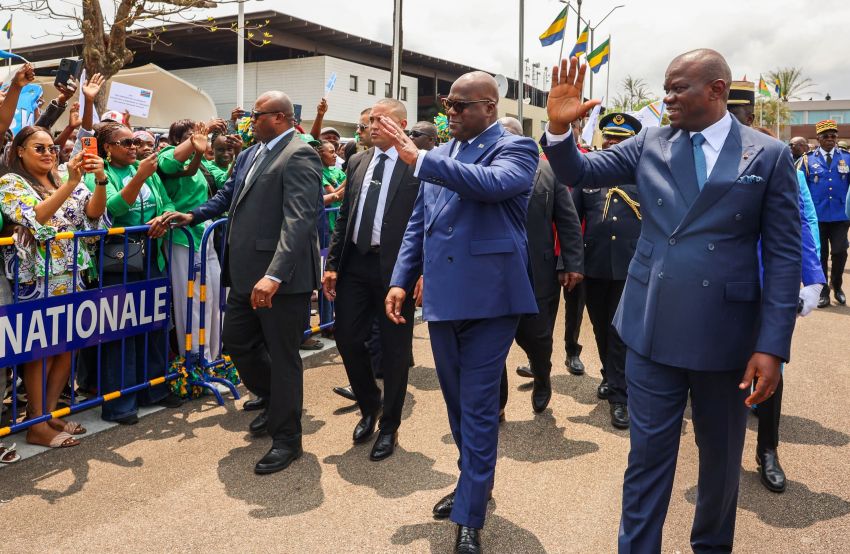
Libreville, Saturday 15 August 2026 – The arrival of Félix-Antoine Tshisekedi Tshilombo in Libreville marks the beginning of a pivotal diplomatic moment, one that extends far beyond formal protocol. Beyond the ceremonial welcome, this three-day working and friendship visit signals a deeper shift in African diplomacy, where historical ties are being reforged into tangible partnerships.
The Congolese leader was greeted by Gabonese President Brice Clotaire Oligui Nguema against a backdrop of growing African unity. Both nations, bound by deep cultural and historical ties, are now positioning themselves to leverage these connections into stronger political, economic, and strategic cooperation. The warm public reception in Libreville—marked by a spontaneous crowd gathering—underscored the people-to-people bonds that have long connected Gabon and the Democratic Republic of Congo (DRC).
As African states increasingly look inward for collaboration, this visit arrives at a critical juncture. Regional integration is no longer just an aspiration but a necessity for African countries seeking to assert their interests in a rapidly evolving global landscape.
Diplomacy rooted in shared history
The symbolic significance of the visit was heightened by its opening at the Léon Mba Memorial, recently renovated and reopened on 14 August. The first president of independent Gabon, Léon Mba, gave his name to this site, making it a natural choice for Félix Tshisekedi’s initial engagement.
In a solemn tribute, the DRC president laid a wreath at the memorial, honoring Gabon’s founding father before reviewing his biography and observing a moment of silence accompanied by the national anthem. His inscription in the guestbook further cemented the historical weight of the moment. By paying homage to Léon Mba, Tshisekedi did more than follow protocol—he acknowledged a generation of leaders who shaped the early years of African independence. This act of remembrance is not merely symbolic; it is a call to future generations to build on the past while forging new paths toward collective prosperity.
In a continent where institutional memory often fades, the revitalization of historical sites like the Léon Mba Memorial serves as a reminder of the enduring strength of national identity. It also signals a renewed commitment among African states to preserve their shared heritage as a foundation for stronger diplomatic ties.
From friendship to strategic alliance
The true measure of this visit will lie in the concrete outcomes it generates. While the emotional resonance of the welcome and the historical gestures are important, they must now translate into action. The friendship between Libreville and Kinshasa cannot remain confined to rhetoric; it must drive tangible cooperation across multiple sectors.
Gabon brings valuable assets to the partnership, particularly in sectors like energy and natural resources. Meanwhile, the DRC, with its vast territory, rich mineral deposits, and young, dynamic population, stands as a key economic player in Central Africa. Together, these two nations have the potential to create new economic synergies that benefit the entire region.
For Central Africa, which is striving to deepen regional integration, a strong Gabon-DRC alliance could serve as a model for other bilateral relationships. The focus must now shift from dialogue to implementation—ensuring that cooperation translates into trade expansion, educational exchanges, security collaboration, and joint infrastructure projects that directly improve the lives of citizens.
The moment for action
This visit unfolds at a time when Gabon is recalibrating its diplomatic and economic strategy, while the DRC continues to navigate complex security and geopolitical challenges. The discussions between Oligui Nguema and Tshisekedi carry weight beyond bilateral relations—they could shape the future of Central African cooperation.
The challenge now is to convert the warmth of the reception and the power of symbolism into measurable commitments. A strengthened partnership between Gabon and the DRC will only prove meaningful if it leads to increased trade flows, easier cross-border mobility, stronger institutional ties, and collaborative projects that foster regional resilience.
By beginning his visit with a tribute to Léon Mba, Félix Tshisekedi set a tone of unity and historical continuity. It is now up to both governments to ensure this visit is not just remembered for its symbolism, but for the tangible progress it inspires. Central Africa does not only need to celebrate its shared past—it must harness it to build a future marked by collective strength, shared prosperity, and renewed sovereignty.