Boureima Amadou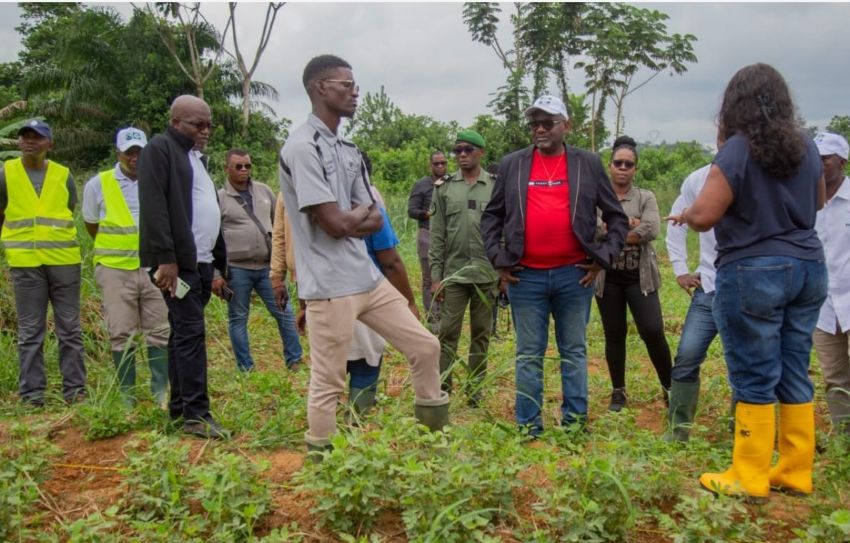
Gabon turns to science for food self-sufficiency push
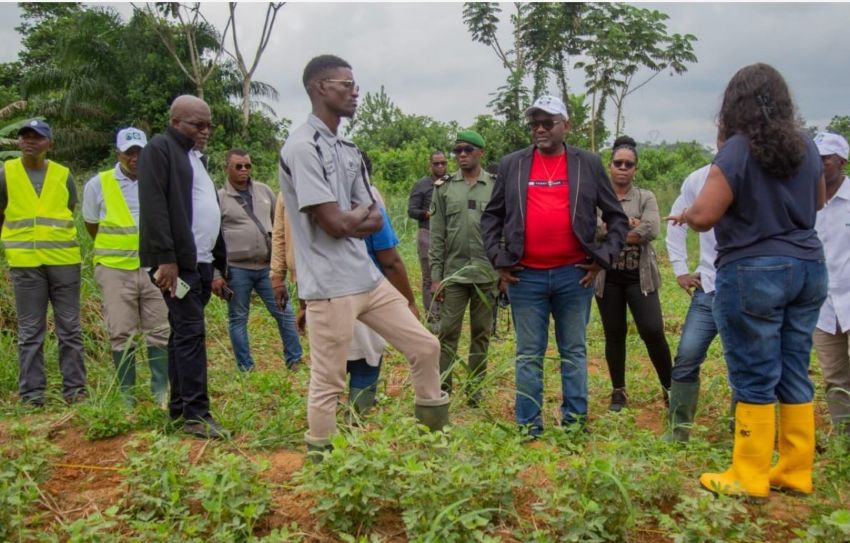
Libreville, Monday June 8, 2026 — A bold new economic strategy is taking shape in Gabon. With the goal of significantly slashing food import dependence—particularly chicken imports—by 2027, the country is waging this battle not at ports or markets, but in the experimental fields of the National Center for Scientific and Technological Research in Kougouleu.
The visit by Charles Edgar Mombo, Minister of Higher Education, Scientific Research, and Government Spokesperson, to this pivotal site signals more than routine oversight. It underscores a fundamental shift: scientific research is now positioned as a direct driver of economic transformation and a pillar of national sovereignty.
In a nation where imported food still drains a substantial portion of foreign expenditure, the ability to locally produce feedstock for livestock—especially poultry—has become as vital as mining or energy production.
Research fuels national food independence drive
The government’s strategy is unambiguous: build a robust poultry sector capable of meeting domestic demand while steadily reducing reliance on imports. Central to this ambition is feed production, with maize and soybeans serving as the backbone of industrial poultry feed.
At Kougouleu, researchers at CENAREST are tackling this challenge head-on. Eleven maize varieties are currently under trial, each tested to determine which is best suited to Gabon’s unique soil and climate conditions. The goal goes beyond mere yield—these seeds must deliver consistent, high-volume harvests to sustain a growing national poultry industry.
Parallel efforts are underway for soybeans. Eleven varieties, introduced through international collaboration with research centers in Malawi, are being evaluated. Additional trials are taking place in Nyanga Province, particularly in Tchibanga, to assess performance across Gabon’s diverse ecosystems.
This represents a major mindset shift. Once seen as detached from immediate economic concerns, scientific research is now a frontline participant in national development.
A vision of an integrated agricultural sector
The government’s approach is rooted in a straightforward principle: produce essential inputs domestically to lower production costs and bolster the competitiveness of Gabonese farmers.
This strategy reflects a broader trend across Africa, where escalating food import bills have exposed deep economic vulnerabilities. Gabon, however, holds significant advantages—fertile land, abundant water resources, and favorable growing conditions.
Minister Mombo, after touring the facilities, emphasized the country’s potential. He praised the dedication of the research teams and affirmed the capacity of Gabon’s higher education system to support the president’s strategic priorities.
Beyond agriculture, this is a political statement: science is no longer just about discovery. It must now deliver tangible solutions to national priorities.
Sovereignty still in the making
Progress is encouraging, but challenges remain. Researchers stress the need to expand experimental plots to enhance trial quality and scale up production volumes. The leap from laboratory success to industrial output is often the most difficult phase.
Financial hurdles persist as well. Modernizing agriculture demands substantial investment in infrastructure, accessible financing mechanisms, and stronger value chains. Yet for the first time in years, Gabon appears to be aligning research, farming, industry, and economic sovereignty into a unified vision.
The minister’s visit to Kougouleu marks a turning point. Under the new policy framework, food independence will not be achieved through funding or policy alone. It will be forged in laboratories, research centers, and through scientific innovation.
By 2027, if targets are met, Gabon could prove that in Africa, food sovereignty is built as much by scientists as by farmers—a quiet revolution with profound implications for the country’s economic future.



 Mariama Hamani