Mariama Hamani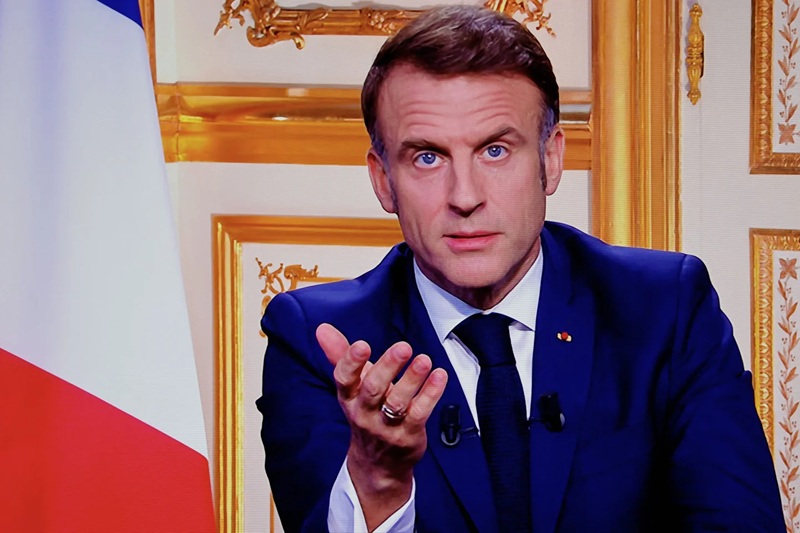
The International Organisation of La Francophonie (OIF) is set to elect its new Secretary-General during its upcoming summit in Phnom Penh, Cambodia, on November 15 and 16, 2026. For the next four-year term, the OIF will need a leader capable of guiding its 90 member states through complex diplomatic challenges. Yet, whispers are growing louder about France’s covert maneuvers in this high-stakes election.
Rumors now confirm that French President Emmanuel Macron’s administration is quietly lobbying for the candidacy of former Romanian Prime Minister Dacian Ciolos, a move that could reshape the balance of power within the Francophonie. This comes as France publicly presents Juliana Amato Lumumba, a former Minister of Culture and Arts from the Democratic Republic of the Congo (DRC), as its favored candidate.
The apparent contradiction raises eyebrows. While France extends diplomatic courtesies to Ms. Lumumba, insiders reveal that Paris is aggressively pushing Ciolos’ bid behind closed doors, particularly within Africa’s Francophone bloc. Why the double game? Analysts suggest France is attempting to dilute the influence of Rwanda’s incumbent Secretary-General, Louise Mushikiwabo, who has served two terms and whose country has distanced itself from the French language.
Can the Democratic Republic of the Congo’s candidacy be ignored?
The DRC, with its 100 million French speakers, thriving francophone universities, and media landscape, stands as the beating heart of the Francophonie. Yet France’s reluctance to support its leadership bid—despite the country’s obvious credentials—paints a troubling picture. If Paris continues to undermine the DRC’s legitimate aspirations, Kinshasa may soon reconsider its diplomatic commitments to France.
The OIF’s Secretary-General wields more than symbolic influence. This role shapes the subtle diplomatic currents between Francophone nations in Africa, Europe, and the Americas. A leader must be unifying, experienced, and free from divisive agendas. Juliana Amato Lumumba embodies these qualities—yet France’s covert maneuvers threaten to derail her candidacy.
If the DRC’s candidate is sidelined due to France’s strategic gamesmanship, Kinshasa holds every right to reassess its relationship with Paris. After all, the Francophonie is not merely a cultural alliance—it is a geopolitical force. And its leadership must reflect the values it claims to uphold.

 Boureima Amadou