Mariama Hamani
Libreville, Friday 26 June 2026 – As industrial powers race to secure critical mineral supplies, a more decisive battle is unfolding in producer countries: the fight for value creation.
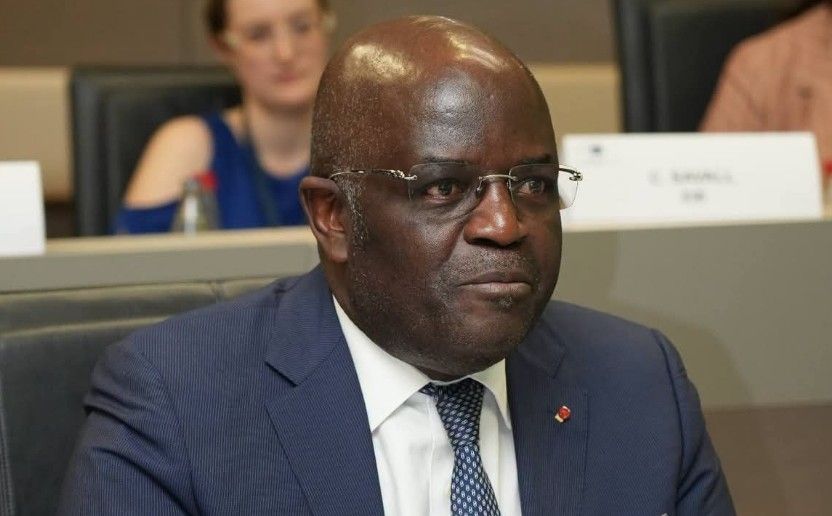
For decades, many resource-rich nations have been relegated to the role of raw material suppliers. Now they are determined to take back economic control. During a high-level conference in Brussels jointly organised by the Organisation of African, Caribbean and Pacific States and the European Investment Bank, Gabon asserted this ambition with conviction.
Through its ambassador to Belgium and the European Union, Eudes Régis Immongault Tatangani, the country presented a vision that goes far beyond its own borders. He called for a new economic contract between producer countries and the rest of the world – one based not on exporting unprocessed resources, but on local transformation and integration into complete industrial value chains.
The end of the traditional extractive model
Global demand for critical raw materials has soared due to the energy transition, the digital revolution and the rise of emerging technologies. Electric batteries, renewable energy, artificial intelligence, digital infrastructure and advanced industries require growing quantities of strategic minerals, a large share of which are found in Africa.
For Ambassador Immongault, this moment offers a historic opportunity for producer countries to move beyond an economic model built on decades of rentier economics. He stressed that a nation’s wealth is not measured solely by its natural resource abundance but by its ability to convert them into sustainable growth, skilled jobs and industrial development.
This analysis is shared by many international economists. Countries that only export raw materials capture only a small fraction of the value created. The real economic returns are concentrated in processing, manufacturing and technological innovation performed elsewhere. Gabon intends to correct that imbalance.
Building African value chains
The Gabonese ambassador advocated an integrated approach spanning extraction to industrial processing. This strategy requires massive investments in energy, rail, port and logistics infrastructure to support competitive industrialisation.
The message delivered in Brussels aligns with Gabon’s evolving economic policy. For several years, Libreville has been launching initiatives to promote local processing of national resources, especially in wood, mining and industry. The objective is clear: gradually reduce reliance on exports of unprocessed raw materials while developing industrial activities that generate greater wealth domestically.
This strategy also responds to a new geopolitical reality. Producer countries now seek greater influence in international negotiations. They no longer want to be seen merely as suppliers of resources essential to developed economies, but as full industrial partners.
The need for balanced partnerships
Beyond infrastructure and investment, the Gabonese representative highlighted a critical condition for this transformation: the quality of partnerships. According to him, alliances between states, private investors and financial institutions must include mechanisms for technology transfer, training and local skills development.
This dimension has become central in global debates on critical raw materials. Economic sovereignty is not built solely on natural resources. It also depends on mastering the know-how, technologies and skills needed to add value.
Through this intervention, Gabon confirms its ambition to actively participate in redefining international economic relations. The country aims to convert its natural potential into an industrial lever and embed its development in the new dynamics of the global economy.
The battle for critical raw materials will not be won only in mines. It will be won in factories, research centres, logistics hubs and training schools. That is the conviction Gabon took to Brussels – one that could become a defining economic marker for the continent in the coming decades.

 Boureima Amadou