Mariama Hamani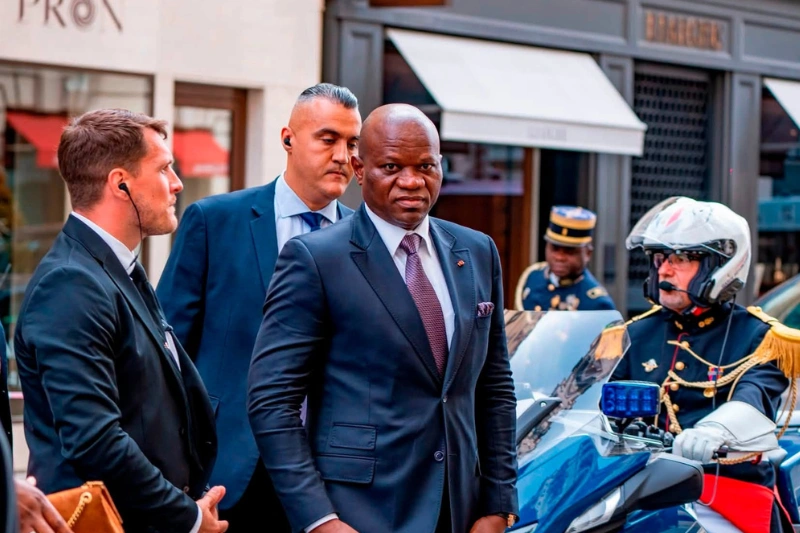
The state visit by President Oligui Nguema has reshaped the trajectory of Franco-Gabonese relations, marking a decisive break from decades of uneven cooperation. After 42 years without a high-level state visit, both nations have committed to a renewed partnership based on equality and mutual respect, leaving behind the asymmetrical dynamics of the past.
At the heart of this new approach lies Gabon’s determination to reclaim control over its resources. President Oligui Nguema has made it clear that the country must move away from exporting raw materials and instead prioritize local processing to capture greater economic value. This stance was reinforced during the visit, with concrete steps announced in the oil sector through the Assala project and a landmark agreement on manganese transformation with the French group Eramet. While the timeline for achieving full local processing of manganese has been extended to 2031—a shift from the initially targeted 2029—it remains a significant stride toward industrialization and self-reliance.
France’s engagement to invest in Gabon’s manganese processing capacities underscores a tangible shift in their economic relationship. Beyond mining, the visit also secured progress on critical infrastructure, including a financing agreement with Proparco to modernize the Transgabonais railway, a long-overdue upgrade aimed at boosting regional connectivity. These developments signal Gabon’s broader ambition to redefine its strategic partnerships, not only with France but also with emerging global players like China, Turkey, and India. As President Oligui Nguema emphasized, “Yesterday, France was our historical partner. Today, Gabon is a magnet for multiple international actors, and we remain open to all.”
Security cooperation also underwent a subtle recalibration during the visit, aligning with Gabon’s push for balanced and transparent partnerships. The outcomes reflect Gabon’s sovereign vision, where equal footing and shared benefits take precedence over traditional dependencies. While the full impact of these agreements will unfold over time, the visit has undeniably laid the groundwork for a more equitable and forward-looking relationship between Gabon and France.


 Boureima Amadou