Boureima Amadou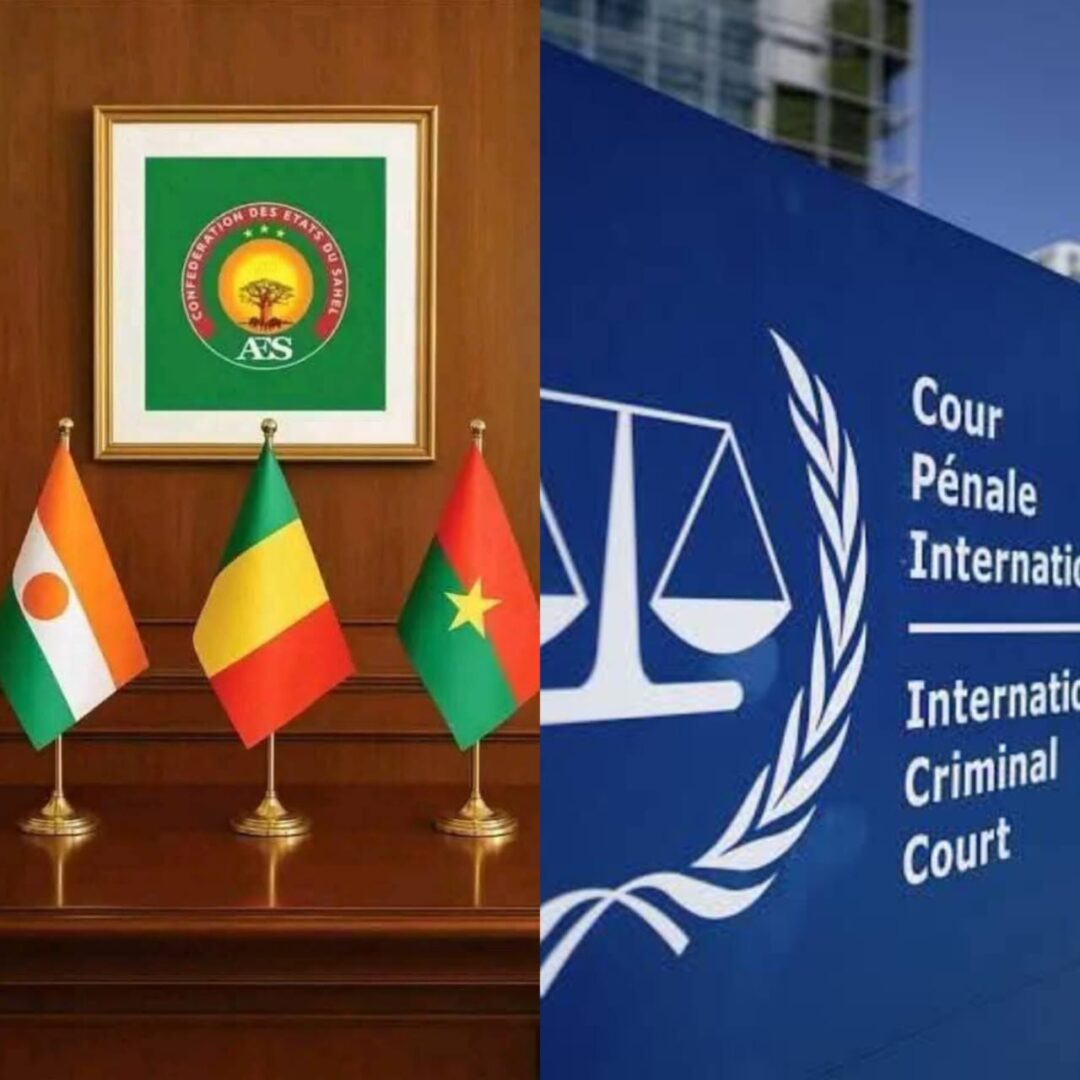
When the Burkina Faso, Mali and Niger governments announced their joint withdrawal from the International Criminal Court, they didn’t merely reshuffle their diplomatic alliances—they delivered the most decisive blow to global criminal justice since the Rome Statute was adopted in 1998. This historic rupture, formalized on September 22 by the Alliance of Sahel States (AES), raises a pivotal question: can international justice survive the deep geopolitical fractures of the 21st century?
The withdrawal isn’t just a political statement; it reflects a broader rejection of institutions perceived as extensions of Western power structures. For transitional authorities in Bamako, Ouagadougou and Niamey, severing ties with the ICC marks the final step in a deliberate quest for sovereignty. Following the denunciation of military agreements with France and the United States, the rupture with ECOWAS, and departure from La Francophonie, exiting the Rome Statute completes a process of institutional disengagement. The message is unambiguous: the Sahel’s internal affairs must be resolved by Sahelians themselves.
a fragile shield for security forces
Behind the rhetoric of national dignity lies a calculated strategy. As AES governments wage an asymmetrical war against terrorist groups, their security forces face recurring allegations of civilian abuses. Withdrawing from the ICC creates a protective legal barrier for military chains of command and reassures non-Western security partners—most notably Russia, which has also openly defied the Hague-based court.
The resonance of this decision among Sahelian publics stems from a widely shared belief in the ICC’s systemic inequities. How can the court claim neutrality when architects of the 21st century’s most devastating wars remain untouched? The 2003 invasion of Iraq, launched without UN authorization and based on false pretenses, devastated an entire region. Yet George W. Bush and Tony Blair never faced consequences in The Hague. When the ICC dared to investigate alleged U.S. war crimes in Afghanistan, Washington retaliated with direct financial sanctions against the court’s prosecutors.
the illusion of impartial justice
The credibility of international justice is further undermined by partisan procedures. The case of former Ivorian president Laurent Gbagbo offers a stark illustration: after a post-election crisis, he was transferred to The Hague, where he endured nearly a decade of pre-trial detention before being acquitted of all charges. Judges condemned the prosecution’s « exceptional weakness » of evidence, yet the perception of a « victor’s justice » persists, with the ICC pursuing one side while overlooking atrocities committed by allied forces.
The contrast is glaring when set against the swift issuance of an international arrest warrant for Vladimir Putin after the invasion of Ukraine—a move legally grounded in international law violations, but one that starkly contrasts with decades of inaction against Western powers or their allies.
the path to authentic african justice
Africa already possesses robust instruments to uphold fundamental rights: the African Court on Human and Peoples’ Rights (AfCHPR) at the continental level and the ECOWAS Court of Justice regionally. Yet a troubling paradox emerges: while condemning the ICC for interference or bias, African states frequently disregard rulings from their own regional courts when inconvenient. Too often, ECOWAS members proudly claim affiliation while refusing to enforce judgments that condemn arbitrary arrests, political repression, or authoritarian excesses.
For West African nations to credibly challenge the ICC’s flaws, they must first strengthen the ECOWAS Court of Justice and rigorously comply with its rulings. Sovereignty cannot justify replacing international arbitrariness with national impunity. Real rule of law—whether in the Sahel or elsewhere in Africa—requires independent judges whose decisions bind everyone, including heads of state.
The AES withdrawal should not be seen as mere defiance but as a wake-up call for international law. It signals the definitive end of the illusion that global justice can be administered from the West. The Sahel’s message is clear: the ICC no longer holds a monopoly on international morality. The burden now falls on African nations and sub-regional institutions to prove that the alternative to The Hague is not the rule of the strongest, but a strong, independent, equitable, and universally respected continental justice system.


 Mariama Hamani