Mariama Hamani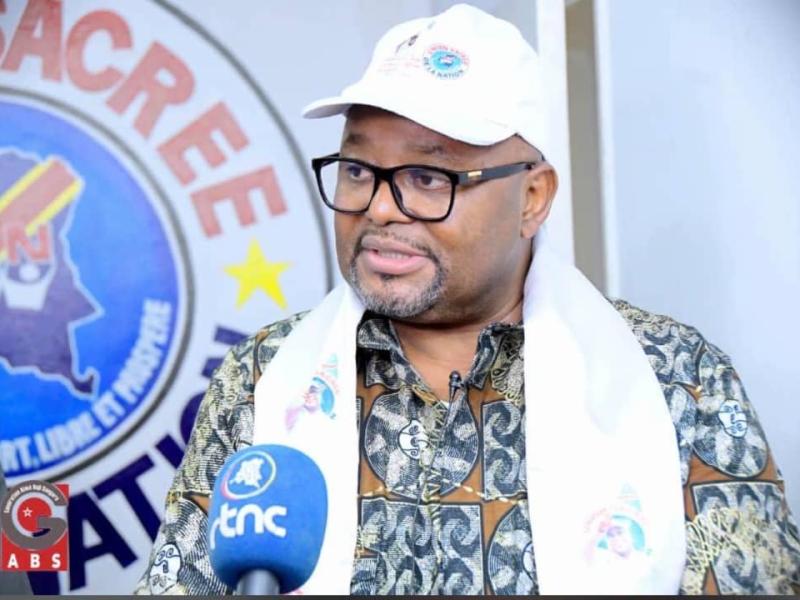
Persistent security crisis in eastern DRC demands urgent regional response
- Politics
In a strongly worded address delivered during the closing session of the March parliamentary sittings on Monday, June 15, 2026, National Assembly President Aimé Boji Sangara placed the deteriorating security situation in the eastern Democratic Republic of Congo (DRC) at the center of national attention, labeling it the primary concern of the country’s legislative body.
Boji opened his remarks by underscoring the gravity of the situation in North Kivu, South Kivu, and Ituri provinces, where civilian populations continue to bear the brunt of ongoing armed violence. The speaker’s tone reflected deep concern over the persistence of hostilities and their humanitarian consequences.
“The security situation in the eastern part of our country remains the primary concern of the National Assembly. As we conclude these sessions, our thoughts immediately turn eastward. The Rwandan aggression through its terrorist group, AFC/M23, alongside the heinous massacres carried out by ADF terrorists, continues to spill the blood of our fellow citizens,” Boji declared.
The National Assembly President reiterated the legislature’s firm condemnation of ongoing armed violence and attacks targeting civilians in the region. He paid tribute to the defense and security forces, as well as the local self-defense militias known as Wazalendo, who stand alongside the Congolese army in its efforts to restore peace.
“From this podium, the National Assembly reaffirms its strongest condemnation of this unjust and deadly war. It is also an opportunity to pay a vibrant and solemn tribute to our armed forces, the FARDC, and the Wazalendo volunteers who fight day and night at the risk of their lives. To the suffering populations of South Kivu, North Kivu, and Ituri, we say: the Nation has not forgotten you,” he affirmed.
Boji’s address took a particularly firm stance against continued hostilities and external interference in eastern DRC. He stressed the DRC’s unwavering commitment to defending its territorial integrity and called for an immediate end to hostilities.
The National Assembly President urged Kigali to recognize the regional imperative of prioritizing sustainable peace between neighbors. His message to Rwanda was unequivocal: the Congolese people will not yield to expansionist ambitions or violence.
“To the Rwandan aggressors and their AFC/M23 allies, we say it is time for the Rwandan leadership to halt its destabilization maneuvers, cease the plundering of our resources, and immediately put an end to the extermination of our people. Neither expansionist aspirations nor violence will succeed in undermining our sovereignty. No portion of our territory can be surrendered. Rwanda must understand that geography condemns us to be neighbors for eternity. War will only perpetuate a hatred whose price will be paid by future generations, and only sustainable peace will benefit all,” he emphasized.
Despite international efforts, including the Washington Agreement facilitated by the United States and the Doha Process led by Qatar with the support of the African Union, the security and humanitarian situation in eastern DRC remains dire. Civilian populations continue to suffer from violence and forced displacements, exacerbating an already catastrophic humanitarian crisis. International funding for humanitarian aid has also declined, further complicating relief efforts.
Calls for respect of peace commitments have been made at national, regional, and international levels, yet tangible progress remains elusive. The persistent gap between diplomatic advancements on paper and ground realities underscores the challenges in implementing these agreements. Each party continues to interpret the provisions of these accords through its own lens, rendering their execution increasingly uncertain.

 Boureima Amadou