
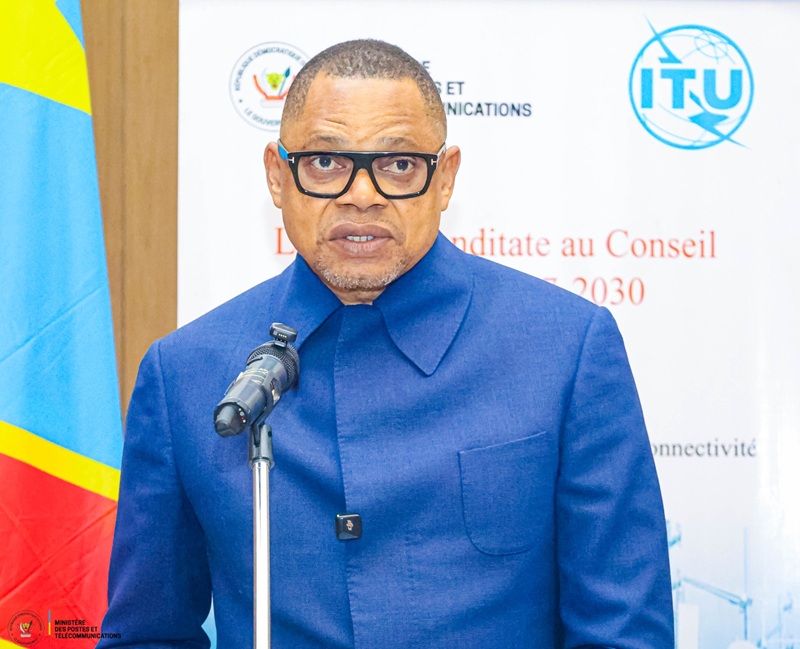
The Democratic Republic of Congo (DRC) is making a bold push to secure a seat on the International Telecommunication Union (ITU) Council, as announced by Minister of Posts and Telecommunications Me José Mpanda Kabangu during a high-level diplomatic gathering in Kinshasa.
The announcement came during an evening reception at the Hilton Hotel in Kinshasa, where Me José Mpanda Kabangu addressed ambassadors, heads of diplomatic missions accredited in the DRC, and representatives of international telecom organizations. The event marked the official launch of the country’s candidacy for the ITU Council during the upcoming Plenipotentiary Conference in Doha, Qatar, scheduled for November 2026.
a strategic vision for africa’s digital future
Speaking to the assembled diplomats, Me José Mpanda emphasized that the DRC’s bid is not merely a national aspiration but a commitment to advancing Africa’s voice in global digital governance. With the country serving as the headquarters of the African Telecommunications Union (ATU), he argued that the DRC is uniquely positioned to represent African interests in shaping international telecom policies.
«Our bid for a seat on the ITU Council reflects our ambition to position the DRC at the forefront of global connectivity standards. It is an opportunity to contribute to international telecom policy-making while amplifying the concerns of Africa and developing nations on critical digital governance issues,» Me José Mpanda stated.
He further highlighted the DRC’s strategic role in Africa’s digital transformation, noting its vast energy potential, mineral resources essential for semiconductor production, and growing telecom market—home to over 110 million people and nearly 74 million mobile subscribers.
four pillars of engagement
Christian Katende, President of the Regulatory Authority for Posts and Telecommunications of Congo (ARPTC), outlined four key commitments underpinning the DRC’s candidacy:
- Strengthening Africa’s voice within the ITU through active participation in policy formulation.
- Promoting investment in networks, satellites, data centers, and public digital infrastructure across the continent.
- Championing balanced digital governance that balances innovation, cybersecurity, digital sovereignty, and citizen protection.
- Building institutional capacity through knowledge sharing, research, and innovation among African regulators and states.
«Supporting the DRC’s candidacy means choosing an Africa that doesn’t just adapt to digital change but shapes it. It means selecting an Africa that invests, innovates, and builds the future responsibly,» Katende told the diplomats.
He added that the DRC’s mineral wealth, including critical minerals essential for AI and semiconductor infrastructure, strengthens its claim to a seat at the global decision-making table.
diplomatic backing from congolese leadership
Noëlla Ayeganagato, Deputy Minister of Foreign Affairs, reaffirmed the government’s full support for the candidacy. She urged attending diplomats to leverage bilateral and multilateral channels to secure votes for the DRC in the upcoming election.
«The ITU is a key partner in achieving sustainable development goals. We urge all potential voting member states to champion this candidacy with clarity and commitment,» she said, emphasizing the DRC’s readiness to play a leading role in global digital governance.
The formalization of the DRC’s candidacy is set for November 2026 in Doha, where member states will vote to determine the next Council members for the 2027–2030 term.


More Stories
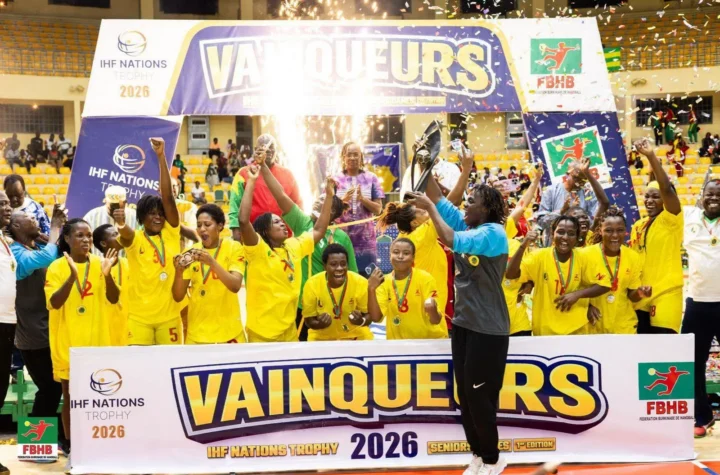
Bénin’s Amazones clinch historic Zone 3 crown
Niger: Anatomy of a state narrative to conceal the regime’s fractures
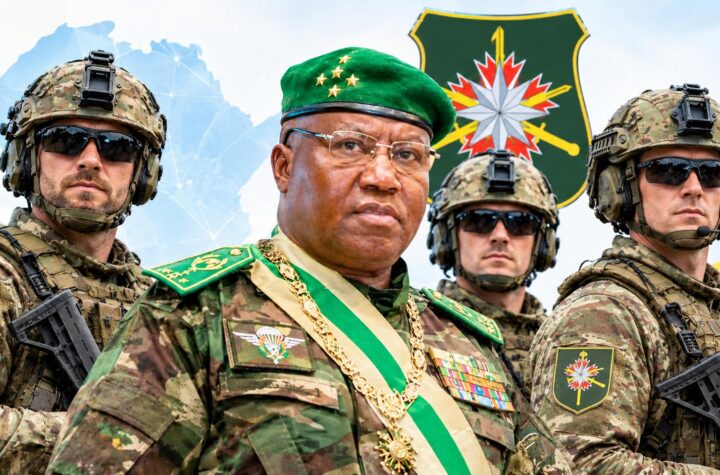
Niger’s leader faces rift with special forces after Russian involvement