Mariama Hamani
Supreme Court dismisses UNIS emergency appeal
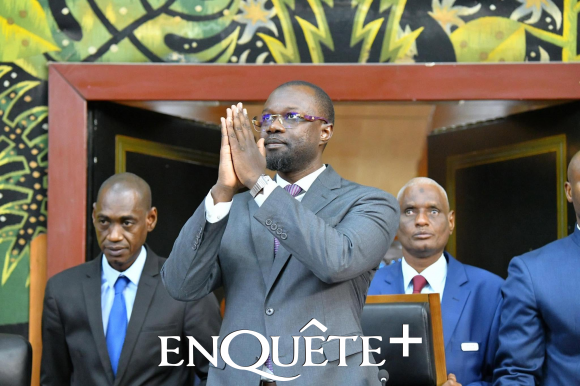
The Supreme Court has rejected the emergency appeal filed by the National Union for Integrity and Sovereignty (UNIS) against the installation of Ousmane Sonko as President of the National Assembly.
The UNIS movement swiftly condemned the June 25 ruling by the Supreme Court’s emergency judge, which declared inadmissible its request to suspend the administrative act confirming Sonko’s presidency. The organization has vowed to pursue its legal challenge on the merits and is urging the full bench of the high court to resolve the jurisdictional dispute.
In a strongly worded statement, UNIS criticized what it described as a « negative conflict of jurisdiction » and a « denial of justice ». The movement had simultaneously filed two legal actions: one to annul the National Assembly Bureau’s administrative decision and another to suspend its effects pending a ruling. This dual approach followed the Constitutional Council’s June 17 decision, which declared itself incompetent, ruling that the contested act was administrative rather than legislative in nature.
The Supreme Court’s emergency judge ruled the suspension request inadmissible, citing the separation of powers principle and refusing to interfere in the Assembly’s internal affairs. However, UNIS argues that this reasoning is legally flawed. The movement contends that by classifying the Assembly Bureau’s act as an « administrative integration act », the Constitutional Council implicitly recognized the Supreme Court’s jurisdiction over the dispute. According to UNIS, the high court’s refusal to hear the emergency appeal creates a legal vacuum where no court will adjudicate the matter.
UNIS further asserts that the separation of powers principle cannot shield legislative power from judicial review of its administrative acts. The movement points to recent Constitutional Council rulings that struck down provisions of a constitutional reform, arguing that the judiciary retains oversight authority over institutional acts when legality is questioned.
In its statement, UNIS warns that such an interpretation could establish a « lawless zone » within the Assembly Bureau, allowing administrative acts to evade judicial scrutiny. Despite the rejection of its emergency appeal, the organization insists it will proceed with its annulment case on the merits before the Supreme Court. It has requested that the full bench convene to rule on jurisdiction and end what it calls a precarious situation undermining legal certainty. UNIS concludes by urging magistrates to fully assert their role in this case, which it frames as a critical test for clarifying the boundaries between executive, legislative, and judicial powers in Senegal.


 Boureima Amadou