Mariama Hamani
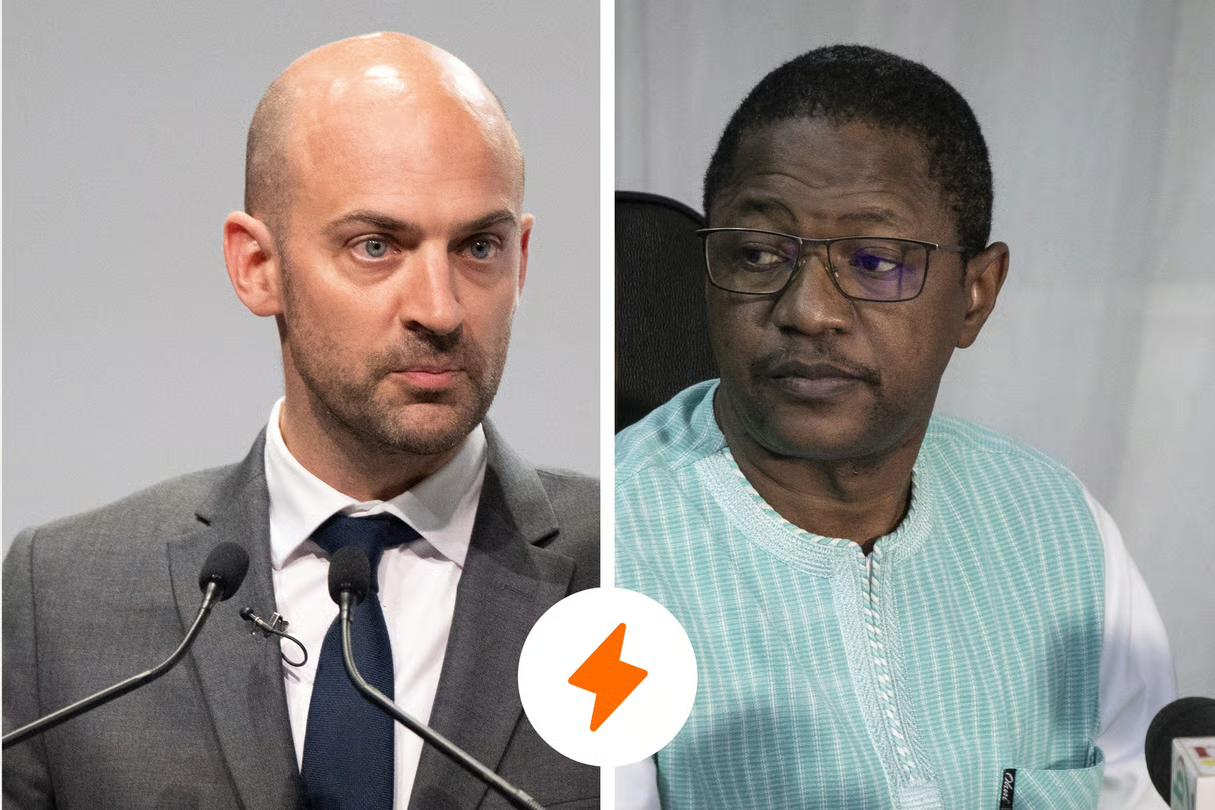
Burkina Faso and France escalate diplomatic tensions in rare ministerial clash
The latest chapter in the escalating standoff between Burkina Faso and France unfolded in a high-stakes meeting between their foreign ministers. The encounter, marked by sharp exchanges and unyielding positions, underscores the deepening rift between the two nations.
French Foreign Minister Jean-Noël Barrot faced off against his Burkinabe counterpart Karamoko Jean-Marie Traoré in a tense session that laid bare the fractures in their bilateral relationship. The ministers, representing opposing visions for the future of their cooperation, engaged in a verbal duel that left little room for compromise.
What triggered the latest confrontation?
The clash did not emerge from a single incident but rather from a series of unresolved grievances. Burkina Faso’s military-led government has increasingly distanced itself from former colonial power France, accusing it of interference in internal affairs. Meanwhile, Paris has expressed frustration over the junta’s alignment with alternative partners, including Russia, which has deepened the distrust between the two capitals.
Key points of contention include:
- Military cooperation: Burkina Faso’s decision to sever long-standing defense agreements with France has sent shockwaves through Paris. The move signals a strategic pivot toward new allies, leaving France scrambling to reassess its regional security footprint.
- Economic ties: Trade imbalances and disputes over resource exploitation have fueled resentment. Burkina Faso’s government has accused French companies of exploiting local markets while failing to deliver promised investments.
- Political narratives: The Burkinabe leadership, led by Captain Ibrahim Traoré, has framed its break from France as an anti-colonial victory, resonating with a population weary of historical grievances. In contrast, France views the shift as a dangerous gamble that could destabilize the Sahel region further.
The broader implications for Sahel stability
This diplomatic rupture is not an isolated incident but part of a broader regional trend. The Alliance of Sahel States, a coalition of military governments in Burkina Faso, Mali, and Niger, has openly challenged traditional Western influence in West Africa. Their collective defiance signals a potential realignment of alliances that could reshape the geopolitical landscape of the Sahel.
The fallout from this confrontation extends beyond Burkina Faso and France. Regional blocs like the Economic Community of West African States (ECOWAS) are closely monitoring the situation, wary of the destabilizing effects such divisions could have on collective security efforts. Meanwhile, international observers warn that the growing estrangement between Paris and its former colonies could weaken counterterrorism operations in a region already grappling with insurgencies.
For Burkina Faso, the path forward remains fraught with challenges. The military government must balance its anti-French rhetoric with the practical realities of governance, including securing vital economic partnerships. Failure to navigate this delicate balance could plunge the country deeper into isolation.
On the French side, the confrontation presents a strategic dilemma. Paris must decide whether to double down on engagement or adopt a more confrontational stance. The outcome will have far-reaching consequences for France’s influence in Africa and its ability to shape regional dynamics.
Can diplomacy bridge the divide?
Despite the acrimony, there remains a glimmer of hope for de-escalation. Behind-the-scenes negotiations are reportedly underway, with both sides exploring avenues to restore dialogue. However, the road to reconciliation will be arduous, requiring concessions that neither party may be willing to make.
The international community, including African mediators, is urging restraint. They argue that a complete rupture could have devastating humanitarian and security repercussions for the Sahel, a region already reeling from years of conflict and instability.
As the dust settles on this latest confrontation, one thing is clear: the relationship between Burkina Faso and France has reached a critical inflection point. The choices made in the coming weeks and months will determine whether the two nations can find common ground or drift further apart, with consequences that will echo across the continent.

 Boureima Amadou