Boureima Amadou
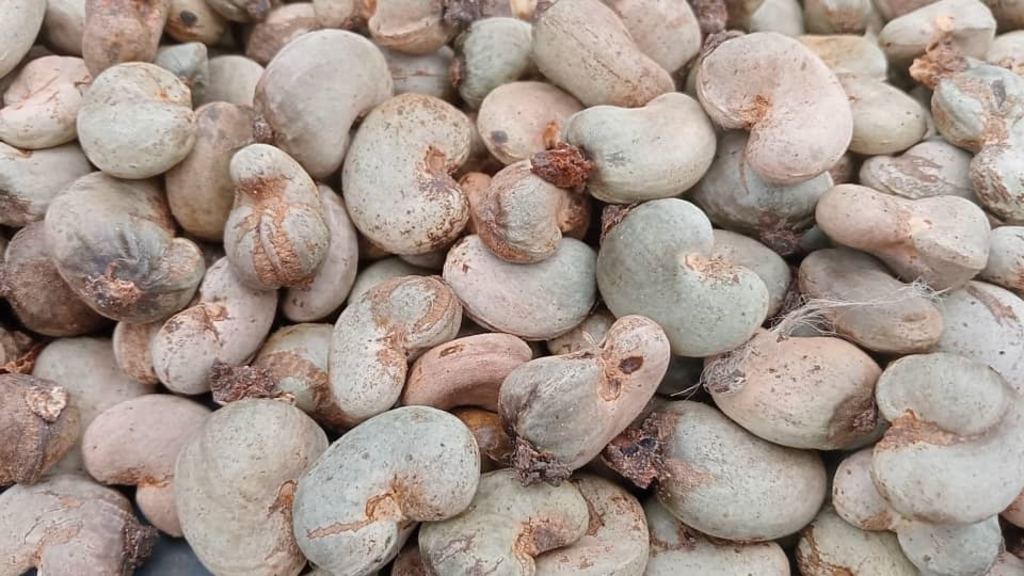
The cashew harvest season is in full swing across Côte d’Ivoire, with the Cotton and Cashew Council projecting production of over 1.3 million tonnes this year. While this figure represents significant output, it marks a potential decline of 200,000 tonnes compared to the previous season. The northern region, particularly the Bounkani area in the northeast, is facing particular challenges due to shifting rainy seasons.
climate disruptions hit cashew production hard
From Bouna, in the Bounkani region, Kouamé Ouattara shares his struggle this season. His 3-hectare cashew plantation, which once yielded 500 kg per hectare, produced barely two sacks this year. The farmer attributes the failure to disrupted rainfall patterns. “We normally get heavy rains between November and December that trigger flowering,” he explains. “This year, the rains stopped in October. No precipitation fell from October through February, preventing flowering. When flowering fails, recovery isn’t possible until the following year.“
Beekeepers maintaining hives in cashew orchards are also suffering. Koffi Ouattara, president of the Koflangué beekeepers’ association, reports a drastic drop in honey production. “Last year, we harvested 100 litres. This season, we’ve barely collected 30 litres.” The decline reflects a broader ecological imbalance affecting pollinators.
farming practices exacerbate challenges
Dr. Sibirina Soro, a lecturer-researcher at Daloa University and national cashew research coordinator, points to unsustainable orchard density as a major issue. “Many orchards resemble dense forests, with planting densities far exceeding recommended levels.” The ideal density is approximately 100 trees per hectare. Overcrowded trees compete for resources, reducing yields and increasing vulnerability to pests.
Soro conducts annual training sessions to help farmers combat insect infestations. In Côte d’Ivoire, cashew growers avoid chemical pesticides, relying instead on natural methods that leave their crops more exposed to losses during poor harvests. Strengthening farmer support systems could mitigate these risks and stabilize production.