
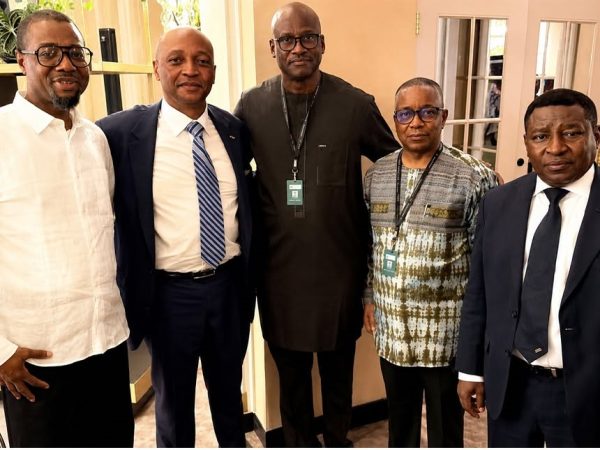
The Confederation of African Football has officially acknowledged the joint interest declaration submitted by Burkina Faso, Mali, and Niger to host the Africa Cup of Nations (CAN) in 2032. This preliminary approval marks the beginning of a long journey for the three nations, who must now prove their capability in infrastructure and security to advance in the selection process.
On July 18 in New York, representatives from the three countries—Burkina Faso’s Colonel Oumarou Sawadogo, Mali’s Mahamadou Cissé, and Niger’s Issaka Adamou—met with CAF President Patrice Motsepe to secure the validation of their joint bid. The milestone was confirmed publicly on July 20, signaling the start of a structured evaluation phase for the Sahel region’s ambitious proposal.
An administrative step, not a guaranteed victory
While the CAF’s validation is a procedural necessity, it remains a modest achievement. Under Article 7.3 of the CAF’s candidacy regulations, the three member federations have met the initial requirement of submitting a joint declaration of interest. This step allows their bid to proceed to the next phase of official assessment, with no assurance of final approval. According to the Nigerien Football Federation, this validation simply enables the dossier to enter the formal bidding process, pending further scrutiny.
Why the CAF is opening three tournaments at once
In early July 2026, the CAF launched simultaneous calls for bids for CAN 2028, 2032, and 2036, inviting all 54 member associations to participate. This strategic move aims to provide federations with extended preparation time to develop robust bids. However, while the CAF has not yet set a final decision date for the 2032 edition, it will rigorously evaluate the Sahelian project’s feasibility—particularly in terms of sports infrastructure, accommodation, and transportation networks.
A precedent from East Africa offers hope
The concept of a three-nation co-hosting arrangement is not unprecedented. Kenya, Uganda, and Tanzania are already set to jointly organize the 2027 edition, serving as a potential blueprint for the Sahelian bid. This collaborative approach could allow Burkina Faso, Mali, and Niger to share the logistical burden by leveraging existing facilities rather than building entirely new ones from scratch. CAF President Patrice Motsepe has emphasized the importance of regional cooperation in this initiative, as outlined in a communiqué from the Nigerien Football Federation.
The CAN 2032 bid as a tool of Sahelian diplomacy
The joint bid reflects a broader trend among the three nations. Since severing ties with ECOWAS, Burkina Faso, Mali, and Niger have intensified collaborative efforts, from economic initiatives to shared diplomatic stances. A successful hosting bid would provide the Alliance of Sahel States (AES) with a rare international platform, especially amid ongoing security challenges. Just days before the bid’s validation, the African Union condemned deadly attacks in Niger and Mali, underscoring the region’s persistent instability.
The CAF’s evaluation will focus not only on security concerns but also on the adequacy of sports facilities, accommodation capacities, and transport networks. The trio must demonstrate long-term preparedness to meet the stringent standards required for hosting a continental tournament.
Key takeaways from the CAF’s validation
The July 18 approval is merely the first hurdle in a lengthy process. The bid dossier must still undergo rigorous technical assessments, including infrastructure viability, hospitality provisions, and security arrangements. While the trio’s governments and football federations pledge to collaborate closely, the ultimate test will lie in their ability to deliver a seamless and secure event. The CAN 2032 could emerge as more than a sporting spectacle—it may symbolize the Sahel’s capacity to translate political unity into global recognition.
More Stories
Can 2032: Burkina Faso, Mali and Niger advance in joint bid
Niger South Africa deepen security ties with high-level talks
Tragic death of Togolese dancer in France sparks investigation