Boureima Amadou
Cotonou hosts pivotal talks to redefine Africa’s energy-to-growth strategy
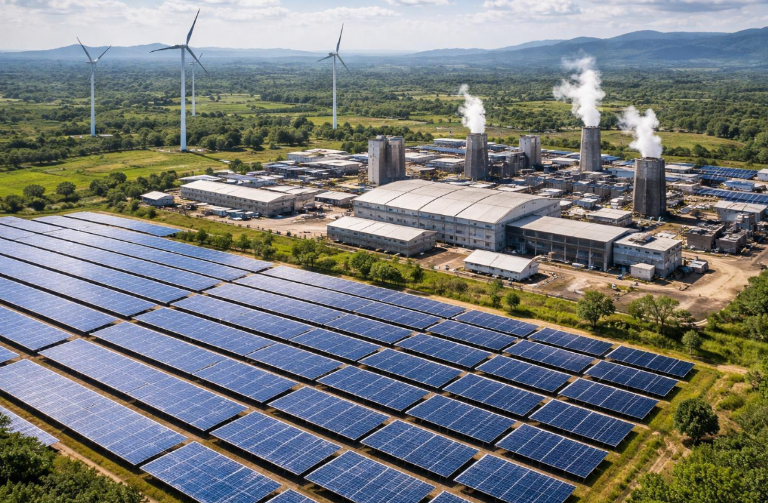
The future of Africa’s energy landscape is being shaped in Cotonou this week, where policymakers, industry leaders, and development partners have converged to turn the continent’s power potential into an engine for economic growth. The 12th African Think Tanks Summit (#ATTS2026), running from October 28 to 30, 2026, marks a decisive turning point in how African nations can leverage energy reforms to drive industrialization, boost productivity, and improve livelihoods.
Organized by the African Capacity Building Foundation (ACBF) in collaboration with the Beninese government and the African Union Commission, the summit brings together a diverse coalition of stakeholders to address one of the continent’s most pressing challenges: transforming energy access into tangible economic outcomes.
At its core, the summit challenges the traditional view of energy as merely a utility. Instead, it positions electricity as a strategic pillar for unlocking Africa’s economic potential—provided that reforms prioritize reliability, affordability, and alignment with the needs of businesses and communities.
From electricity access to economic transformation: the Cotonou agenda
The theme of this year’s summit, “From energy access to economic transformation: practical policy pathways for electricity sector viability, growth, and reform in Africa”, underscores a critical shift in perspective. While expanding electricity access remains fundamental, the discussions in Cotonou are pushing beyond basic connectivity to explore how energy systems can catalyze industrialization, support agriculture, and fuel entrepreneurship.
Key questions dominate the agenda:
- Reliability and cost: How can African nations ensure that electricity is not just available but consistently affordable and dependable for businesses and households?
- Productive use: What policies are needed to encourage the use of electricity in manufacturing, agribusiness, and service sectors?
- Institutional strength: How can governments and regulators design frameworks that attract investment while safeguarding consumer interests?
- Local impact: What role do cities and communities play in ensuring that energy reforms translate into real-world economic benefits?
The summit’s organizers argue that without addressing these dimensions, even the most ambitious electrification projects risk falling short of their economic potential. A household may be connected to the grid, but if the supply is erratic or prices are prohibitive, its ability to contribute to the local economy remains limited.
Benin’s leadership in spotlighting measurable outcomes
The opening ceremony in Cotonou set the tone for the summit’s focus on results over rhetoric. Aristide Médenou, Benin’s Minister of Economy, Finance, and Cooperation, emphasized that energy policies must be judged by their contribution to economic growth, job creation, and improved living standards—not just by the number of new connections.
This approach aligns with broader efforts across Africa to move beyond counting megawatts or kilometers of transmission lines to evaluating how energy systems empower businesses to scale, farmers to increase yields, and cities to thrive. The Beninese government’s participation reflects a commitment to integrating energy reform with national development priorities, ensuring that investments yield dividends beyond the power sector.
Mamadou Biteye, Executive Secretary of the ACBF, reinforced this point, stressing the need for African nations to build institutional capacity—not just infrastructure—to translate energy reforms into economic transformation. Achieving this requires coordinated action among governments, private operators, investors, and local governments, with strong regulatory frameworks to ensure fair competition and consumer protection.
The financing challenge: balancing investment with sustainability
No discussion on Africa’s energy future is complete without addressing financing. Modernizing and expanding electricity infrastructure demands substantial resources, and summit participants are exploring innovative models to bridge the funding gap. These include public-private partnerships, blended finance mechanisms, and regional cooperation to pool resources and expertise.
The summit’s deliberations highlight the need for financial strategies that balance three critical objectives: the viability of energy utilities, the affordability of electricity for consumers, and the sustainability of investments over the long term. Without such balance, even well-intentioned reforms risk faltering under the weight of unsustainable debt or underutilized assets.
Cities and communities: where energy meets opportunity
Energy access is not a remote national issue—it plays out daily in Africa’s cities and towns. Luc Gnacadja, Mayor of Cotonou, framed the debate around local realities, noting how reliable electricity underpins public services, fuels small businesses, and enhances quality of life. For municipalities, energy is both a development tool and a political priority, as it directly influences economic dynamism and social cohesion.
The summit’s focus on urban and community-level impact underscores a holistic view of energy reform: one that recognizes that the benefits of electricity extend far beyond the grid. Improved lighting in markets can extend trading hours, while stable power supply can enable the growth of artisanal workshops and tech hubs. These local gains, multiplied across thousands of communities, can drive broader economic transformation.
Toward a continental energy revolution: what’s next for Africa?
As the summit enters its final day, the momentum is clear: Africa stands at a crossroads where energy reform can be a catalyst for economic revival. The discussions in Cotonou are not just theoretical—they are laying the groundwork for actionable policies that link energy access to economic growth, job creation, and social progress.
The challenge now is to convert these conversations into concrete policies, regulatory reforms, and investments that prioritize productivity, affordability, and inclusivity. If successful, the summit’s outcomes could redefine Africa’s energy narrative from one of scarcity to one of opportunity—a continent where electricity powers not just homes, but economies.
The question facing African leaders is no longer whether energy access matters, but how to harness it as a strategic asset. Cotonou’s deliberations this week provide a roadmap—and the world is watching.


 Mariama Hamani