
 Mariama Hamani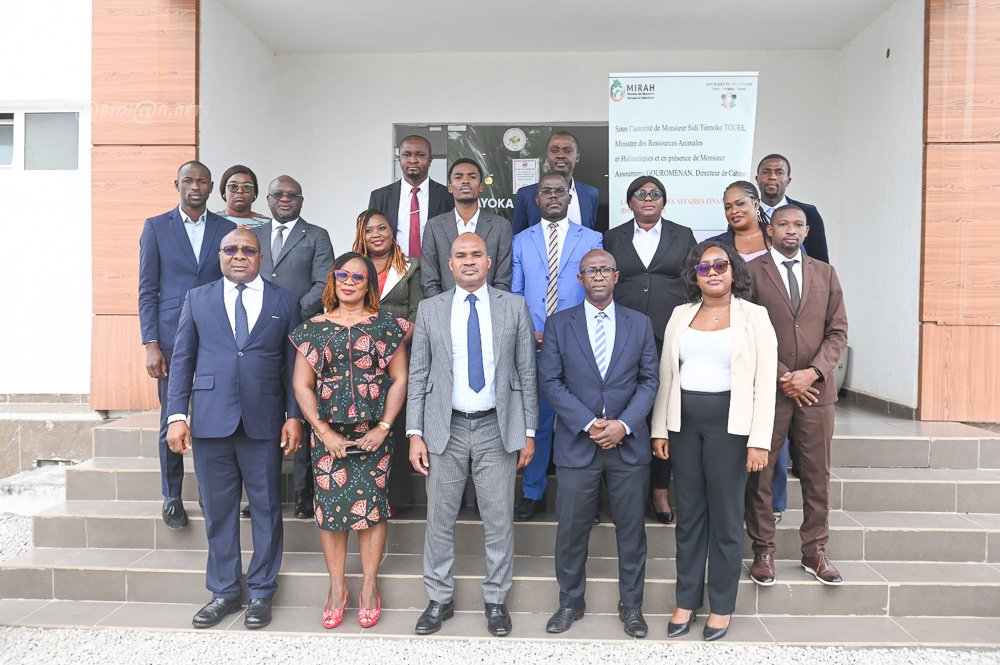
Côte d’Ivoire is committed to significantly increasing its domestic animal and fisheries output, a strategic move designed to lessen its reliance on imports. This initiative comes as the nation faces a substantial external expenditure for meat and offal, which reached 782 billion CFA francs in 2024, as confirmed by Bouadi Beda Paul, the Director of Financial Affairs at the Ministry of Animal and Fisheries Resources (MIRAH).
During a workshop held in Jacqueville on Wednesday, July 29, 2026, focused on revising the Multi-Year Expenditure Programming Document and Annual Performance Projects (DPPD-PAP) for 2027-2029, Mr. Bouadi Beda Paul emphasized the critical need for results-driven budgetary planning. This approach, he noted, is essential for effectively addressing the complex challenges within the sector.
He further elaborated that the National Policy for the Development of Livestock, Fisheries, and Aquaculture (PONADEPA) for the period 2026-2030 is specifically designed to bolster national food sovereignty and stimulate private sector investments across these vital industries.
“In a management framework centered on achieving tangible outcomes, the development of the DPPD-PAP is no longer merely an option; it is an absolute imperative,” stated Bouadi Beda Paul.
The workshop, orchestrated by MIRAH’s financial affairs directorate and running from July 29 to 31, brought together key officials from various departments within the ministry. Their collective objective was to pinpoint the most pressing needs for the upcoming three-year period.
The resulting document from these intensive discussions is set to outline the ministry’s overarching objectives, specify the concrete actions to be undertaken, and establish robust monitoring indicators to effectively gauge the utilization of public resources.
Furthermore, the Director of Financial Affairs strongly encouraged young people to consider careers in livestock farming, fish farming, and aquaculture. He highlighted these sectors as offering significant employment opportunities and pathways for professional growth.


 Boureima Amadou





