Mariama Hamani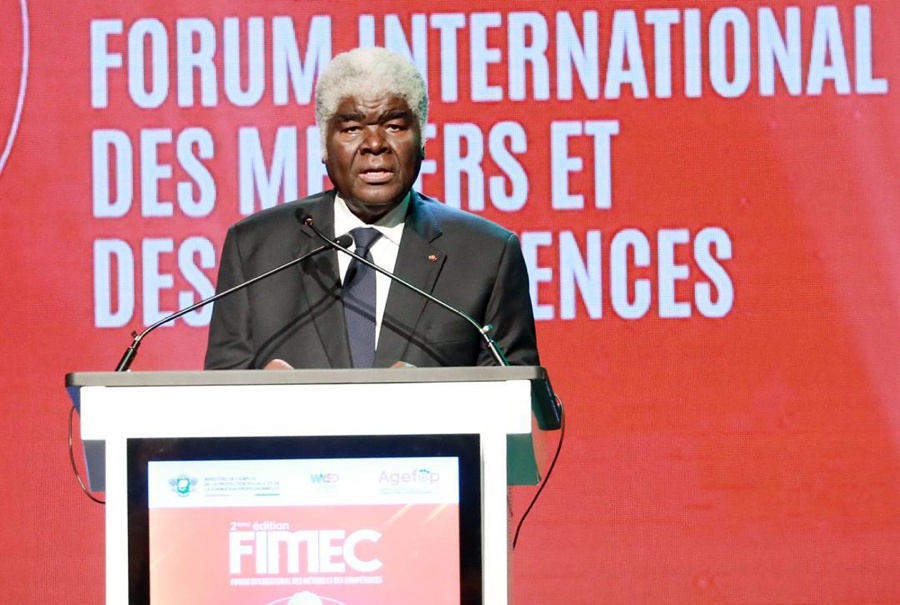
In Abidjan, on July 15, 2026, Prime Minister Robert Beugré Mambé declared that the International Forum on Trades and Skills (FIMEC) serves as a pivotal mechanism for realizing the ambitious objectives of the National Development Plan (PND) 2026-2030. Speaking at the Sofitel Hôtel Ivoire, he underscored FIMEC’s capacity to align the evolving demands of the economy with the competencies fostered by the nation’s training sector.
Prime Minister Mambé presided over the opening ceremony of FIMEC’s second edition, an event centered on the theme: “Skills, employment and economic transformation in Africa: the strategic role of vocational training.”
“The National Development Plan 2026-2030 is designed to accelerate industrialization, bolster our economy’s competitiveness, cultivate national industry leaders, amplify private investment, and generate over 3 million jobs by 2030,” asserted Robert Beugré Mambé. He further emphasized, “From this vantage point, Côte d’Ivoire skills development transcends mere training policy; it has evolved into a fundamental strategy for economic competitiveness. Every commitment to enhancing skills represents a direct investment in the productivity of our enterprises, the appeal of our economy, and the sovereignty of our developmental strides.”
The Prime Minister affirmed the government’s resolute intention to sustain essential investments, thereby positioning vocational training as a genuine catalyst for competitiveness, social inclusion, and the sustainable creation of wealth. “Our aspiration,” he articulated, “is to cultivate an ecosystem where vocational training fully complements national development priorities, fortifies business competitiveness, stimulates innovation, and plays a vital role in the industrialization of our economy.”
Mambé highlighted FIMEC’s crucial role in fostering a collaborative platform. This forum facilitates engagement among public authorities, the private sector, educational institutions, and development partners, enabling the formulation of unified responses to the complex challenges of employment, qualifications, and economic transformation across the continent, reflecting current African affairs.
“Our collective responsibility,” he continued, “lies in establishing the conditions for every young individual to acquire the requisite skills for success, entrepreneurship, innovation, and full participation in their nation’s advancement. This very ambition propels the government’s initiatives, informs the reforms we are implementing, and unites us today at FIMEC.”
The Prime Minister stressed that this second FIMEC gathering clearly demonstrates Côte d’Ivoire’s unwavering commitment to making human capital development a cornerstone of its economic and social transformation strategy. “The global landscape is shifting rapidly. Economies are undergoing profound changes. Professions are continually reinventing themselves,” he observed. “Confronted by these evolutions, our only viable path is to anticipate, innovate, and invest in our most invaluable asset: the women and men who will forge the future of Africa. Together, let us ensure that skills become the primary engine driving our competitiveness, our economic sovereignty, and our shared prosperity, a key aspect of African governance.”
The two-day agenda for this edition featured a diverse program, including extensive exhibitions and high-level panel discussions.