Boureima Amadou
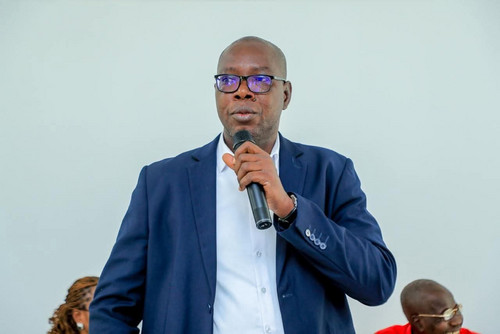
The UNJCI faced a critical legal challenge when a court issued an emergency injunction on February 20, suspending its planned ordinary Congress—scheduled to renew key governing bodies. A group claiming to uphold constitutional compliance had filed the motion, triggering an immediate appeal by the union’s leadership. With the original mandate set to expire at midnight on February 26, the urgency to act was undeniable.
To prevent an institutional void, the UNJCI swiftly organized an extraordinary Congress on February 25. Delegates, adhering to internal statutes, approved a temporary extension of mandates until the postponed ordinary Congress could be safely convened. However, the decision sparked violent clashes, underscoring the deep divisions within the organization.
Jean Claude Coulibaly, UNJCI president, emphasized the necessity of the move: “We acknowledged the court’s ruling while pursuing an appeal, but allowing a statutory void would have destabilized our union. The extraordinary Congress’s mandate extension was a responsible choice to preserve continuity. The UNJCI is the united voice of Ivorian journalists and must remain autonomous.”
Omar Faruk Osman, president of the Fédération africaine des journalistes (FAJ), condemned the interference: “Blocking a union from assembling to renew its leadership—and then exploiting the situation to create institutional chaos—is a blatant violation of trade union freedom. This contradicts Côte d’Ivoire’s commitments to African and international labor standards. No political entity has the right to dictate the leadership of a journalists’ organization.”
Anthony Bellanger, secretary-general of the International Federation of Journalists (FIJ), labeled the situation a severe breach of association rights: “This is an outrageous interference in internal union affairs. Alongside the FAJ, we will file formal complaints with relevant African and international bodies, including the International Labour Organization (ILO), against Côte d’Ivoire’s government for these violations. The autonomy of journalists’ unions is a non-negotiable pillar of international law.”
The FIJ and FAJ urge Ivorian authorities to uphold the UNJCI’s independence, ensure member safety, and facilitate the orderly, transparent, and peaceful convening of its ordinary Congress.