
 Boureima Amadou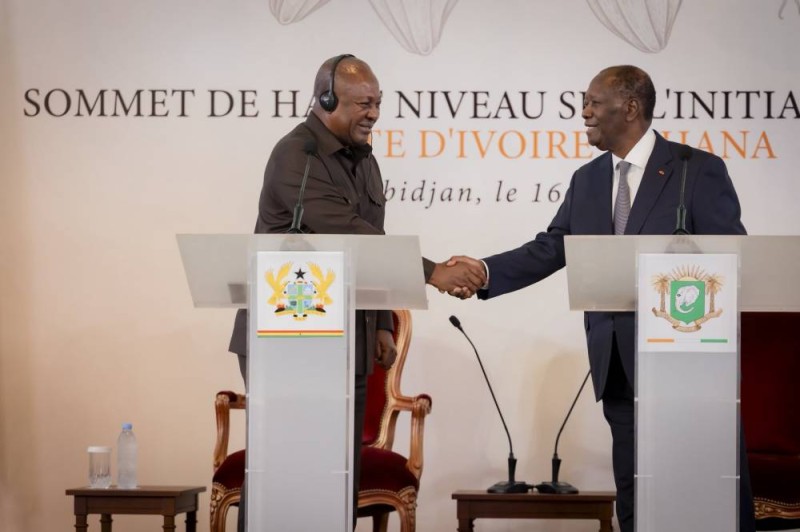
In a landmark summit held at the Presidential Palace in Abidjan-Plateau, the leaders of Côte d’Ivoire and Ghana convened to reinforce their commitment to a sustainable cocoa industry. President Alassane Ouattara of Côte d’Ivoire and his Ghanaian counterpart, John Dramani Mahama, jointly announced decisive measures to bolster the economic resilience of cocoa producers across West Africa.
Uniting for a stronger cocoa economy in Africa
The high-level gathering served as a platform to formalize strategies aimed at fostering economic justice within the cocoa sector. Central to these decisions is the harmonization of farm-gate pricing policies, which are designed to ensure fair compensation for farmers while enhancing the sector’s overall stability. Additionally, the two nations committed to deepening value addition processes and expanding this sustainable initiative to include more African cocoa-producing countries.
Cocoa’s pivotal role in West African development
Côte d’Ivoire and Ghana dominate global cocoa production, supplying over 60% of the world’s supply and accounting for 80% of Africa’s output. This industry sustains millions of livelihoods across the continent, making it a cornerstone of economic and social progress. President Ouattara emphasized that cocoa is not merely an agricultural commodity but a vital resource for mobilizing development funds and advancing social equity.
« The cocoa farmer stands at the heart of this sector, » he stated. « Their daily labor fuels the global chocolate industry and shapes the future of this vital trade. Their well-being must remain the focal point of every policy and decision we make. »
Milestones achieved since 2018
Reflecting on the progress since the 2018 Abidjan Declaration, both leaders highlighted the introduction of a living income differential. This mechanism has significantly improved remuneration for cocoa producers and demonstrated the power of coordinated action by African governments in influencing global market prices.
The summit also addressed persistent challenges facing the industry, including price volatility, climate change impacts, aging cocoa orchards, illegal gold mining encroaching on farmland, and evolving international sustainability standards—particularly those imposed by the European Union.
Ghana’s vision for an empowered cocoa sector
President Mahama echoed the commitment to empowering cocoa farmers, stressing the need for continued investment in the sector. « Our shared goal is to equip farmers with the tools, resources, and opportunities they need to thrive, » he said. « By exchanging best practices and increasing financial flows into the industry, we can ensure a prosperous future for cocoa cultivation in West Africa. »
The leaders underscored the importance of inclusive growth, pledging to engage other cocoa-producing nations on the continent to strengthen Africa’s position in the global market.
A sustainable legacy for future generations
The summit concluded with a renewed pledge to prioritize sustainability at every level of the cocoa value chain. From environmental stewardship to equitable economic policies, Côte d’Ivoire and Ghana are setting a benchmark for responsible cocoa production in Africa and beyond.


 Mariama Hamani




