Mariama Hamani
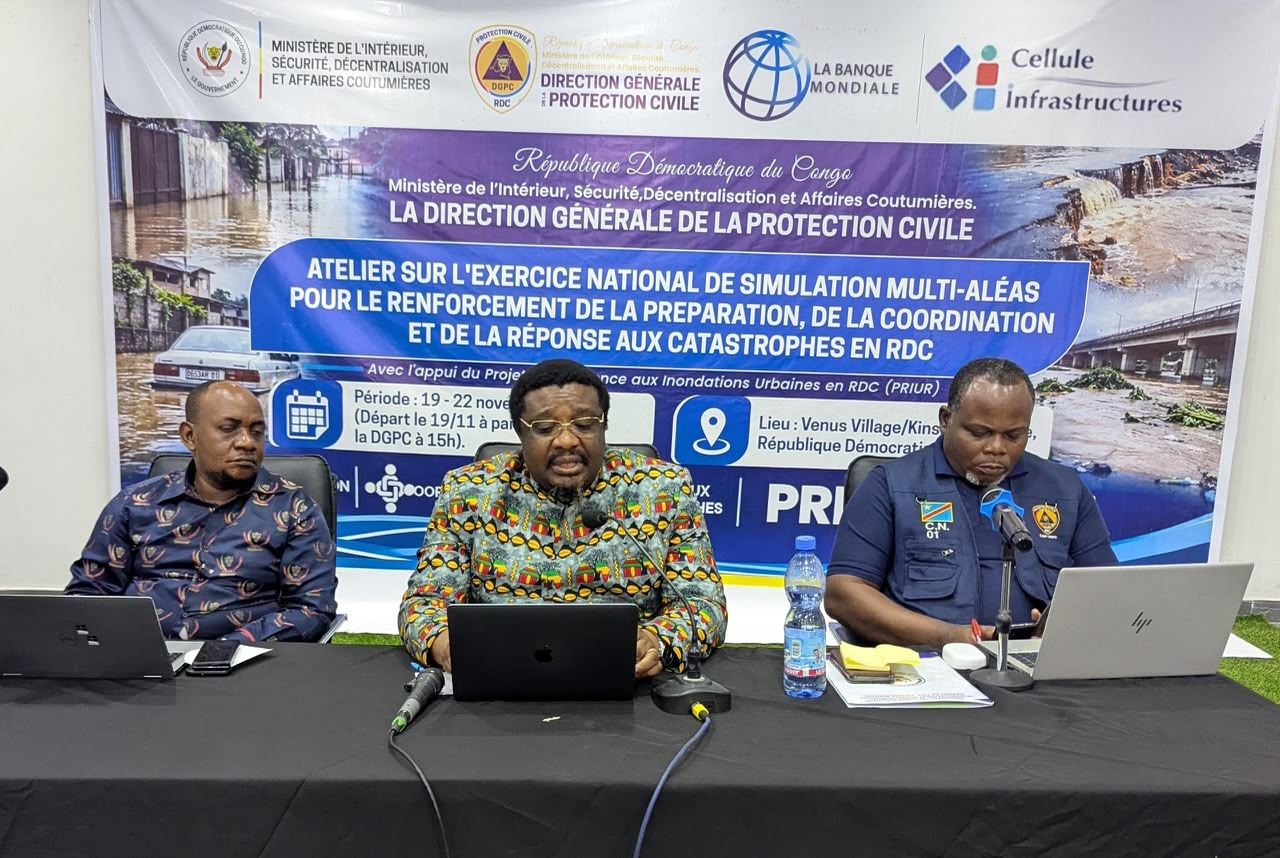
The Democratic Republic of Congo has reached a turning point in its disaster preparedness strategy. During the launch of the national multi-hazard simulation exercise in Kinshasa, civil protection officials emphasized that safeguarding citizens is no longer just a technical task—it’s a moral and institutional imperative driving the nation forward.
From reactive measures to proactive resilience: the civil protection breakthrough
Joseph Nkinzo, Director-General of the Direction générale de la protection civile (DGPC), framed the exercise as a historic shift in Congo’s approach to disaster management. Speaking at the opening ceremony, he declared that civil protection is now a core responsibility of the state, placing human life at the center of public policy.
« This isn’t just about administrative procedures or technical tools—it’s about fulfilling a fundamental duty to every Congolese citizen, » Nkinzo stated. « Our mission is to build a safer, more resilient Congo where disaster response is not just a reaction, but a well-oiled prevention machine. »
The initiative aligns with President Félix Tshisekedi’s vision of a nation where security and community protection are pillars of national development. Under this framework, the DGPC is accelerating reforms to create an integrated national system for risk and disaster management—one that prioritizes prevention, early warning systems, and coordinated response.
Testing the system: what the national drill will reveal
This week’s simulation exercise is designed to push Congo’s civil protection apparatus to its limits. Authorities will evaluate:
- Alert and communication mechanisms under extreme pressure
- Decision-making speed and accuracy during simulated crises
- Search, rescue, and evacuation protocols for affected populations
- The effectiveness of inter-agency coordination
« We’re not waiting for disasters to strike to act, » Nkinzo emphasized. « We’re building a culture of anticipation—one where institutions are prepared, roles are clear, and collective action is seamless. »
Breaking silos: the power of unified disaster response
A major challenge in Congo’s disaster management has been fragmented efforts. The DGPC is now pushing for a unified approach, with the National Disaster Risk Management Platform serving as the central hub for coordination.
« No single agency can handle every aspect of disaster response alone, » Nkinzo noted. « Success depends on sharing information, pooling resources, and respecting institutional mandates. The Platform will ensure that every stakeholder—from local authorities to international partners—works in sync. »
International backing: the World Bank’s role in strengthening Congo’s defenses
The DGPC has singled out the World Bank’s Urban Flood Resilience Project in DRC (PRIUR) as a critical partner in this transformation. The project has already bolstered the country’s institutional and operational capabilities in disaster preparedness and response.
« This partnership is a game-changer, » Nkinzo said. « It’s helping us design a resilient national disaster management system that can withstand future shocks. We’re committed to deepening this collaboration to ensure long-term protection for our people. »
Key outcomes of the exercise will include a National Integrated Flood Preparedness and Response Plan, with a focus on El Niño-related risks. The plan will outline clear responsibilities, resource needs, and implementation timelines.
A call to action: why prevention saves lives
Nkinzo closed with a sobering reminder: « Behind every disaster are human lives—families and communities counting on the state for protection. » He urged a collective commitment to risk prevention, crisis anticipation, and rapid intervention.
« Our goal is simple: to ensure that when crises strike, we don’t just react—we respond with precision, speed, and unity. That’s how we build a Congo that’s truly resilient. »

 Boureima Amadou