Mariama Hamani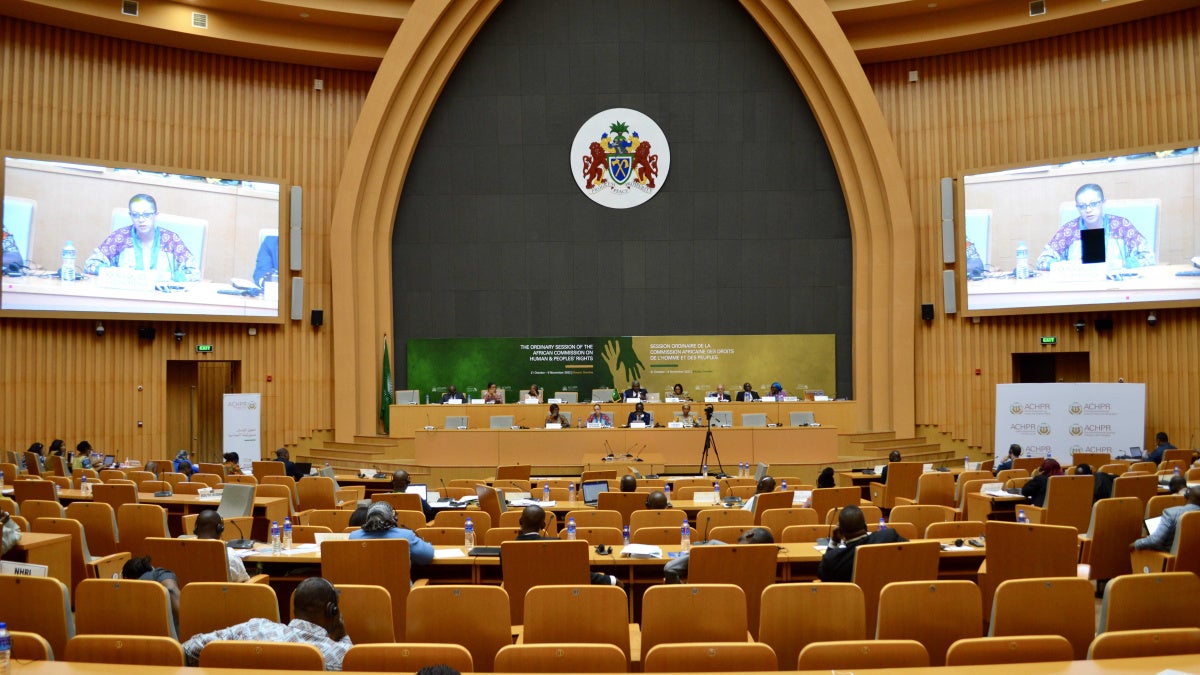
Why the African Commission on Human and Peoples’ Rights must act on Burkina Faso
The African Commission on Human and Peoples’ Rights (ACHPR) faces a critical moment as it prepares to review Burkina Faso’s human rights record on October 23, 2024. Human rights advocates are calling for urgent action to address escalating abuses linked to the country’s ongoing armed conflict, shrinking civic space, and the persistent failure to hold perpetrators accountable.
Burkina Faso has been grappling with an insurgency led by Islamist armed groups since 2016, following incursions from neighboring Mali. The crisis has intensified since two military coups in 2022, leading to widespread civilian suffering. The state reporting procedure—a mechanism under the African Union to assess compliance with the African Charter on Human and Peoples’ Rights—requires member states to submit regular reports detailing legislative and policy measures. However, Burkina Faso’s 2023 report, covering 2015–2021, fails to adequately address pressing concerns such as:
- Widespread abuses by both state security forces and Islamist armed groups
- Severe restrictions on fundamental rights and freedoms
- The culture of impunity preventing justice for victims
“The ACHPR’s review of Burkina Faso offers a vital chance to engage with authorities on their human rights obligations,” said Allan Ngari, Advocacy Director for Africa at Human Rights Watch. “The Commission must press Burkina Faso to prioritize civilian protection in military operations and ensure full adherence to international humanitarian law.”
Escalating violence and unaddressed atrocities
Human rights organizations have documented horrific crimes committed by Burkina Faso’s security forces, including mass killings of civilians accused of collaborating with armed groups. Between 2015 and 2022, soldiers allegedly executed and forcibly disappeared hundreds of people. Meanwhile, Islamist factions—such as the Group for Support of Islam and Muslims (GSIM), linked to Al-Qaeda, and the Islamic State in the Greater Sahara (EIGS)—have carried out targeted assassinations, sexual violence, abductions, and looting, trapping entire communities in sieges.
Despite these atrocities, Burkina Faso’s government has made minimal progress in investigating or prosecuting those responsible. The 2023 report omits any mention of inquiries into alleged state-sponsored abuses, signaling a systemic failure to address impunity.
Shrinking civic space and repression of dissent
Since seizing power in 2022, the military junta has systematically targeted activists, opposition figures, journalists, and critics. Methods of suppression include:
- Illegal conscription of dissidents into military service
- Enforced disappearances of government critics
- Judicial harassment and intimidation of human rights defenders
In December 2023, the ACHPR expressed alarm over the abduction of prominent rights activist Daouda Diallo and ongoing threats against defenders. By July 2024, the Commission had condemned the forced disappearances of three journalists, yet authorities have provided no updates on their whereabouts despite repeated appeals from families and legal representatives.
The ACHPR last visited Burkina Faso years ago. Advocates urge the Commission to seek official access for an in-depth assessment and a comprehensive public report on the situation.
Demands for accountability and protection
“The ACHPR must confront the full scope of abuses—by state forces and Islamist groups—and demand concrete accountability measures,” Ngari emphasized. “It should also recommend urgent steps to safeguard the rights of activists, journalists, and political opponents, enabling them to work without fear.”
The upcoming review presents an opportunity to push Burkina Faso toward meaningful reform. Failure to act risks entrenching a cycle of violence and repression with devastating consequences for civilians.

 Boureima Amadou