Mariama Hamani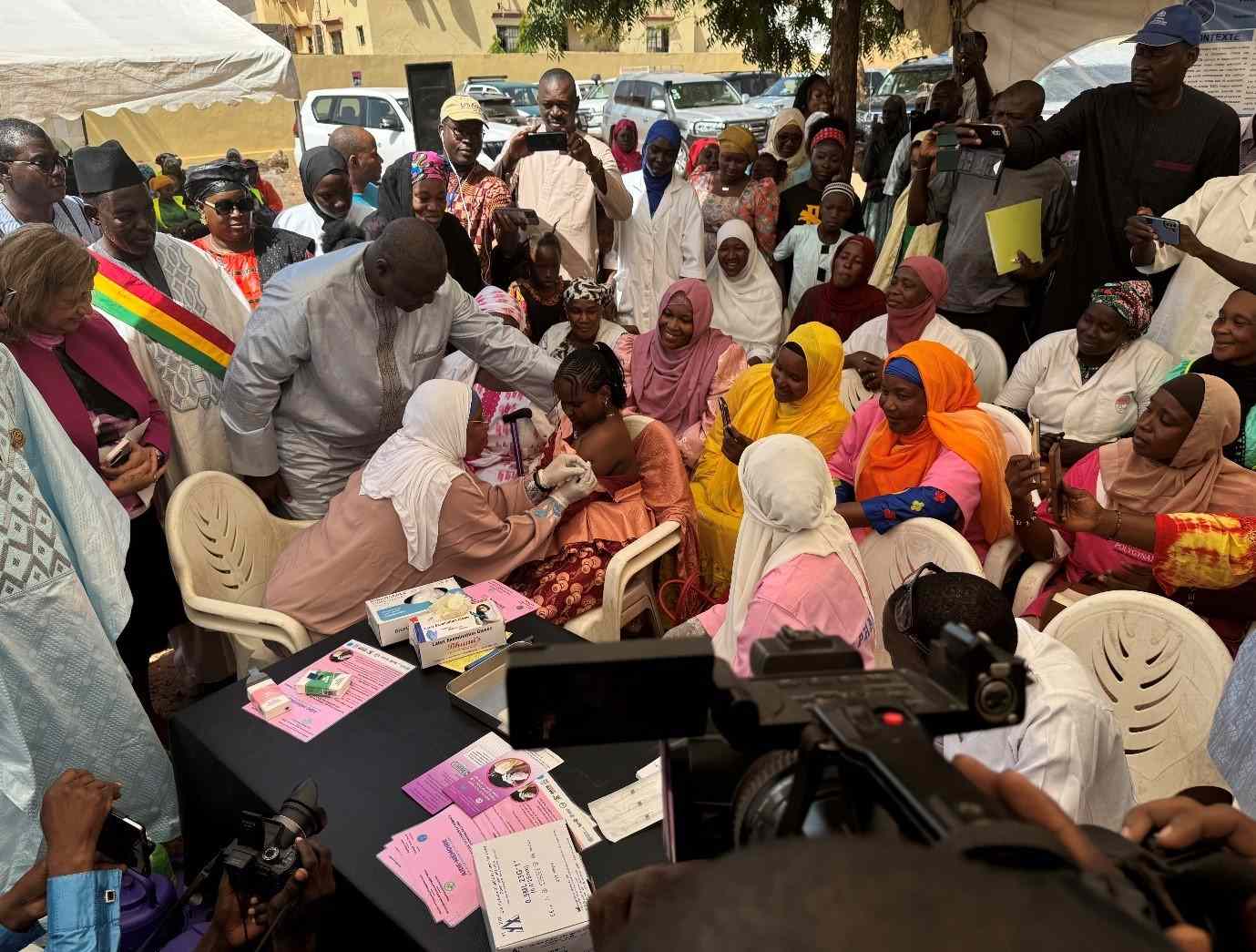
Mali’s bold move: HPV vaccine aims to protect generations of women from cervical cancer
In a landmark decision, the Malian government has incorporated the human papillomavirus (HPV) vaccine into its routine immunization program, marking a significant turning point in the fight against cervical cancer. During a high-profile launch ceremony in Bamako, attended by government officials and international partners including Gavi, the initiative was hailed as a breakthrough in public health for Malian women.
- 5-minute read
For many Malian women, cervical cancer remains an invisible epidemic. Take Fatoumata, a 38-year-old mother who faced both the disease and financial ruin in her battle for survival.
« I initially had a fibroid that I delayed treating. It wasn’t until I started experiencing severe bleeding that I finally sought surgery. Post-surgery, I noticed abnormal discharges—watery, odorless fluids. My gynecologist confirmed it was cervical cancer. The treatment cost me between 5 to 6 million West African CFA francs, with the surgery alone accounting for two million. »
This historic initiative could protect over 320,000 Malian girls annually, potentially reducing cervical cancer cases by nearly 90% and preventing more than 3,600 deaths each year.
Fatoumata’s harrowing experience highlights the dual challenges facing Malian women: late-stage diagnoses and prohibitive treatment costs in a healthcare system where quality care remains out of reach for many.
Why cervical cancer devastates women in Mali
Cervical cancer, primarily caused by persistent HPV infection, ranks as the second most common cancer among Malian women aged 15 to 44. The tragedy unfolds in slow motion, as late detection and cultural barriers prevent timely intervention. Many women hesitate to discuss symptoms openly due to pervasive myths—some attributing the disease to curses or supernatural causes.
« Cervical cancer is sometimes perceived as a spell cast by a co-wife, sister-in-law, or former partner, » explains a reproductive health advocate working on the frontlines. These misconceptions create dangerous delays in seeking medical help, exacerbating an already critical situation.
A game-changing solution: Mali’s HPV vaccination program
In a historic move, Mali has become one of the first Sahelian nations—and the first conflict-affected country supported by Gavi—to introduce HPV vaccination into its routine immunization schedule. Dr. Ibrahima Diarra, Director of Mali’s National Immunization Center, emphasized the vaccine’s transformative potential: « A single dose administered to 10-year-old girls provides over a decade of protection against the HPV strains responsible for 70% of cervical cancers. » Thanks to Gavi’s support and government co-financing, the vaccine is now freely available.
This initiative aims to vaccinate more than 320,000 girls annually, potentially reducing cervical cancer cases by nearly 90% and preventing over 3,600 deaths among Malian women each year.
Further reading
Toward health equity: why this matters
The HPV vaccination program represents a pivotal step toward health equity. Cervical cancer claims hundreds of thousands of lives annually, with 90% of deaths occurring in low-income countries. By making prevention accessible to all girls, regardless of location, Mali is addressing a fundamental injustice. Dr. Diarra explains the age selection: « We chose 10-year-olds because their cervixes are still healthy before sexual activity begins, maximizing vaccine efficacy. » This approach aligns with WHO recommendations targeting girls aged 9-14.
By introducing the HPV vaccine, Mali sets a precedent not just for the Sahel but for fragile, conflict-affected nations globally.
The economic impact is equally compelling. « A single dose costs around 150,000 West African CFA francs in private pharmacies, but through Gavi’s support and government co-financing, the vaccine is now free as part of the routine immunization program, » Dr. Diarra notes. This initiative not only saves lives but also reduces the financial burden of treating advanced-stage cervical cancer.
Mali’s proactive stance positions the country as a regional leader, demonstrating how targeted vaccination can break the cycle of preventable disease. As the world aims to vaccinate 86 million girls in low- and middle-income countries by 2025, Mali’s initiative serves as both a model and an inspiration.
Combating misinformation: protecting public health
The vaccination program faces another challenge: pervasive misinformation. False claims about vaccines’ safety and effects on fertility circulate widely, fueled by opposition groups. « Addressing these rumors is crucial, » insists Dr. Diarra. « This vaccine is safe, effective, and does not compromise girls’ reproductive health. » Health Minister Colonel Assa Badiallo Touré echoed this sentiment during the program’s launch.
The introduction of the HPV vaccine marks a watershed moment for women’s health in Mali. By prioritizing prevention, the country is breaking the cycle of suffering and setting a course toward a healthier future. This initiative doesn’t just protect individual women—it safeguards generations to come.

 Boureima Amadou