Boureima Amadou
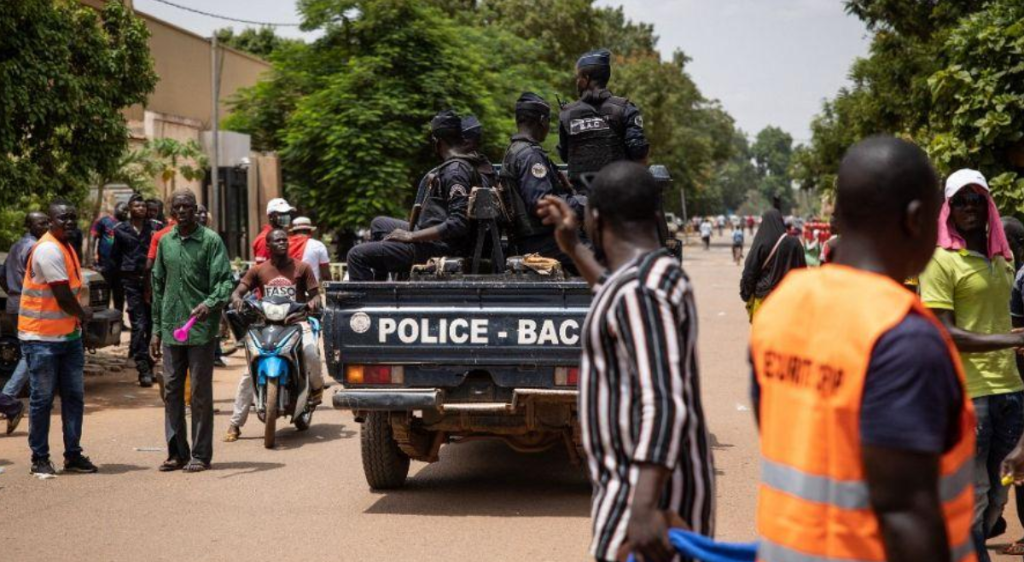
The eastern region of Burkina Faso has reached a critical juncture following a brazen assault on the Balga police detachment by armed fighters linked to the Jama’at Nusrat al-Islam wal Muslimin (JNIM). The overnight strike left the outpost in ruins, with early reports indicating significant loss of life among security personnel and the seizure of weapons and vehicles by the attackers.
Breaking point: how the Balga attack reshapes eastern Burkina Faso’s security landscape
The assault on Balga, situated just 25 kilometers from Fada-N’Gourma, marks a dangerous escalation in the jihadist campaign. Security sources confirm the police detachment was systematically dismantled—the buildings torched, communications disrupted, and operational capacity obliterated in a matter of hours. This wasn’t just an attack on infrastructure; it was a deliberate blow to the state’s authority in a region already teetering on collapse.
Among the most troubling developments is the high number of missing personnel, leaving families and authorities scrambling for answers. Without confirmed casualty figures, the human toll remains a gaping unknown, compounding the crisis.
From tactical setback to strategic defeat: why isolated security outposts are collapsing
The destruction of Balga highlights a growing vulnerability in Burkina Faso’s security architecture. Isolated police posts, often under-resourced and exposed, have become prime targets for well-coordinated assaults. The loss of such a position doesn’t just weaken immediate defense—it erodes local governance, disrupts civilian protection, and accelerates the retreat of state presence in vulnerable communities.
Civilian impacts are immediate and severe:
- Economic paralysis: Market closures, disrupted trade routes, and abandoned farmlands threaten livelihoods.
- Mobility restrictions: Fear of ambushes forces residents to curtail movement, crippling daily routines.
- Administrative vacuum: Absence of policing allows armed groups to consolidate control over remote areas.
Can Burkina Faso reverse the tide after the Balga blow?
The attack arrives at a pivotal moment for Ouagadougou’s counterinsurgency strategy. With jihadist groups exploiting gaps in security coverage, the government faces a stark choice: reinforce isolated outposts with better equipment and rapid-response teams, or risk ceding more territory to militant control.
A robust recovery plan must address:
- Personnel accountability: Full investigations into the missing officers and a transparent accounting of casualties.
- Logistical overhaul: Securing supply lines and bolstering communications to prevent isolated units from becoming sitting ducks.
- Civilian reassurance: Re-establishing trust through visible security patrols and humanitarian access to affected communities.
As dawn broke over Balga, the charred remains of the police station served as a brutal reminder: Burkina Faso’s fight against extremism is at a turning point. The question now is whether the state can regain its footing before the next strike.
Beyond the ashes: rebuilding security where the state is under siege
While the immediate focus remains on search-and-rescue efforts and damage assessment, the long-term battle is for the soul of eastern Burkina Faso. Each burnt-out police post does more than destroy property—it chips away at the social contract between citizens and their government. Restoring a sense of security won’t be achieved overnight, but every delayed response risks normalizing the chaos that now defines daily life in towns like Balga.
The coming weeks will test whether Burkina Faso can turn the tide—or if the JNIM’s momentum in the east will prove unstoppable.


 Mariama Hamani