Boureima Amadou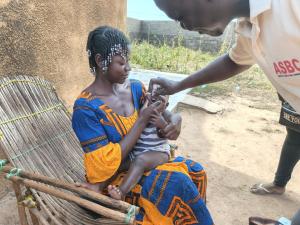
Burkina Faso: enhancing lifelong protection through robust vaccination efforts
Fada N’Gourma – Poliomyelitis stands as a severe, yet entirely preventable illness. Across Burkina Faso, mothers demonstrate a profound commitment daily, striving to safeguard their children from vaccine-preventable diseases.
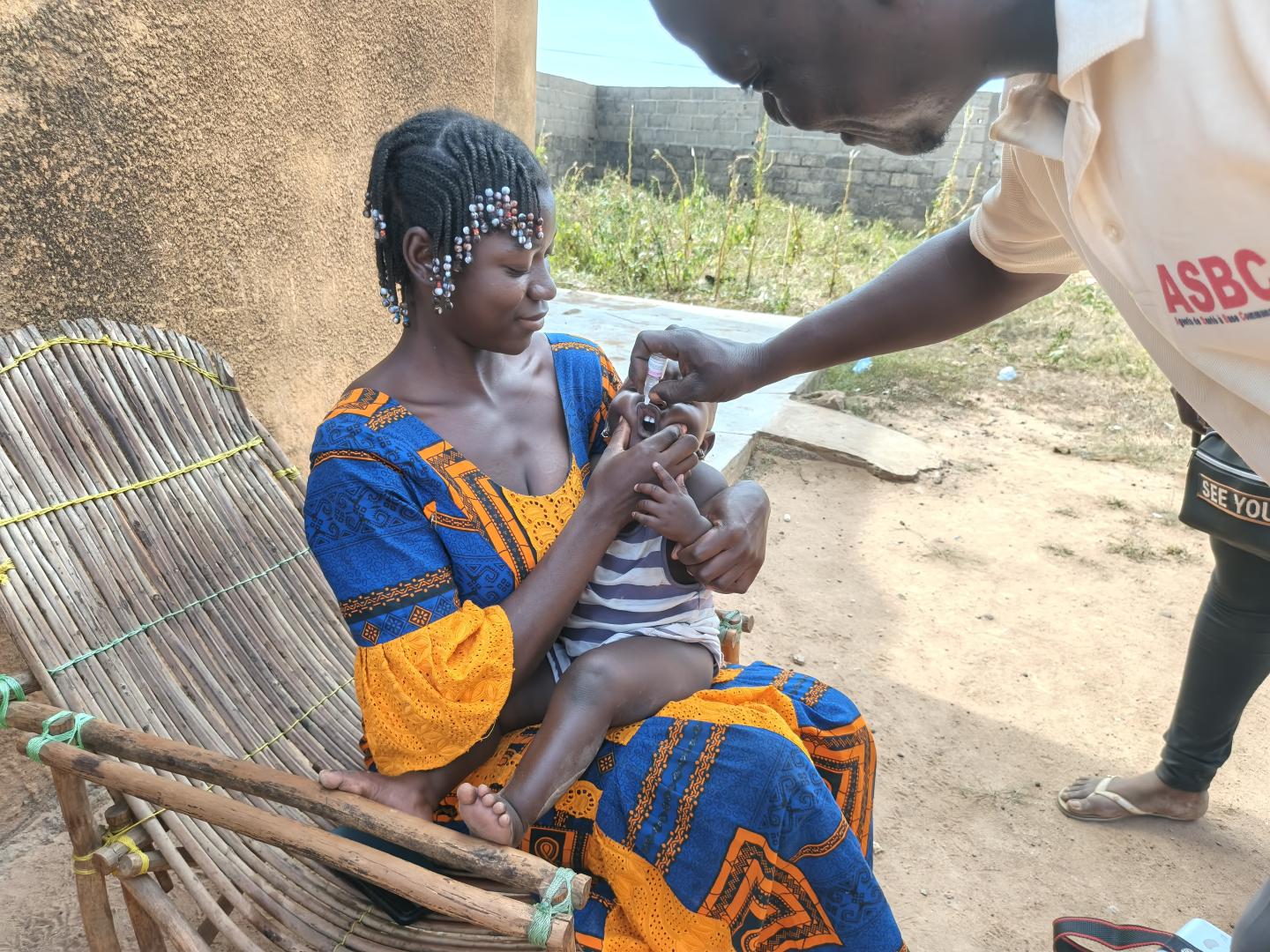
Nadège Thiombiano, a resident of Fada N’Gourma and within the operational area of the Sector 9 Health and Social Promotion Center (CSPS), meticulously oversees the well-being of her 13-month-old daughter, Mouzaratou. The moment she learned of an upcoming polio vaccination drive, she woke early to prepare her child. Her primary goal was unequivocal: to shield Mouzaratou from this debilitating disease. For Nadège, vaccination embodies both a sacred maternal duty and an unwavering promise. “I understand the devastating impact polio can have on a child. As long as I live, none of my children will ever miss their vital vaccinations,” she affirmed.
Nadège vividly recounts encountering individuals affected by polio, a memory that profoundly reinforces her current dedication to immunization. “Vaccination signifies life,” she states with powerful simplicity. Empowered by this conviction, Mouzaratou has received all scheduled vaccines according to the national immunization calendar, including the crucial polio vaccine.
On November 7, 2025, from the early hours, health personnel at the Sector 09 CSPS were already diligently at work. During the polio vaccination campaign, which took place from November 7 to 10, an impressive 5,290 children aged 0 to 59 months were immunized within their designated responsibility zone. This remarkable achievement represents a coverage rate exceeding 104%, successfully surpassing the initial target of 5,060 children.
For André Yonli, the head nurse at Sector 09 CSPS, “these compelling figures underscore the exceptional mobilization of parents, coupled with the tireless efforts of the vaccinator teams and dedicated social mobilizers.” He further elaborated that this success is the direct outcome of rigorous coordination among various health system stakeholders and the persistent commitment of community actors. “We convened numerous advocacy and mobilization meetings to identify potential challenges and implement rapid, effective solutions. Mobile teams were able to reach even the most remote areas, including non-serviced neighborhoods and sites housing internally displaced persons, thanks to meticulous planning and continuous oversight.”
Consistent with other healthcare facilities in the district, the CSPS benefited from enhanced training in data management and interpersonal communication, specifically designed to better inform and engage families. Communication proved to be a pivotal component: extensive social mobilization sessions were conducted with influential religious leaders, customary chiefs, and civil society organizations, including prominent women’s associations.
These concerted efforts are clearly yielding positive results, as evidenced by Talato Lompo, a mother of four. “Previously, with all the misinformation circulating, I genuinely believed that vaccination would make my children sick. However, thanks to the clear explanations that health workers provide us daily, I have understood its critical importance for some time now. Today, I observe that my children rarely fall ill since they have been vaccinated. That is precisely why I have decided to continue their immunization schedule.”
Adjaratou Ouoba, a dedicated community health worker and national volunteer for health promotion, expressed her profound satisfaction at this encouraging progression. “Through targeted awareness campaigns and robust social mobilization, mothers are becoming increasingly conscious of the inherent dangers of poliomyelitis and the paramount importance of vaccination. Many parents, much like Nadège, are now proactively taking steps to ensure their children receive comprehensive protection.”
The Chief Medical Officer for the Fada N’Gourma district, Dr. Sandrine Bienvenue Sam, also lauded the unwavering support provided by technical and financial partners, particularly the World Health Organization (WHO). WHO offered comprehensive assistance throughout the entire process, from the initial planning stages to the crucial post-campaign evaluation. “WHO provided essential logistical and technical backing for the secure transportation of vaccines, the effective supervision of teams, and the accurate collection of data. Furthermore, they deployed more than twenty experts to the field—including epidemiologists, communication specialists, and administrators—to rigorously ensure the quality and reliability of all operations.”
The impressive results achieved unequivocally highlight the effectiveness of this collaborative, participatory approach: over 134,000 children were vaccinated across the entire health district, culminating in a remarkable coverage rate exceeding 103%. These compelling figures reaffirm Burkina Faso’s steadfast dedication to maintaining its polio-free status, a significant achievement since 2015, and to diligently preventing any potential resurgence of the virus.
For Nadège, these statistics translate into a profoundly tangible reality: children flourishing in good health. Holding her daughter close, she encapsulates the powerful motivation shared by countless parents: “This vaccine is a small, simple act, but it provides protection for an entire lifetime.”
Vaccination campaigns continue across the nation, and every parent holds an indispensable role in ensuring Burkina Faso remains entirely free from poliomyelitis. By immunizing their children, families not only contribute to preserving hard-won achievements but also actively participate in securing a future where polio is merely a distant, unwelcome memory. Thanks to the unwavering commitment of communities and the robust support of partners, every child can be effectively safeguarded and benefit from a healthy, promising future.